





 India
 UK
 UAE
Application Modernization
Transforming Legacy Systems into Scalable Growth Infrastructure
Matrix Bricks Corporation combines application engineering, cloud, DevOps, cybersecurity, data, UX, and product engineering expertise to modernize software without treating every legacy environment as a replacement project. The focus is on identifying what deserves to be preserved, what needs to change, and which architectural improvements can create measurable room for the business to evolve.
- 15+ years of technology and digital transformation expertise.
- 19+ industries across varied enterprise technology environments.
- Clutch-recognized Digital Partner supporting complex transformation initiatives.
Modernize Your App Without a Full Rebuild. Start Free
Tell us about your legacy application. Our engineers will map the safest route to a modern, cloud-ready system.


When Legacy Software Starts Limiting the Business
Replacing a legacy system is rarely the only answer. The real issue begins when software that once enabled growth starts slowing it down, becoming harder to maintain, integrate, secure, and extend with every passing change.
Every Change Carries a Hidden Cost
Legacy applications are often built on tightly coupled components, outdated frameworks, and undocumented dependencies. What should be a simple enhancement can quickly turn into weeks of development, regression testing, and risk mitigation. Legacy application modernization services help break these constraints without forcing a complete rebuild.
Your Cloud Investment Is Undermined by Old Architecture
Moving legacy systems to the cloud is not the same as being cloud-ready. Rigid dependencies block scalability, automation, resilience, and cost efficiency. Cloud application modernization services help re-architect workloads into containers, managed services, and modular or cloud-native patterns that actually leverage the cloud.
Technical Debt Is Now a Business Risk
Outdated libraries, unsupported frameworks, aging infrastructure, and poor documentation do more than slow development — they increase security exposure, reduce system stability, and make talent harder to retain. A structured application modernization solution prioritizes and reduces technical debt based on real business impact, not just code cleanup.
New Digital Capabilities Can't Connect to Old Foundations
AI, real-time analytics, automation, and modern customer experiences all depend on accessible data and flexible architecture. When legacy systems were never designed for APIs or modern integration patterns, every new capability becomes a workaround. Modern application development approaches introduce APIs, modular services, and event-driven architecture — unlocking innovation without discarding what still works.
Application Modernization Services for the Next Version of Your Business
Modernization is not a race to replace old technology with new technology. Some legacy components still carry critical business logic, while others have become barriers to speed, security, scalability, or innovation. Our application modernization solutions help organizations make those distinctions and create a practical path from aging software to a more adaptable technology foundation as part of our broader product engineering capabilities.
Legacy Application Assessment
Before changing an application, it is worth understanding what is actually holding it back. Our assessment examines architecture, dependencies, code quality, infrastructure, integrations, data, security exposure, performance, and business criticality to determine where modernization effort will create the greatest return.
- Architecture & Dependency Analysis
Map application components, technology dependencies, integrations, databases, infrastructure, and hidden coupling. - Technical Debt Assessment
Identify outdated frameworks, unsupported libraries, brittle components, maintainability issues, and areas creating disproportionate development effort. - Performance & Reliability Review
Locate bottlenecks, resource constraints, availability issues, and architectural limitations affecting production workloads. - Modernization Readiness Scorecard
Prioritize applications according to business value, modernization complexity, technical risk, cloud readiness, and expected transformation impact.
Application Reengineering & Refactoring
Sometimes the application is worth keeping, but its internal structure is not. Our application modernization consulting services use targeted refactoring and reengineering to improve maintainability without unnecessarily disrupting proven business functionality. This approach often works hand-in-hand with modern software development practices.
- Codebase Refactoring
Restructure complex code to improve readability, testability, maintainability, and development velocity. - Architecture Decomposition
Separate tightly coupled functionality into modular components where independent development and scaling provide a clear advantage. - Framework Modernization
Move applications away from obsolete frameworks and language versions toward supported technologies without losing essential functionality. - Technical Debt Reduction
Address the components that create the greatest operational or development friction rather than attempting to clean every line of legacy code.
Cloud Application Modernization
Cloud adoption creates the most value when applications are designed to take advantage of cloud capabilities. Our cloud application modernization services help organizations move beyond simple hosting toward architectures built for elasticity, resilience, automation, and efficient resource usage.
- Cloud-Native Reengineering
Adapt applications for managed cloud services, containers, orchestration, autoscaling, and distributed architectures where appropriate. - Containerization
Package suitable workloads into containers to improve deployment consistency, portability, and environment management. - Managed Service Adoption
Replace selected infrastructure responsibilities with cloud-native databases, messaging, storage, compute, and other managed capabilities. - Cloud Optimization
Review architecture, workloads, resource consumption, performance, and operational patterns to improve both technical efficiency and cloud economics.
Application Replatforming & Migration
Not every application needs a complete architectural redesign. Cloud app modernization service provider USA engagements can use a measured replatforming approach when the objective is to move workloads toward a better infrastructure foundation while minimizing application-level disruption.
- Infrastructure Replatforming
Move applications to newer operating environments, runtime platforms, or cloud infrastructure with controlled changes to the application itself. - Database Modernization
Transition aging database technologies toward scalable, supported, and cloud-compatible alternatives where appropriate. - Workload Migration Planning
Sequence application dependencies, data movement, testing, cutover, rollback, and business continuity requirements. - Hybrid Cloud Transition
Support environments where some workloads remain on-premises while others move to cloud infrastructure during the modernization journey.
API & Integration Modernization
Old applications often become difficult to evolve because their functionality is trapped inside proprietary interfaces or tightly coupled systems. Our modernization approach can expose valuable capabilities through APIs and our modernization approach can expose valuable capabilities through APIs and modern software integration services, creating a bridge between legacy software and newer digital products.
- API Enablement
Expose selected application capabilities through secure, documented APIs that modern applications can consume. - Legacy Integration Decoupling
Reduce direct dependencies between older systems and newer applications through middleware, services, or integration layers. - Event-Driven Modernization
Introduce event-based communication where asynchronous processing, real-time updates, or independent service scaling makes business sense. - Integration Architecture Redesign
Replace brittle point-to-point dependencies with reusable integration patterns that are easier to monitor and extend.
Application Modernization & DevSecOps
Modernization should leave the organization with a better way to build and operate software, not simply a newer codebase. Our approach brings CI/CD, automated testing, observability, infrastructure automation, and security practices into the modernized environment.
- CI/CD Enablement
Automate build, testing, deployment, and release workflows to reduce manual intervention and shorten release cycles. - Automated Quality Engineering
Introduce unit, integration, regression, API, and performance testing to provide greater confidence as the application changes. - Application Observability
Use logs, metrics, traces, application performance monitoring, and actionable alerts to understand system behavior after modernization. - Secure Development Practices
Integrate dependency scanning, secrets management, vulnerability testing, identity controls, and secure deployment practices into the development lifecycle.
Get Your Free Application Modernization Roadmap
Speak with our engineers to discover how much maintenance, downtime, and workarounds are costing you each year.
Awards & Recognition



Case Studies
Matrix Bricks has helped businesses navigate complex digital change, modernise capabilities, and turn transformation initiatives into measurable business outcomes. Backed by 15+ years of industry experience, our approach combines digital strategy, emerging technologies, customer experience, process optimisation and AI-driven transformation to help organisations build more agile, connected and future-ready businesses. Explore our case studies to see how this expertise translates into real-world transformation outcomes.
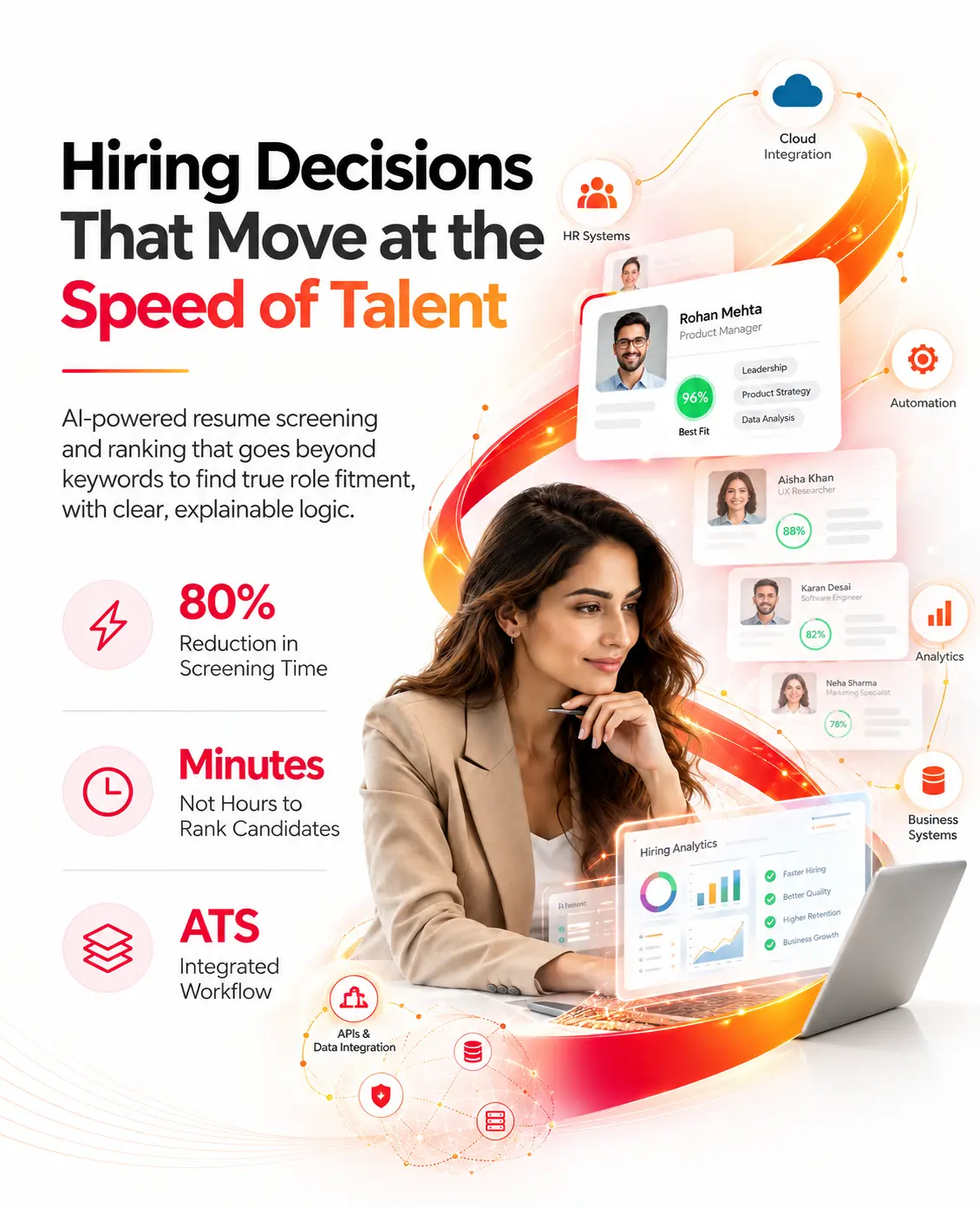
Reduction in Screening Time
Candidate Ranking & Shortlistingc
“Introduced an AI-driven recruitment engine that analyses resumes beyond keyword matches, ranks candidates by contextual role fit, and supports recruiters with instant summaries and intelligent queries for quicker, more consistent shortlisting.”

Operations
Resumes Processed in One Batch
Employee & Workforce Management
“Created a unified HRM ecosystem bringing employee records, attendance, leave, recruitment, self-service, and workforce analytics into one platform, with an AI engine capable of evaluating large volumes of resumes using semantic role-fit analysis.”

Institutions
Faster SOP Retrieval
Access to Critical Procedures
“Converted scattered hospital SOPs across PDFs, scans, folders, and SharePoint into an intelligent knowledge system, allowing medical teams to search procedures in natural language while maintaining version control and role-based access.”
Client Testimonials
The Legacy Application Modernization Decision Process
There is no universal modernization recipe. A critical application with decades of business logic requires a different strategy from an aging customer portal or an internally developed tool. Our process is built around making the right modernization decision for each workload before large-scale engineering begins.
Separate Business Value From Technical Baggage
The first question is not "How old is the application?" It is "How important is what the application does?" Critical workflows, proprietary business rules, customer-facing functionality, revenue dependencies, and operational knowledge are identified before deciding what should be preserved.
Find the Parts Worth Saving
Applications often contain components that still perform their jobs effectively. Those areas are distinguished from obsolete frameworks, fragile integrations, unsupported dependencies, and inefficient architecture. This prevents modernization from becoming an expensive exercise in replacing perfectly functional technology.
Choose the Appropriate Modernization Path
Each application is mapped to the approach that fits its condition and business value. That could mean refactoring, replatforming, rearchitecting, rebuilding, replacing, or using a hybrid strategy. The decision considers complexity, risk, expected return, cloud readiness, and future product requirements.
Modernize Around Production Reality
Migration plans account for users, integrations, transaction volumes, data dependencies, peak workloads, operational schedules, and business continuity. Where downtime is unacceptable, phased migration, parallel environments, controlled releases, or incremental replacement can reduce disruption.
Build Security and Governance Into the New Foundation
Modernization is an opportunity to address access management, secrets, encryption, vulnerability exposure, logging, data handling, and auditability rather than carrying legacy weaknesses into the new architecture. Where applicable, requirements may be mapped to NIST-aligned controls, SOC 2 criteria, HIPAA safeguards, PCI DSS obligations, or applicable privacy regulations based on the application's role and industry.
Prove the New Architecture Before Expanding It
A modernization pilot or carefully selected workload can expose performance, integration, deployment, security, and operational issues before the approach is applied across the broader estate. Success is measured against meaningful indicators such as release velocity, resilience, infrastructure efficiency, application performance, security posture, and maintenance effort.
Leave the Organization With More Options
The finished environment should make future change easier. APIs, modular architecture, automated delivery, observability, documentation, cloud capabilities, and maintainable code create an application foundation that can accommodate new products, AI capabilities, integrations, and changing business requirements without repeating the same modernization cycle.
Modernize Your App Step By Step With Our Engineers
Receive expert insights into your application’s architecture, performance, technical debt, and modernization opportunities with a customized assessment.
Why Enterprises Choose Matrix Bricks for Application Modernization
Modernization Decisions Backed by Engineering Judgment
Cloud Architecture With Clear Business Value
Preserving What Works, Rebuilding What Doesn’t
Proven Industry Experience
Why Do 3600+ Clients Trust Us?
We bring 15+ years of expertise in application modernization, product engineering, cloud-native architecture, and digital transformation to help businesses modernize legacy systems and scale with confidence.
“My experience has been so great. We have seen such an increase in our overall numbers coming from Internet searches and people who have cited internet search as their reason. Bringing you guys on has made it just so simple and so easy, and I’ve learned so much. The month reports are really great and make it very simple for me to understand, and we’re really happy with the outcomes.”

Heather Baird
Department Director, Brighton Recovery Center“We are very much happy with the website design services offered by Matrix Bricks and they are also fully dedicated to satisfying our needs. Alongside, we also appreciate their creative approach towards designing a powerful website.”

Sangeeta Jain
Director, All India Association of Industries“Matrix Bricks has a very creative and skillful team who constantly thrives towards the complete satisfaction of the customer with functional and innovative skills. The web development services provided from their end is of exceptional quality.
I wish them all the best in their future endeavors.”

Neetu S Srivastava
Group Product Manager - Majesta, Glenmark Pharmaceuticals Limited“I would like to thank Mr. Mehul for creating a wonderful website. I have been appreciated by lots of acquaintances both personal and professional for the website. It has come out exactly the way or rather I would say even better than what I envisaged. His team is very patient and understanding, always ready to support you in best possible ways. Another very good point about Mr. Mehul’s approach is that he always tries to figure out the best ways to match customer’s budget and still give a quality solution. I look forward to a long-term relation with Matrix Bricks.”

Shrey Kejriwal
“We at P3 Sports, have been with Matrix Bricks for a short time but our experience has been very pleasant & fulfilling. The staff is super-efficient & amazing. You name it they do it. We have only warm words & appreciation for them. We would like to give special mention to Urvi, who worked with us on our project. Nothing is impossible for her. Super service with sweet smile. Rafique who liaised for us proved sp invaluable for his hard work in giving our project the discipline of time. Thank you all at Matrix Bricks… Keep it up & see u at the top.”

Sushmita & Moonmoon Partners
Frequently Asked Questions
What is application modernization?
How much do application modernization services cost?
There is no meaningful standard price because every legacy environment has a different level of complexity. Matrix Bricks first examines the application and its surrounding ecosystem to understand the actual modernization effort, including:
- Codebase condition and technical debt
- Infrastructure, cloud, database, and integration dependencies
- Migration, testing, security, and continuity requirements
That assessment creates a more defensible estimate for application modernization services than applying a generic project rate.
Does application modernization mean replacing the entire application?
Not necessarily. Matrix Bricks looks at what already works before recommending what should change. Depending on the environment, legacy application modernization may involve:
- Refactoring selected components
- Introducing APIs or modular architecture
- Replatforming or selectively rebuilding specific workloads
This allows organizations to address genuine constraints without automatically discarding valuable business logic.
What is the difference between application migration and modernization?
Can an old application be moved to the cloud without rewriting it?
What are the benefits of application modernization?
The business case depends on the application's existing limitations and the organization's future goals. Matrix Bricks connects modernization work to measurable improvements such as:
- Faster releases and easier application changes
- Greater scalability, resilience, and performance
- Lower technical debt and stronger security practices
The broader objective of an application modernization solution is to make the software more capable of supporting the business, not simply newer in terms of technology.
What is cloud-native application modernization?
How can businesses modernize legacy applications without disrupting users?
Modernization has to happen alongside business operations, particularly when the application supports customers, revenue, or critical internal workflows. Matrix Bricks can design legacy application modernization services around:
- Phased releases and incremental migration
- Parallel environments and controlled cutovers
- Automated testing, rollback, and recovery procedures
The approach reduces the need to choose between modernization progress and operational continuity.
Should every monolithic application be converted into microservices?
How does application modernization improve security?
Legacy environments can contain outdated dependencies, unsupported frameworks, weak access controls, and limited visibility. Matrix Bricks can address these issues during modernization through:
- Supported frameworks and dependency management
- Identity, access, encryption, and secrets controls
- Vulnerability testing, logging, monitoring, and secure deployment
Security becomes part of the modernized architecture rather than a separate exercise after the application has been rebuilt.
How should I choose an application modernization company?
How long does application modernization take?
What happens to the existing data during application modernization?
Our Partners