











Matrix Bricks
Matrix Bricks Matrix Bricks

FinOps Consulting
Turning Cloud Spend into Business Clarity

Matrix Bricks Corporation helps organizations move from a monthly cloud invoice to a clearer understanding of what drives spend, who owns it, what value it supports, and where optimization is possible. The approach can span visibility, allocation, forecasting, optimization, governance, and continuous improvement across complex cloud environments.

Optimize Cloud Costs With a Free FinOps Strategy

Identify spending inefficiencies, improve financial visibility, and uncover opportunities to optimize resource utilization with a FinOps strategy tailored to your business.

    captcha

    +
    Worldwide Clients Served
    +
    Years
    +
    Page 1 Keywords Ranked
    +
    Industries Covered
    Matrix Bricks Client Logo - Brighton Recovery
    Matrix Bricks Client Logo - Suncrest Care
    Matrix Bricks Client Logo - Outreach Uganda
    Matrix Bricks Client Logo - The CleanUp Guys
    Matrix Bricks Client Logo - Aditya Birla Hindalco Logo
    Matrix Bricks Client Logo - Amar equipment
    Matrix Bricks Client Logo - Brighton Recovery
    Matrix Bricks Client Logo - Suncrest Care
    Matrix Bricks Client Logo - Outreach Uganda
    Matrix Bricks Client Logo - The CleanUp Guys
    Matrix Bricks Client Logo - Aditya Birla Hindalco Logo
    Matrix Bricks Client Logo - Amar equipment

    Why Your Business Needs FinOps Before Cloud Economics Get Out of Control

    Cloud makes it easy to provision, scale, experiment, and launch. That same flexibility can make financial discipline surprisingly difficult when usage grows across teams, accounts, workloads, environments, and providers. 

    Your Cloud Bill Keeps Growing Without a Clear Owner

    A finance team may see the total invoice while engineering sees hundreds of resources. Without allocation and accountability, nobody has enough context to explain the increase. FinOps establishes clearer ownership through tagging, cost allocation, showback, chargeback, and workload-level visibility.

    AI and Data Workloads Are Changing the Cost Equation

    Generative AI, GPU workloads, large-scale analytics, data pipelines, and high-volume inference can behave very differently from conventional application infrastructure. Traditional cloud cost optimization alone may miss the economics of these workloads. FinOps brings usage, performance, while MLOps practices help manage machine learning model development, deployment, monitoring, and resource utilization.

    Engineers Often Discover Cost Problems After Architecture Is Already Locked In

    Compute selection, storage architecture, database choices, data transfer, observability, Kubernetes resources, and scaling policies all influence cloud economics. Applying FinOps best practices earlier in the development lifecycle allows teams to consider cost alongside reliability, supported by effective SecOps solutions for continuous security monitoring and risk management.

    Cloud Growth Needs a Financial Operating Model

    As organizations move across accounts, regions, platforms, and cloud providers, spreadsheets and one-off optimization exercises become increasingly difficult to maintain. A structured FinOps framework creates repeatable practices for forecasting, allocation, optimization, governance, and continuous decision-making without turning every engineering conversation into a finance review.

    FinOps Services That Put Cloud Economics into Practice

    FinOps works when cost becomes part of everyday technology decision-making. Matrix Bricks brings finance, engineering, product, and cloud perspectives into one operating model, giving each stakeholder the information needed to make better choices without slowing innovation. 

    Turn Cloud Spending Into Measurable Business Value

    Gain actionable insights into your technology expenditure and explore smarter ways to manage costs with a free FinOps consultation from Matrix Bricks.

      Awards & Recognition

      Case Studies

      Matrix Bricks has helped businesses navigate complex digital change, modernise capabilities, and turn transformation initiatives into measurable business outcomes. Backed by 15+ years of industry experience, our approach combines digital strategy, emerging technologies, customer experience, process optimisation and AI-driven transformation to help organisations build more agile, connected and future-ready businesses. Explore our case studies to see how this expertise translates into real-world transformation outcomes.

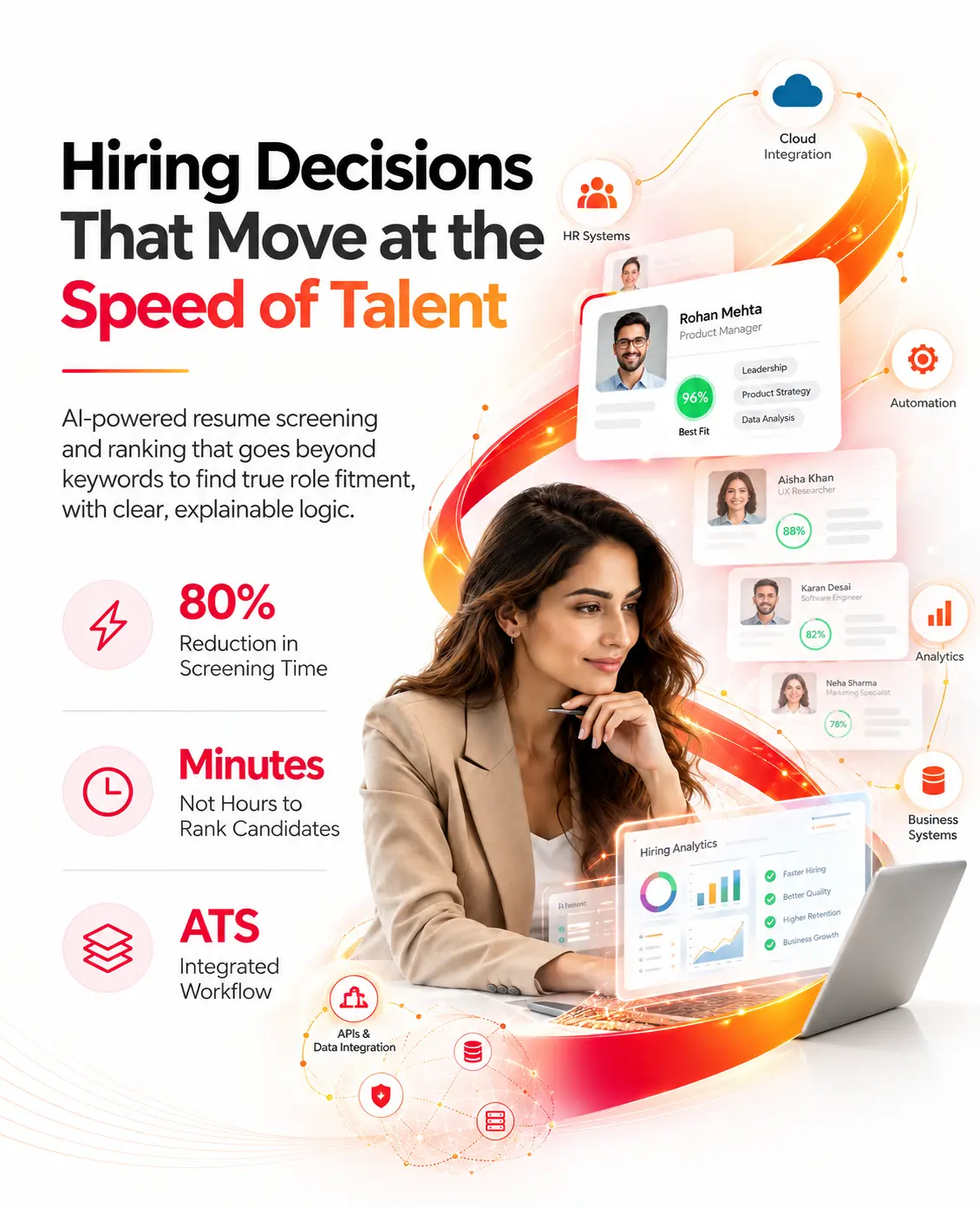
      Recruitment & Talent Acquisition Platforms
      Up to 80%

      Reduction in Screening Time

      Smarter

      Candidate Ranking & Shortlistingc

      “Introduced an AI-driven recruitment engine that analyses resumes beyond keyword matches, ranks candidates by contextual role fit, and supports recruiters with instant summaries and intelligent queries for quicker, more consistent shortlisting.”

      Enterprise HR
      Operations
      500

      Resumes Processed in One Batch

      Centralised

      Employee & Workforce Management

      “Created a unified HRM ecosystem bringing employee records, attendance, leave, recruitment, self-service, and workforce analytics into one platform, with an AI engine capable of evaluating large volumes of resumes using semantic role-fit analysis.”

      Healthcare
      Institutions
      Up to 70%

      Faster SOP Retrieval

      Web + Mobile

      Access to Critical Procedures

      “Converted scattered hospital SOPs across PDFs, scans, folders, and SharePoint into an intelligent knowledge system, allowing medical teams to search procedures in natural language while maintaining version control and role-based access.”

      Client Testimonials

      Cloud Spend Management Framework

      FinOps should not begin with a list of resources to delete. It begins by understanding how the organization uses technology, what that technology costs, and what the business expects from it. Matrix Bricks Corporation uses a six-stage approach that connects financial visibility with engineering reality.

      01

      Map the Money Trail

      We start by tracing where cloud expenditure actually originates. Accounts, subscriptions, projects, workloads, environments, services, and ownership structures are mapped to expose gaps between the billing view and the business view.

      02

      Give Every Major Cost a Context

      A large number is not automatically a problem. We connect spend with utilization, workload purpose, product activity, traffic, performance, and business ownership. This makes it possible to distinguish necessary investment from genuine waste.

      03

      Find the Expensive Decisions

      Instead of focusing only on unused resources, the analysis looks deeper into architecture and consumption patterns. Rightsizing, storage, data transfer, database configuration, Kubernetes utilization, observability, scaling, and AI workloads can all reveal opportunities for cloud cost optimization.

      04

      Build the Financial Operating Rhythm

      Budgets, forecasts, allocation rules, ownership, reporting, and review cycles are established according to how the organization actually operates. The FinOps framework becomes part of regular decision-making rather than a separate finance exercise.

      05

      Put Better Signals in Engineers' Hands

      Cost awareness becomes far more useful when it reaches the people making infrastructure and architecture choices. Appropriate FinOps tools, dashboards, anomaly alerts, and workload-level metrics can bring financial context closer to engineering workflows.

      06

      Keep Optimization Moving

      Cloud environments never stay still. New applications launch, workloads scale, teams experiment, and technology choices change. Ongoing reviews, commitment analysis, forecasting, anomaly detection, and maturity improvements keep FinOps best practices active long after the initial optimization exercise.

      Build a More Cost-Efficient Business With Matrix Bricks

      Start with a free FinOps consultation tailored to your infrastructure and financial objectives.

        Why Businesses Choose Matrix Bricks for FinOps

        Know Where the Money Goes
        Turn fragmented cloud consumption into clear ownership, allocation, and business-level visibility.
        Optimize Without Slowing Growth
        Reduce waste without blindly cutting infrastructure, compromising performance, or restricting engineering teams.
        Make Cloud Economics Predictable
        Move beyond reactive bill reviews with forecasting, anomaly detection, commitment planning, and continuous optimization.
        15+ Years of Technology Depth
        Matrix Bricks brings 15+ years of technology and digital transformation expertise across cloud, DevOps, data, infrastructure, and engineering.

        Why Do 3600+ Clients Trust Us?

        With 15+ years of expertise, Matrix Bricks empowers businesses with smarter FinOps strategies, better cost control, and improved financial efficiency.

        “My experience has been so great. We have seen such an increase in our overall numbers coming from Internet searches and people who have cited internet search as their reason. Bringing you guys on has made it just so simple and so easy, and I’ve learned so much. The month reports are really great and make it very simple for me to understand, and we’re really happy with the outcomes.”

        Heather Baird

        Department Director, Brighton Recovery Center

        “We are very much happy with the website design services offered by Matrix Bricks and they are also fully dedicated to satisfying our needs. Alongside, we also appreciate their creative approach towards designing a powerful website.”

        Sangeeta Jain

        Director, All India Association of Industries

        “Matrix Bricks has a very creative and skillful team who constantly thrives towards the complete satisfaction of the customer with functional and innovative skills. The web development services provided from their end is of exceptional quality.
        I wish them all the best in their future endeavors.”

        Neetu S Srivastava

        Group Product Manager - Majesta, Glenmark Pharmaceuticals Limited

        “I would like to thank Mr. Mehul for creating a wonderful website. I have been appreciated by lots of acquaintances both personal and professional for the website. It has come out exactly the way or rather I would say even better than what I envisaged. His team is very patient and understanding, always ready to support you in best possible ways. Another very good point about Mr. Mehul’s approach is that he always tries to figure out the best ways to match customer’s budget and still give a quality solution. I look forward to a long-term relation with Matrix Bricks.”

        Shrey Kejriwal

        “We at P3 Sports, have been with Matrix Bricks for a short time but our experience has been very pleasant & fulfilling. The staff is super-efficient & amazing. You name it they do it. We have only warm words & appreciation for them. We would like to give special mention to Urvi, who worked with us on our project. Nothing is impossible for her. Super service with sweet smile. Rafique who liaised for us proved sp invaluable for his hard work in giving our project the discipline of time. Thank you all at Matrix Bricks… Keep it up & see u at the top.”

        Sushmita & Moonmoon Partners

        Frequently Asked Questions

        What is FinOps?
        FinOps is an operating practice that brings financial accountability into cloud technology decisions. It connects finance, engineering, product, and leadership around cloud usage, cost, forecasting, and business value. Matrix Bricks uses FinOps consulting to establish visibility and accountability while keeping cloud consumption aligned with technical and business priorities.
        Why is FinOps important for cloud computing?

        Cloud makes infrastructure highly flexible, but that flexibility can make spending difficult to predict. Matrix Bricks uses cloud cost optimization to help organizations understand:

        • Which workloads and teams are driving consumption
        • Where infrastructure is being underutilized
        • How architecture and usage patterns affect future spend

        The objective is controlled cloud growth rather than simply reducing the monthly bill.

        What are the three main phases of FinOps?
        FinOps is commonly described through the phases Inform, Optimize, and Operate. Matrix Bricks translates those principles into an ongoing FinOps framework involving cost visibility, allocation, optimization, forecasting, governance, and continuous review rather than treating the phases as a one-time exercise.
        What are FinOps best practices?
        Effective FinOps best practices include accurate cost allocation, resource ownership, forecasting, anomaly detection, rightsizing, commitment management, and regular optimization reviews. Matrix Bricks Corporation also looks at engineering behavior and architecture because sustainable cloud cost optimization often requires changing the decisions that create the spend, not just removing unused resources.
        What are FinOps tools used for?
        FinOps tools help organizations analyze cloud billing, allocate costs, identify anomalies, forecast expenditure, track budgets, and surface optimization opportunities. Matrix Bricks evaluates tooling based on the organization's cloud architecture and operating model, using FinOps platforms where they improve visibility and decision-making rather than adding another dashboard without ownership.
        How does FinOps reduce cloud costs?

        FinOps identifies where cloud consumption is unnecessary, inefficient, poorly allocated, or misaligned with workload requirements. Matrix Bricks can combine cloud cost optimization with:

        • Rightsizing and utilization analysis
        • Resource cleanup and scaling optimization
        • Storage, database, network, and commitment reviews

        This creates savings opportunities while protecting performance and reliability.

        What is a FinOps maturity model?
        A FinOps maturity model describes how an organization progresses from basic cloud cost visibility toward proactive optimization, accountability, automation, and strategic cloud economics. Matrix Bricks can assess an organization's current FinOps maturity and establish practical next steps based on its cloud footprint, governance structure, engineering practices, and business objectives.
        What is FinOps as a service?
        FinOps as a service provides ongoing expertise for organizations that want continuous cloud cost oversight without building a large internal FinOps team. Matrix Bricks can support managed FinOps services through recurring cost reviews, optimization analysis, forecasting, anomaly monitoring, commitment evaluation, and executive reporting.
        How does FinOps work with DevOps?
        FinOps and DevOps intersect because many cloud-cost decisions originate inside engineering workflows. Matrix Bricks connects FinOps with DevOps practices by bringing cost awareness into infrastructure provisioning, CI/CD, workload scaling, architecture reviews, and operational monitoring, allowing engineers to consider cost alongside performance, reliability, and security.
        How can FinOps manage AI and GPU costs?

        AI workloads can introduce highly variable compute consumption, particularly when organizations use GPUs for training, inference, experimentation, or large-scale model workloads. Matrix Bricks can apply AI cost management through:

        • GPU utilization and workload analysis
        • Inference and training cost visibility
        • Capacity, scaling, and infrastructure optimization

        This extends cloud cost optimization into one of the fastest-changing areas of cloud economics.

        Does FinOps only apply to AWS, Azure, or Google Cloud?
        No. The principles apply across public cloud, private cloud, hybrid environments, and increasingly multi-cloud operations. Matrix Bricks can establish FinOps best practices across complex environments while creating consistent cost allocation, governance, and reporting through a shared FinOps framework.
        How much does FinOps consulting cost?

        The investment depends on cloud scale, number of providers, organizational maturity, existing tooling, reporting requirements, and the depth of ongoing support required. Matrix Bricks can scope FinOps consulting around:

        • Current cloud spend and architectural complexity
        • Existing cost-management processes and tools
        • Required optimization, forecasting, governance, and managed support

        This makes the engagement proportional to the organization's actual cloud economics rather than a generic consulting package.

        Our Partners

        Matrix Bricks Partner - GOOGLE
        Matrix Bricks Partner - Clutch
        Matrix Bricks Partner - DUNS
        Circle
        Circle

        Get In Touch With Us

          captcha

          Search Here