





 India
 UK
 UAE
Software Development Services
Building Platforms That Power Business Growth Not Just Codebases
Matrix Bricks Corporation brings product engineering, software architecture, cloud, DevOps, cybersecurity, data, and application development together to address the full technical picture behind modern software. The result is a development approach suited to organizations that need dependable applications, complex integrations, scalable infrastructure, and a technology foundation capable of evolving with the business.
- 15+ years of technology and digital transformation expertise.
- 19+ industries across diverse business and technology environments.
- Clutch-recognized Digital Partner supporting complex technology initiatives.
Get Software Built Right. Start With a Free Consultation
Tell us about your product, platform, or project and receive a tailored development approach covering architecture, integrations, and next steps.


Why Your Business Cannot Afford Software That Stands Still
A software product can be technically functional and still become a serious business constraint. As users, transactions, integrations, security requirements, and product expectations increase, weaknesses in the original architecture become harder and more expensive to ignore.
Your Application Has Become Harder to Change
When tightly coupled code, outdated frameworks, and accumulated technical debt sit underneath the product, even simple enhancements can require disproportionate development effort. Modern architecture and custom software development services create greater room for new features, integrations, and changing business requirements.
Growth Is Exposing Architectural Weaknesses
Performance problems often appear when applications encounter larger user volumes, heavier transactions, more data, or geographically distributed demand. Scalable infrastructure, cloud-native patterns, caching, containerization, and performance engineering give the application room to grow without turning every growth milestone into a technology crisis.
Your Systems Are Not Talking to Each Other
Disconnected CRM, ERP, payment, analytics, customer, and operational systems create duplicate work and fragmented information. Software application development services can incorporate APIs, event-driven architecture, middleware, and system integration so critical workflows move across the technology ecosystem with less friction.
Security Requirements Are Becoming Part of Product Engineering
Modern applications handle increasingly sensitive customer and business information. Security needs to exist throughout the development lifecycle through secure coding, identity management, encryption, vulnerability testing, dependency management, and access controls. Depending on the product and industry, requirements may also involve frameworks such as SOC 2, HIPAA, PCI DSS, GDPR, or CCPA/CPRA.
Our Software Engineering Capabilities for Products Built to Evolve
Software development works best when engineering decisions are made with the product’s future in mind. Our capabilities span application creation, enterprise systems, integration, modernization, quality engineering, and cloud-native development, giving organizations room to build new products without creating another generation of technical debt.
Custom Software Development
When standard platforms force the business into someone else’s workflow, custom software creates room to build around the way the organization actually operates. Our custom software development services cover everything from internal business applications to customer-facing platforms and specialized digital products.
- Business Application Development
Create purpose-built applications around operational workflows, approvals, transactions, customer journeys, and internal processes. - SaaS Product Development
Build subscription-based software with multi-tenant architecture, role management, billing workflows, APIs, analytics, and scalable cloud infrastructure. - MVP Development
Turn a validated product concept into a focused minimum viable product that can be tested with real users before larger engineering investment. - Feature & Platform Development
Extend existing products with new capabilities without compromising architectural consistency, performance, or maintainability.
Enterprise Software Development
Large organizations need software that can work across departments, locations, users, data environments, and existing technology stacks. Our enterprise software development services focus on applications where scalability, security, integration, governance, and long-term maintainability are critical.
- Enterprise Applications
Develop business-critical platforms for finance, operations, workforce management, customer service, supply chain, and other complex functions. - Role & Access Architecture
Build granular permissions, authentication, authorization, and identity workflows around different user groups and business responsibilities. - Workflow Automation
Replace manual handoffs with digital workflows, approval engines, notifications, rules, and system-driven processes. - Scalable Application Architecture
Design software around increasing users, transactions, data volumes, integrations, and geographic expansion.
API & Integration Development
Modern businesses rarely run on one application. Our Software integration capabilities connect software products with ERP, CRM, payment platforms, databases, SaaS applications, third-party services, and internal systems through reliable digital interfaces.
- API Development
Design secure and well-documented RESTful and event-driven APIs that allow applications and services to exchange information consistently. - Third-Party Integrations
Connect external platforms and services without forcing users to manually move information between disconnected systems. - Event-Driven Architecture
Use events and asynchronous communication for workflows that need scalability, resilience, and near real-time processing. - Integration Layer Modernization
Replace brittle point-to-point connections with more maintainable API, middleware, and service-based integration patterns.
Web & Mobile Application Development
Digital products increasingly serve users across browsers, smartphones, tablets, and connected experiences. Our software application development services focus on responsive, accessible, high-performing applications designed around real user behavior.
- Web Application Development
Build modern applications for customer portals, SaaS platforms, marketplaces, dashboards, internal systems, and digital services. - iOS & Android Development
Develop mobile experiences that connect users with products, services, transactions, workflows, and real-time information. - Progressive Web Applications
Create web experiences with app-like functionality for use cases where reach, accessibility, and simplified deployment are priorities. - Performance Engineering
Address page speed, API latency, resource utilization, caching, database performance, and application responsiveness before they affect the user experience.
Software Modernization
Legacy software does not always need to be replaced. Sometimes the smarter move is to preserve what works while changing the parts that restrict growth. Our modernization services help organizations move aging applications toward more maintainable, secure, and scalable architectures.
- Legacy Application Assessment
Examine architecture, dependencies, technical debt, frameworks, infrastructure, integrations, and business-critical functionality before modernization begins. - Application Refactoring
Restructure code and components to improve maintainability, testability, performance, and future development velocity. - Cloud Migration & Replatforming
Move suitable applications toward cloud infrastructure, managed services, containers, or other modern deployment models. - Monolith to Modular Architecture
Gradually separate tightly coupled functionality into independently manageable components where the business case supports the change.
Quality Engineering & DevSecOps
A successful release is not simply one that reaches production. It needs to perform under realistic conditions, remain secure, and behave consistently as the product changes. Quality engineering brings automated validation, security, performance, and deployment discipline into the software lifecycle.
- Automated Testing
Use unit, integration, regression, API, and end-to-end testing to catch defects earlier and make frequent releases safer. - CI/CD Engineering
Automate build, testing, deployment, and release workflows so engineering teams can ship changes with greater consistency. - Application Security
Integrate secure coding practices, dependency scanning, secrets management, vulnerability testing, and security checks into the SDLC. - Performance & Reliability Testing
Test applications under realistic loads to identify bottlenecks, failure conditions, scaling limits, and resilience gaps before production users encounter them.
Get an Expert Review of Your Software Architecture
Delays, rising costs, or constant rework? Our experts review your plan, team setup, and technology choices to find what is putting your project at risk.
Awards & Recognition



Case Studies
Matrix Bricks has helped businesses navigate complex digital change, modernise capabilities, and turn transformation initiatives into measurable business outcomes. Backed by 15+ years of industry experience, our approach combines digital strategy, emerging technologies, customer experience, process optimisation and AI-driven transformation to help organisations build more agile, connected and future-ready businesses. Explore our case studies to see how this expertise translates into real-world transformation outcomes.
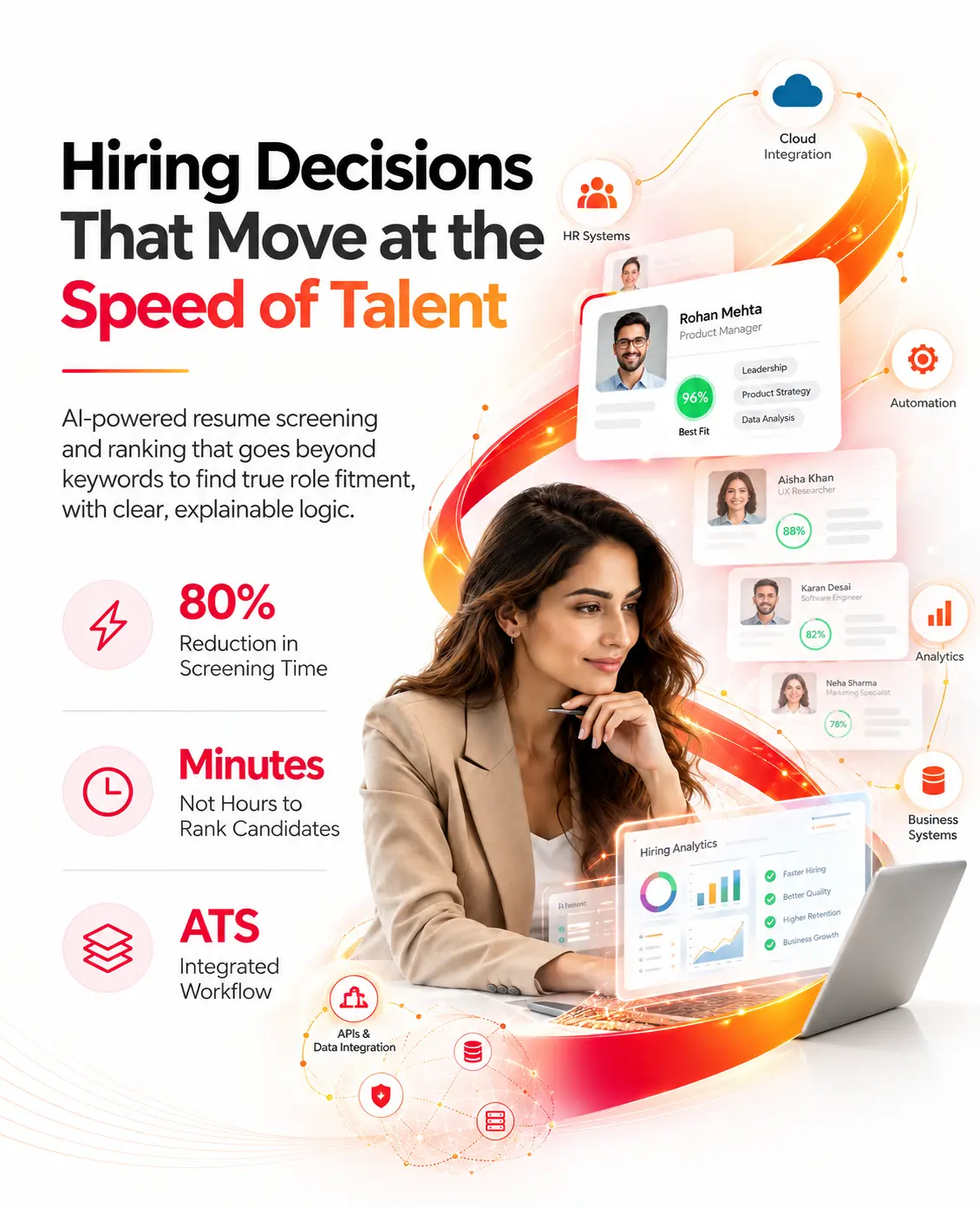
Reduction in Screening Time
Candidate Ranking & Shortlistingc
“Introduced an AI-driven recruitment engine that analyses resumes beyond keyword matches, ranks candidates by contextual role fit, and supports recruiters with instant summaries and intelligent queries for quicker, more consistent shortlisting.”

Operations
Resumes Processed in One Batch
Employee & Workforce Management
“Created a unified HRM ecosystem bringing employee records, attendance, leave, recruitment, self-service, and workforce analytics into one platform, with an AI engine capable of evaluating large volumes of resumes using semantic role-fit analysis.”

Institutions
Faster SOP Retrieval
Access to Critical Procedures
“Converted scattered hospital SOPs across PDFs, scans, folders, and SharePoint into an intelligent knowledge system, allowing medical teams to search procedures in natural language while maintaining version control and role-based access.”
Client Testimonials
From Requirement to Production-Ready Product: Our Engineering Flow
Good software development is not a straight line from specification to code. Requirements change once users interact with the product, integrations expose new constraints, and production behavior reveals issues that were impossible to predict in a planning document. The engineering approach needs room for that reality.
Decode the Business Intent into Product Logic
Before technical decisions are locked in, requirements are translated into user journeys, business rules, system behavior, data requirements, and measurable outcomes. This gives engineering teams something more useful than a feature list to build against.
Design Architecture for Real-World Scale
Expected users, transactions, integrations, data volumes, availability requirements, and security needs influence architectural decisions from the outset. Cloud-native services, containers, APIs, microservices, or modular monoliths are considered according to the product rather than treated as mandatory patterns.
Deliver in Controlled, High-Confidence Releases
Instead of waiting for one large release, functionality is developed in meaningful increments that can be reviewed, tested, and validated. This creates earlier feedback and reduces the risk of discovering fundamental product or architecture problems late in development.
Embed Security into the Engineering Core
Security requirements are translated into development practices through secure coding, dependency management, secrets handling, identity controls, API protection, logging, and automated security testing. Where relevant, the engineering environment can support requirements connected to SOC 2, PCI DSS, HIPAA, GDPR, CCPA/CPRA, or other applicable obligations.
Evolve the Product Using Real Usage Signals
Application telemetry, performance data, error monitoring, user feedback, and product analytics reveal what actually happens after deployment. Those signals inform prioritization, optimization, and future engineering decisions rather than relying entirely on assumptions made before launch.
Engineer for Continuous Evolution
Documentation, automated tests, clean interfaces, observability, deployment automation, and maintainable architecture reduce the cost of future change. The goal is not simply to deliver version one, but to leave behind an engineering foundation that can support version two, version ten, and whatever comes next.
Find Out Why Software Projects Run Late and Over Budget
Slow releases, recurring bugs, or growing technical debt? Find out what’s really holding your software back.
Why Businesses Trust Matrix Bricks with Product Engineering
15+ Years of Engineering Perspective
Modernize What Matters. Keep What Works.
Software Built for the Real Ecosystem
A Partner Beyond Launch
Why Do 3600+ Clients Trust Us?
We bring 15+ years of expertise in software development, product engineering, cloud, and digital transformation to help businesses build scalable, secure, and future-ready digital products.
“My experience has been so great. We have seen such an increase in our overall numbers coming from Internet searches and people who have cited internet search as their reason. Bringing you guys on has made it just so simple and so easy, and I’ve learned so much. The month reports are really great and make it very simple for me to understand, and we’re really happy with the outcomes.”

Heather Baird
Department Director, Brighton Recovery Center“We are very much happy with the website design services offered by Matrix Bricks and they are also fully dedicated to satisfying our needs. Alongside, we also appreciate their creative approach towards designing a powerful website.”

Sangeeta Jain
Director, All India Association of Industries“Matrix Bricks has a very creative and skillful team who constantly thrives towards the complete satisfaction of the customer with functional and innovative skills. The web development services provided from their end is of exceptional quality.
I wish them all the best in their future endeavors.”

Neetu S Srivastava
Group Product Manager - Majesta, Glenmark Pharmaceuticals Limited“I would like to thank Mr. Mehul for creating a wonderful website. I have been appreciated by lots of acquaintances both personal and professional for the website. It has come out exactly the way or rather I would say even better than what I envisaged. His team is very patient and understanding, always ready to support you in best possible ways. Another very good point about Mr. Mehul’s approach is that he always tries to figure out the best ways to match customer’s budget and still give a quality solution. I look forward to a long-term relation with Matrix Bricks.”

Shrey Kejriwal
“We at P3 Sports, have been with Matrix Bricks for a short time but our experience has been very pleasant & fulfilling. The staff is super-efficient & amazing. You name it they do it. We have only warm words & appreciation for them. We would like to give special mention to Urvi, who worked with us on our project. Nothing is impossible for her. Super service with sweet smile. Rafique who liaised for us proved sp invaluable for his hard work in giving our project the discipline of time. Thank you all at Matrix Bricks… Keep it up & see u at the top.”

Sushmita & Moonmoon Partners
Frequently Asked Questions
How much does custom software development cost in the USA?
How long does it take to develop custom software?
There is no reliable universal timeline. A focused internal application and a multi-tenant enterprise platform have very different engineering requirements. Matrix Bricks typically breaks software development services into manageable releases based on:
- Product scope and complexity
- Integrations, data, and security requirements
- Testing, deployment, and infrastructure needs
This allows useful functionality to reach users earlier while the broader product continues to evolve.
What does a software development company do?
When should a company choose custom software over SaaS?
Custom development becomes worth considering when the business has differentiated workflows, proprietary processes, complex integrations, or requirements that standard SaaS cannot accommodate effectively. Matrix Bricks evaluates custom software development alongside commercial software options, considering:
- Business differentiation
- Integration and data requirements
- Control over functionality and the future roadmap
The objective is to build only where ownership creates meaningful value.
Can an existing application be modernized without replacing everything?
Absolutely. Selective modernization can preserve valuable business logic while addressing the parts of an application that create technical constraints. Matrix Bricks can combine legacy application modernization with:
- Refactoring tightly coupled components
- Introducing APIs and modular architecture
- Replatforming suitable workloads to cloud infrastructure
This can reduce modernization risk compared with an unnecessary full rebuild.
What is the difference between software development and product engineering?
Can software development include integrations with existing business systems?
How is security handled during software development?
Security is built into the engineering lifecycle rather than left for final-stage testing. Matrix Bricks can incorporate secure software development practices covering:
- Identity, authentication, authorization, and encryption
- Dependency, secrets, and vulnerability management
- API security, logging, testing, and secure deployment
Where applicable, the engineering process can also account for regulatory and contractual requirements.
What should I look for in a software development company in the USA?
Can you develop enterprise software for large organizations?
Yes. Enterprise products often involve multiple departments, complex permissions, high transaction volumes, legacy integrations, and strict security requirements. Matrix Bricks provides enterprise software development services with attention to:
- Scalability and application performance
- Identity, access, security, and governance
- APIs, data flows, and enterprise integrations
The architecture is shaped around the organization’s operating environment rather than a generic enterprise template.
What is software development outsourcing?
Software development outsourcing allows an organization to bring an external engineering partner into some or all stages of product development. Matrix Bricks can operate as a software development outsourcing company where businesses need:
- Additional engineering capacity
- Specialized technical expertise
- An extended product development team
The engagement can complement an internal engineering organization rather than replacing it entirely.
Can software developers work with an existing internal team?
What technologies can be used to build modern software?
There is no single technology stack suitable for every product. The choice depends on application requirements, expected scale, team capabilities, integrations, security, and deployment model. Matrix Bricks can work across modern software development environments involving:
- Cloud platforms and managed services
- Web, mobile, API, and backend technologies
- Containers, CI/CD, microservices, and AI-enabled development
Technology selection follows the product’s requirements rather than forcing the same stack onto every project.
How do you support software after it launches?
Can AI be added to existing software?
Our Partners