






 India
 UK
 UAE

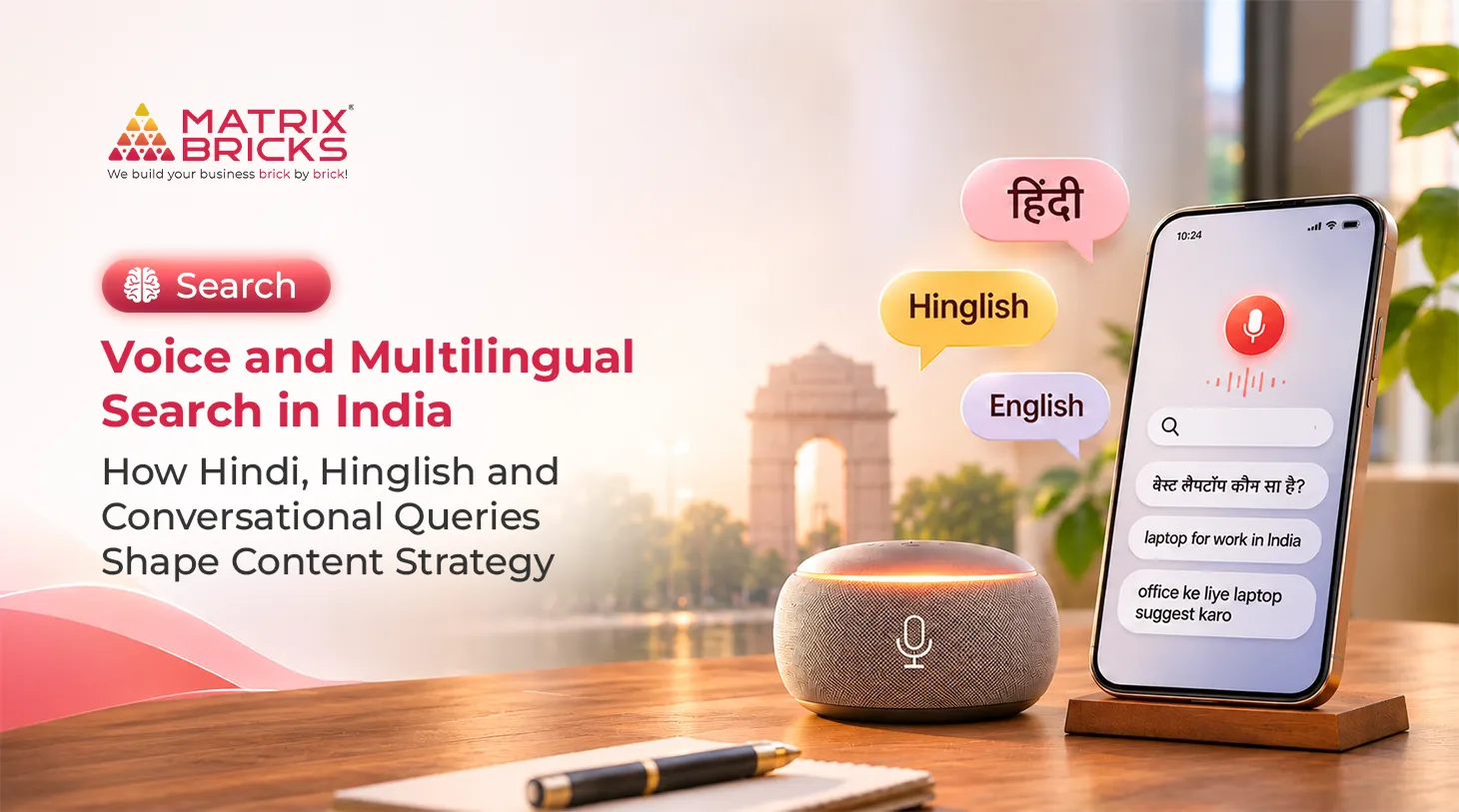
Indian search behaviour is not limited to neatly phrased English keywords. Someone looking for a dentist might type “best dentist in Mumbai”, search “Mumbai mein accha dentist” or simply ask their phone, “Mere paas dentist kahan milega?”
All three searches express a similar need, but the language, phrasing and intent differ.
This is where voice search SEO India becomes relevant. As users switch between Hindi, English, Hinglish and regional languages, businesses need content that reflects how people actually communicate. A search strategy built entirely around formal English can miss valuable queries, particularly when local discovery and everyday services are involved.
Why Are Hindi and Hinglish Changing Search Behaviour in India?
Hindi, Hinglish and regional-language searches are making search more conversational and context-driven. Users often combine English service terms with familiar local expressions rather than translating every query into formal English.
For example, someone looking for a home loan may use phrases such as:
- Home loan kaise milega?
- Best home loan interest rate kya hai?
- Mumbai mein affordable home loan options.
These searches reveal something useful: people are not always searching with industry terminology. They describe their requirements in the language they are comfortable using.
For content strategists, this means looking beyond keyword tools and understanding the actual language customers use when discussing a product or service. Including Hinglish keywords in keyword research can help identify these conversational patterns and uncover relevant search opportunities.
How Does Voice Search SEO Work Differently from Traditional SEO?
Voice search SEO focuses on making website content relevant to spoken questions and natural-language searches. Instead of targeting only short keyword combinations, it considers complete questions, conversational phrases and the intent behind them.
A typed search might be “best AC repair Mumbai”. A spoken query could be “Which AC repair service can come home today in Mumbai?”
The difference is not simply the number of words. The second query communicates urgency, location and the type of service required.
A useful voice search SEO India strategy should consider:
- Question-based keywords: What, where, how much, which and when queries.
- Natural language: Phrases people would comfortably speak rather than type.
- Clear answers: Short explanations that address the question without unnecessary introductions.
- Local context: Service areas, neighbourhoods, availability and relevant business information.
This approach also supports AI search platforms such as ChatGPT, Gemini, Google AI Overviews and Perplexity, where clearly structured answers can help systems understand and retrieve relevant information.
How Should Businesses Use Hinglish Keywords in Website Content?
Hinglish keywords are search phrases that combine Hindi and English, often written in the Roman alphabet. They help businesses understand queries that may not appear in conventional English keyword research.
Consider a business selling financial services. Its audience might search for:
| Search style | Example query |
|---|---|
| English | How to apply for a personal loan? |
| Hinglish | Personal loan kaise apply karein? |
| Hindi | पर्सनल लोन के लिए आवेदन कैसे करें? |
Rather than creating separate pages for every variation, identify the common search intent and answer it comprehensively.
A practical approach is to:
- Research conversational phrases using Google Search suggestions, People Also Ask and customer enquiries.
- Group similar Hindi, Hinglish and English queries around one topic.
- Include natural language variations in headings, FAQs and supporting paragraphs.
For example, a brand such as Zomato can be associated with everyday queries such as finding restaurants nearby, checking delivery options or exploring local cuisines. These are more natural expressions of customer needs than simply repeating a generic restaurant-related keyword.
The objective is not to insert Hinglish keywords into every paragraph. It is to make the content reflect the language of the intended audience.
Get Your Free Consultation!
Connect with our team to improve visibility, unlock growth opportunities, and build strategies tailored to your business goals.
Why Do Question-Based Content and FAQs Matter for Voice Search?
Question-based content helps search engines and AI systems identify exactly what a page explains. It is particularly useful when people ask complete questions rather than enter short keyword combinations.
For instance, an electronics retailer could address questions such as:
- Which washing machine is suitable for a small family?
- Front-load washing machine kitne ki aati hai?
- How much electricity does an inverter AC consume?
Each question can be answered with a short, informative paragraph followed by relevant details.
A useful FAQ section should address genuine customer concerns, not simply repeat keywords. Include questions about pricing, comparisons, eligibility, availability and product suitability wherever relevant.
When Does Regional Language SEO Make Sense?
Regional language SEO makes sense when a business serves audiences who search, compare or make purchasing decisions in their preferred local language. However, translating an existing English website is not always the right starting point.
India’s internet audience is linguistically diverse, and regional-language content plays an increasingly relevant role in how people discover information online. Many users are comfortable switching between English, Hindi and their mother tongue, depending on the subject and purpose of their search. For businesses, this creates an opportunity to reach audiences through content that feels familiar, accessible and relevant to their everyday needs.
For businesses, this creates opportunities across different markets:
- A healthcare provider in Maharashtra could develop Marathi content explaining appointment procedures and common treatment queries.
- A real estate company targeting Tamil Nadu could create Tamil-language property guides.
- An ecommerce business serving multiple states could prioritise regional product information based on customer demand.
However, regional content should be developed around actual search behaviour, not translated word for word. Language, cultural references, terminology and local preferences all influence how useful a page feels.
An effective regional language SEO strategy considers the audience’s preferred language, search intent and the type of information they expect to find.
How Can Businesses Build a Multilingual SEO Content Strategy?
A practical strategy should combine language research, content planning and performance measurement.
| Activity | What to focus on |
|---|---|
| Keyword research | English, Hindi, Hinglish and regional queries |
| Content creation | Conversational headings, direct answers and FAQs |
| Local SEO | Location-specific pages and accurate business information |
| Performance tracking | Search queries, conversions and engagement by language |
Matrix Bricks approaches this through three connected services:
- SEO Content Writing: Developing useful, search-focused content around real customer questions and language preferences.
- AI SEO/AEO: Structuring information so search engines and AI platforms can understand, retrieve and reference relevant answers.
- Local SEO: Improving location-based visibility through relevant local pages, business information and search intent.
The right mix depends on the audience, industry and locations a business wants to reach.
Reaching Customers Through the Language They Actually Search In
Search visibility is no longer just about choosing the right English keywords. It also involves understanding how people ask questions, express their needs and look for nearby services.
For Indian businesses, combining conversational keywords, multilingual content, local search optimisation and AI-ready answers can create a more meaningful content strategy. Matrix Bricks brings together SEO Content Writing, AI SEO/AEO and Local SEO to help brands develop content that connects with real search behaviour across languages and platforms.
The opportunity lies in answering the same customer need in the language they naturally use.
Frequently Asked Questions
How do I find voice search keywords for an Indian audience?
Start by researching the questions customers ask while looking for your products or services. Include spoken-language variations alongside conventional keywords.
- Check Google autocomplete and People Also Ask.
- Review customer calls, chats and search queries.
- Explore Hindi, Hinglish and regional-language variations.
Should I create separate Hindi and English pages for SEO?
Separate language pages can help when audiences have distinct language preferences and the content offers genuine value in each language.
- Use dedicated URLs for different language versions.
- Add appropriate hreflang annotations.
- Ensure each version is naturally written, accurate and locally relevant.
Does Hinglish content help websites appear in AI-generated answers?
Hinglish content can help address conversational queries that users express in mixed languages. However, inclusion in AI-generated answers is not guaranteed.
- Answer specific questions clearly.
- Use consistent product, service and location terminology.
- Provide useful context that AI systems can interpret independently.
Is voice search SEO important for local businesses in India?
Yes. Voice queries often communicate immediate needs, making them relevant to businesses serving specific locations.
- Include neighbourhood and city-based search terms.
- Maintain accurate Google Business Profile information.
- Publish useful answers about services, timings and availability.