

 India
India  UK
UK  UAE-English
Imagine this: a potential patient visits your healthcare website, browses the web pages, clicks on “Book an Appointment”, and then disappears. No Booking. No Call. Just another missed opportunity.
In 2026, medical website conversion will not be just about having a sleek design or informative pages; it is about creating a digital experience so intuitive, trustworthy, and personalised that visitors instinctively feel, ‘This clinic understands me’.
With changing user behaviour, growing competition, and increasing expectations for instant service, optimising your patient funnel is no longer optional—it’s essential. Today’s patients expect instant booking, transparent pricing, real-time support, and tailored service recommendations. If your site doesn’t provide that, they’ll move on to one that does.
Let’s dive into actionable, data-backed, and human-centred patient funnel optimisation strategies that can turn casual browsers into confirmed appointments.
How to Simplify Appointment Funnels
If patients have to click through multiple pages, fill out endless forms, or wait for manual confirmations, they are likely to drop off. In 2026, convenience equals conversion. Your appointment funnel should feel effortless, like booking a table at a restaurant or ordering groceries online.
Why Funnels Fail
A 2025 UX Health Benchmark study revealed that nearly 68% of healthcare website visitors abandon appointment forms due to unclear steps, technical errors, or slow load times. The first step to improvement is simplification.
Tactics to Simplify the Patient Journey
Here’s how to streamline your funnel and make it frictionless from first click to confirmation:
- Use a clear, linear booking path: Reduce the number of clicks from landing to booking. Ideally, users should reach a confirmation page within three clicks.
- Highlight the “Book Appointment” button: Keep it visible across every page—on the header, in service sections, and even on doctor profiles.
- Enable smart form autofill: Let users save time by pulling data from previous sessions or linked profiles.
- Provide transparent time slots and pricing: Ambiguity is the biggest barrier to conversion. Let patients choose preferred slots and view consultation costs upfront.
- Optimise for mobile-first experiences: Over 75% of healthcare searches in 2025 came from mobile devices. A slow or clunky mobile interface drives patients away instantly.
Simplified Funnel Flow
| Step | Action | Conversion Tip |
| 1 | Homepage | Highlight “Book Now” in the hero banner with one-click access. |
| 2 | Service Page | Use clear callouts for common treatments with transparent pricing. |
| 3 | Doctor Selection | Add ratings, experience highlights, and patient testimonials. |
| 4 | Booking Form | Auto-suggest locations, times, and payment options. |
| 5 | Confirmation | Offer WhatsApp/email confirmation with reschedule link. |
A simplified funnel respects the patient’s time—and that’s what builds trust and boosts medical website conversion.
Personalisation in Patient Onboarding
One-size-fits-all onboarding does not work anymore. In 2026, personalisation is going to be the new patient magnet. People expect their healthcare experience to mirror what they say on Netflix, Amazon, or Spotify—customised, predictive, and humanised.
Why Personalisation Matters
Patients want to feel seen, not sold to. They are not just looking for medical help; they are looking for reassurance, empathy, and relevance. Personalised onboarding builds emotional connection and confidence in your services.
Ways to Personalise Patient Onboarding
Here are the most effective personalisation tactics hospitals and clinics are adopting:
- AI-driven recommendations: Use patient data to suggest relevant doctors, departments, or wellness plans. For instance, someone browsing physiotherapy might get suggestions for “Posture Correction” or “Sports Injury Rehab.”
- Dynamic content blocks: Change on-page content based on visitor location, search intent, or previous interactions.
- Personalised greetings: Recognise returning visitors—simple touches like “Welcome back, John!” create a sense of familiarity.
- Segmented communication: Send targeted reminders or follow-ups via email, SMS, or WhatsApp based on user behaviour or booking stage.
- Virtual onboarding assistants: These AI tools guide patients step-by-step through registration, document uploads, and pre-consultation instructions.
Real-World Example
A leading multi-speciality hospital integrated predictive personalisation tools into its website in 2025. Within six months, it reported a 32% increase in online bookings and a 40% drop in incomplete registrations. The secret? Every visitor saw customised service options and doctor recommendations based on their browsing behaviour.
Tip to Remember
Personalisation should feel helpful, not intrusive. Always respect user privacy and clearly communicate how data is used. Transparency fosters trust—an essential driver of patient loyalty.
Measuring Conversion at Every Step
You can’t improve what you don’t measure. Tracking the proper metrics reveals where potential patients are leaving your funnel, and where optimisation can make the biggest impact.
The Modern Healthcare Conversion Map
Unlike e-commerce, healthcare conversion journeys are complex. Patients can explore various sections, compare doctors, read reviews, and consult with their family before making a booking. That is why measuring engagement at every micro-step matters.
Key Metrics to Monitor
Here’s what you should measure—and why it matters:
- Click-to-book ratio: The percentage of users who click “Book Now” and complete the process.
- Drop-off rate: Where users abandon your funnel (e.g., at the doctor selection stage or payment page).
- Page load time: Every second of delay reduces conversions by approximately 7%.
- Mobile conversion rate: Crucial, given the dominance of mobile health searches.
- Live chat interactions: indicate engagement quality and support responsiveness.
- Average time on page: Longer time suggests content relevance; shorter time could indicate confusion or poor UX.
Turning Data into Action
Collecting data is easy—interpreting it for real-world action is where strategy comes in.
- Use heatmaps: Identify where users hover, scroll, or drop off.
- A/B test page layouts: Test headlines, button placements, or form lengths to find what converts best.
- Track cross-device behaviour: A user might browse on mobile and book on desktop—your analytics should connect those dots.
- Automate reporting dashboards: Let AI tools flag sudden drops in conversion so you can respond quickly.
Insight for 2026
Healthcare leaders are investing heavily in predictive analytics. AI-driven dashboards can forecast which users are most likely to convert—helping teams personalise offers or reminders proactively.
When you measure conversion continuously, optimisation becomes an ongoing process—not a one-time project.
Integrating Chatbots & Scheduling Tools
If your site still relies on “Contact Us” forms or manual call-backs, you are already behind the curve. The next frontier of patient funnel optimisation is intelligent automation powered by healthcare chatbots and real-time scheduling systems.
Why Chatbots Are the New Front Desk
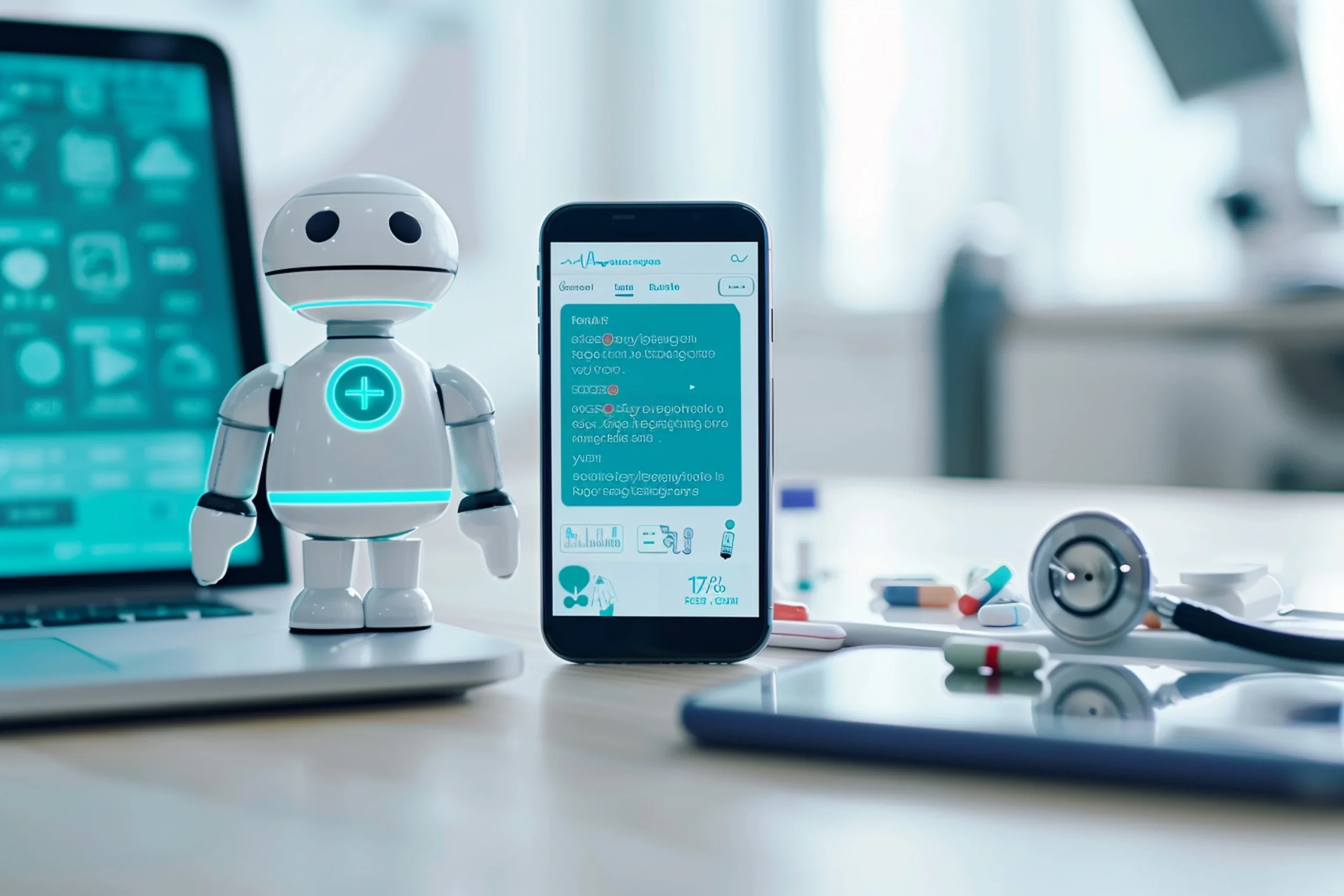
In 2026, AI chatbots will perform more than just FAQs; they will be your 24/7 patient coordinators. From clarifying symptoms to helping book appointments instantly, they bridge the gap between curiosity and conversion.
Benefits of Integrating Healthcare Chatbots
- Instant engagement: Visitors get answers in seconds instead of waiting hours for email replies.
- Reduced staff load: Chatbots handle routine queries like “Which doctor handles skin allergies?” or “What’s your OPD timing?”
- 24/7 availability: Patients often browse after work hours; chatbots keep your clinic accessible round the clock.
- Seamless scheduling: Integration with booking tools allows instant slot confirmation without human intervention.
- Lead nurturing: Even if users don’t book immediately, chatbots can collect contact details for follow-up reminders.
How Chatbots Complement Scheduling Systems
The most successful healthcare websites connect their chatbots directly to live scheduling databases. For example:
- A patient asks, “Can I see Dr Mehta tomorrow at 4 PM?”
- The chatbot checks the doctor’s availability and confirms the booking instantly.
- It sends a confirmation email, a WhatsApp message, and an automated payment link—all within minutes.
This real-time flow doesn’t just improve convenience; it builds confidence that your clinic is organised, efficient, and tech-savvy.
Best Practices for 2026 Chatbot Integration
- Human fallback: Always offer an option to “Talk to a live agent” for complex queries.
- Personalised conversation flow: Use name recognition and contextual responses for a human-like feel.
- Multilingual support: Offer regional language options to cater to the diverse needs of patients.
- HIPAA/GDPR compliance: Ensure chat data is encrypted and private.
- Post-visit automation: Send feedback forms or care instructions via chatbot after the appointment.
When integrated well, healthcare chatbots and schedulers do more than save time—they turn your website into an intelligent conversion engine.
Connecting the Dots: The New Healthcare Experience
A healthcare website in 2026 is not just an online brochure; it is a living, responsive ecosystem that understands, guides, and reassures patients.
When simplified funnels meet personalisation, data-driven insights, and automation, conversion rates naturally improve. But more importantly, your website starts reflecting what modern patients truly value: speed, clarity, empathy, and trust.
Let’s recap the transformation journey:
- Simplify your appointment funnel to reduce friction.
- Use personalisation to connect emotionally with patients.
- Measure every step of your funnel to uncover real insights.
- Deploy chatbots and smart schedulers for instant engagement.
Each of these steps contributes to higher medical website conversion and stronger patient trust—a combination that defines success in 2026’s digital healthcare space.
Common Mistakes That Hurt Conversions
Even well-designed healthcare websites often lose potential patients due to avoidable mistakes. Here is what to watch out for:
- Overloading users with information: Patients want clarity, not complexity. Keep your message short and helpful.
- Ignoring trust signals: Missing doctor credentials, patient reviews, or certifications makes visitors hesitant.
- Slow mobile performance: Google reports that healthcare sites loading beyond 3 seconds lose nearly half their traffic.
- No clear CTA: A “Book Now” button hidden under menus can cost thousands in lost conversions.
- Lack of follow-up automation: If someone abandons the form, an automated reminder can recover that lead.
Fixing these issues doesn’t just improve numbers—it improves patient experience.
Future Trends in Healthcare Website Optimisation (2026 & beyond)
Looking ahead, patient expectations will evolve alongside technology. The winners will be healthcare providers who adapt early and continuously.
Emerging Trends to Watch:
- Predictive UX: Websites will use AI to anticipate user intent and auto-suggest actions (like booking, insurance checks, or prescription refills).
- Voice search optimisation: As voice assistants grow, patients will search by speaking; sites optimised for conversational queries will gain visibility.
- Video-based consultations: Direct booking and onboarding for telehealth via embedded video tools will become standard.
- Emotion-sensitive interfaces: Future healthcare chatbots will detect user sentiment to adjust tone and empathy levels dynamically.
- Integrated care ecosystems: From wearables to EHR systems, websites will sync with health data to provide personalised recommendations.
The next era of digital healthcare will reward providers who treat technology not just as a tool—but as a bridge to genuine human care.
Every click on your healthcare website is a potential life you can help. Optimising that journey, from curiosity to commitment, isn’t just good marketing; it is a moral responsibility in a digital-first healthcare world.
When you simplify appointment funnels, personalise onboarding, measure intelligently, and use chatbots for engagement, your website becomes more than a platform—it becomes a trusted digital clinic.
If you’re ready to elevate your medical website conversion and transform your online patient experience, Matrix Bricks can help.
Book a free UX consultation for your healthcare website.
Frequently Asked Questions
1. How can I increase patient conversions on my healthcare website?
To increase conversions, focus on simplifying navigation and streamlining the booking process.
- Use clear CTAs like “Book Appointment” or “Talk to a Doctor.”
- Display transparent pricing and doctor availability.
- Implement chatbots for real-time support and instant scheduling.
- Optimise for speed, mobile, and user-friendly design.
Patients value ease and trust—make both part of your digital experience.
2. Why do patients abandon appointment forms midway?
Common reasons include lengthy forms, unclear steps, or a lack of clarity regarding fees and timings.
- Simplify your forms—collect only essential details.
- Offer real-time assistance via chatbots.
- Show progress indicators so users know how many steps remain.
Reducing friction directly improves completion rates.
3. How do Healthcare Chatbots improve conversions?
Healthcare chatbots help by providing instant answers and booking support, reducing wait time and anxiety.
- They automate FAQs and appointment scheduling.
- Guide patients to the right specialist or service.
- Work 24/7 to capture leads even outside office hours.
They act as your virtual reception desk—always open, always ready.
4. What metrics should I track for medical website conversion?
Key metrics include:
- Click-to-book ratio
- Funnel drop-off points
- Page speed and mobile load time
- Average session duration
- Chatbot engagement rate
These insights reveal where users hesitate and how to fix it.
5. What are the upcoming trends in patient funnel optimisation for 2026?
Future trends focus on predictive, AI-enhanced, and hyper-personalised experiences.
- Predictive UX and voice search optimisation.
- AI-driven recommendations and emotional tone detection.
- Seamless integration with telehealth and wearables.
The more intuitive and personal your website becomes, the higher your conversions will climb.