

 India
India  UK
UK  UAE-English
Have you ever noticed that whenever you click ‘Buy Now’ on Amazon, it somehow knows what you need next? It suggests you below that or something similar in the ads of the apps you use frequently throughout the day. From suggesting a phone case after you buy a phone to recommending a charger, Amazon works like it can read your mind all the time.
Is it some magic? No, that’s the power of Artificial Intelligence (AI) and the Internet of Things (IoT) working together behind the scenes. Amazon is not just working smartly with fast delivery and competitive pricing to stay on the top. It stays two steps ahead of what you think to fulfil your needs before you even realise about them.
Let’s take a deeper look at how Amazon uses AI + IoT to stay ahead of the curve, what it means for digital transformation, and how you can take steps toward automation too.
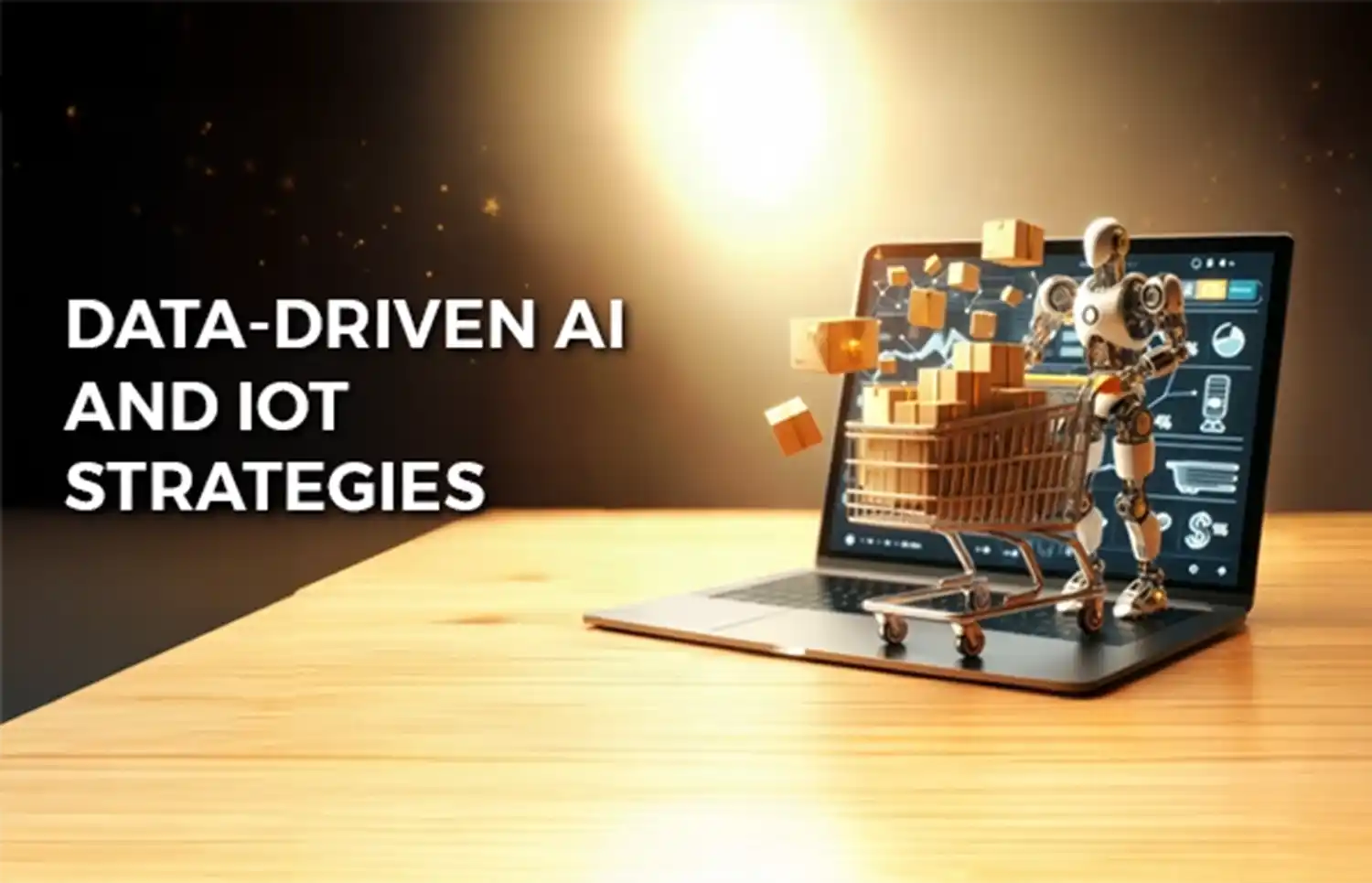
The Power of Prediction: When you click ‘Buy Now’
The second you click on ‘Buy Now’, you enter a smart ecosystem that i IoT and industrial automation s constantly learning and getting updated about your preferences. From the products you view to how long you hover over an item, every click becomes part of a larger picture.
Here’s how AI plays a key role:
- Personalised recommendations: Amazon’s AI studies and analyses your shopping habits and browsing history to offer customised suggestions.
- Dynamic pricing: Prices may vary based on demand, time of day, and competitor pricing, all handled automatically by AI.
- Predictive shipping: Amazon even predicts what products are likely to be ordered next and ships them to nearby fulfilment centres before the order is placed.
This level of prediction ensures not only faster delivery but also a smoother shopping experience for you, which naturally makes you shop next time from the same app.
Let’s Explore How Amazon Uses AI to Stay Ahead
Amazon’s use of AI goes beyond product suggestions. It is deeply integrated into almost every part of the business.
1. Smart Warehouses and Robotics
Amazon’s fulfilment centres are powered by intelligent machines that make warehousing more efficient than ever.
- AI-powered systems optimise warehouse layout and reduce item retrieval time.
- IoT sensors continuously monitor inventory in real time to reduce stockouts and overstocks.
2. Predictive Inventory and Anticipatory Shipping
Imagine your product reaching the nearest regional hub before clicking ‘Buy Now’. Sounds futuristic, right? It is already happening.
- AI forecasts purchasing behaviour based on browsing, wish lists, and purchase history.
- Anticipatory shipping sends items to regional hubs even before the order is placed.
- Inventory is positioned closer to the customer to enable same-day or next-day delivery.
3. Personalised shopping experience
Amazon doesn’t just sell – it customises for you
- AI algorithms analyse billions of data points to suggest relevant products.
- The homepage, deals, and even search results are dynamically personalised for each user.
- Voice assistants like Alexa gather preferences to enhance the shopping journey across devices.
4. Smart Supply Chain & Last-Mile Delivery
The last mile is getting the product to your doorstep, which is often the most complex and expensive part of delivery. Amazon tackles this with automation and real-time data.
- AI routes delivery drivers and drones in the most efficient way.
- Amazon Scout (autonomous delivery robot) is being tested for zero-contact deliveries.
- IoT devices provide live tracking, temperature control (for perishables), and status updates in transit.
How These Core Strategies Work Together
All these innovations don’t exist in silos — they’re connected by Amazon’s massive cloud infrastructure (AWS) and unified by data. When AI detects a hype in demand, IoT – Connected systems respond in real time to adjust inventory, shipping, and even product recommendations.
This tight synergy is what allows Amazon to operate with unmatched speed, accuracy, and personalisation all together.

Digital Transformation of Amazon
Digital transformation is not about just uploading things to the cloud; it is a deep structural evolution or change in how a company operates, delivers and innovates ideas. For Amazon this transformation means:
- Data-first culture: Every product, click, and sensor reading becomes an input to the system.
- Modular Platform: Amazon can deploy new AI features across all the segments.
- Infrastructure scalability: AWS and serverless architectures let Amazon scale IoT and AI workloads efficiently.
- Continuous iteration: Models are not static; they evolve based on real-world usage and feedback.
- Edge + cloud co‑design: Some compute is pushed to the edge (e.g., IoT gateways), reducing latency.
- Cross-domain intelligence: Insights from supply chain feed product recommendation models; logistics data strengthens risk models, etc.
Amazon’s transformation is deeply integrated — AI supports every function, IoT connects the physical world, and the result is agility, efficiency, and resilience.
Amazon and its core strategies with the help of Artificial Intelligence and IoT
| Strategy Pillar | How AI + IoT enable it | Takeaway |
| Customer Personalisation | Recommendation engines, search ranking, conversational AI | Start simple: personalize a landing page or email using user behaviour |
| Operational excellence/cost control | Forecasting robotics and smart logistics | Automate repetitive tasks and monitor operations in real time |
| Innovation and platform leverage | AWS, CodeWhisperer, IoT services | Build reusable tech blocks that you can extend to new domains |
| Data Flywheel and feedback loops | Continuous model training, integrated data pipelines | Set up closed loops: deploy → monitor → retrain → deploy |
Primarily, Amazon’s core strategies are empowered and boosted with the use of Amazon AI technology and Amazon IoT strategy.
Implementing AI and IoT strategy is not as difficult as you think
While Amazon operates at a wide scale, the principle behind this success is its accessibility. You don’t need a huge budget; all you need is direction and discipline.
You can follow a simple road map:
- Start with your data
Clean and standardise your data (customer, operations, logs). - Pick a use case with ROI
For example: product recommendations, fraud detection, or sensor-based alerting. - Integrate sensors/IoT devices
Use off-the-shelf sensors and link them to your cloud or edge backend. - Build an MVP AI/ML model
Use open‑source libraries or managed services (e.g., AWS SageMaker, Azure ML). - Deploy & monitor in real time
Log and track predictions, errors, and latency. Collect feedback. - Iterate & scale
Retrain models, add more features, and automate more tasks gradually. - Bridge AI with operations
Feed AI predictions to your logistics, supply chain, or decision systems. - Create feedback loops
Let outcomes (sales, returns, errors) feed back into your system to improve future predictions.
You might start with a simple email recommendation engine or anomaly detection in your operations and later move into more complex AI + IoT integrations. The key is incremental progress.
Frequently Asked Questions
1. How does Amazon use Artificial Intelligence in e-commerce?
Amazon’s artificial intelligence powers personalised recommendations, smart search results, and dynamic pricing to enhance the AI in e-commerce experience.
2. What is Amazon’s approach to IoT in logistics?
The Amazon IoT strategy uses smart sensors and connected systems to track packages, monitor warehouse operations, and streamline delivery in real time.
3. How does AI improve Amazon warehouse automation?
Amazon warehouse automation combines AI algorithms with robotics to optimise picking, packing, and inventory control, increasing efficiency.
4. Can small businesses apply similar AI and IoT strategies?
Yes, simplified versions of AI in e-commerce and IoT-based automation can be adopted using cloud tools and affordable sensor devices.
5. How does Amazon use AI for delivery optimisation?
Amazon artificial intelligence plans delivery routes using traffic, weather, and location data, ensuring accurate and faster deliveries.
Amazon’s use of artificial intelligence and IoT strategy shows how technology can drive smart decisions, fast operations and better consumer experiences. But you don’t need to be a tech giant to get started. With the right tools and mindset, any business can take small steps toward automation and stay ahead in a digital world.