

 India
India  UK
UK  UAE-English
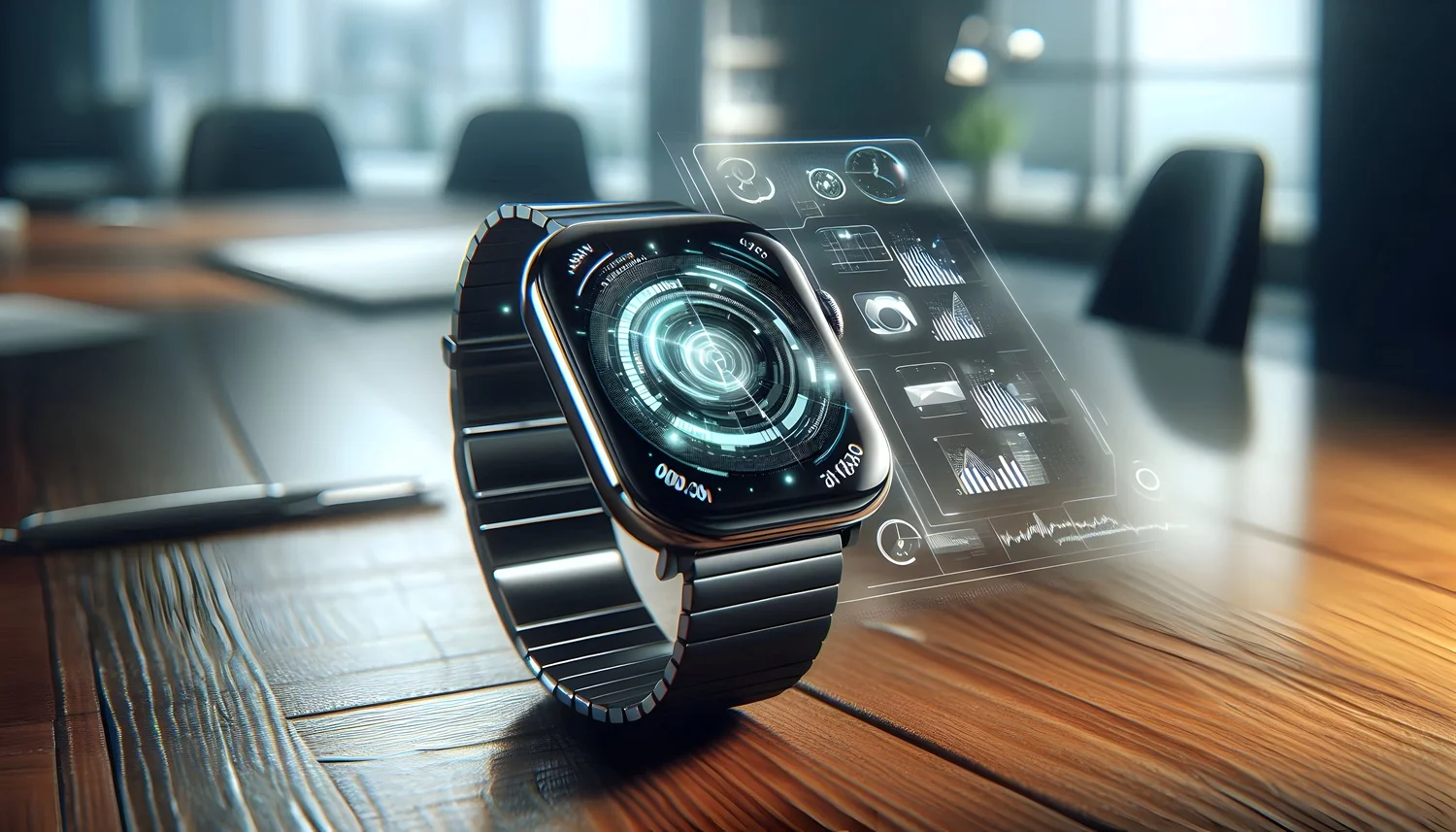
Have you ever paused for a moment and noticed your smartwatch gently nudging you, maybe through a soft vibration or a subtle on-screen alert telling you that you are stressed? Though your heart rate has spiked slightly, your breathing has become shallower, or your body seems a bit more restless than usual. And yet, you don’t realise it yourself. How does your watch know, sometimes even before you do, that something is off? What is the product engineering process behind this?
It is easy to dismiss it as clever programming or chalk it up to coincidence, but the truth is far more fascinating. Behind that sleek screen and minimalist interface lies a sophisticated blend of hardware and software, a chain of tiny sensors, embedded firmware microcontrollers, and finely tuned algorithms, all working silently and continuously in the background. These components — firmware, microcontrollers, and finely tuned algorithms — work silently and constantly in the background. These components collaborate in real time to collect biophysical data from your body, filter out noise, detect meaningful patterns, and convert that raw data into useful—and sometimes even life-changing—health insights.
In other words, it’s not magic. It’s science, product development software engineer, and innovation elegantly packed into a device that lives on your wrist and quietly works to keep you informed, balanced, and more in tune with your well-being. This seamless fusion of technology and human-centred design showcases how a digital transformation company can deliver intelligent product engineering solutions that redefine personal health and wellness experiences.
Why Your Watch “Knows” You’re stressed
Before delving into the technical details, let’s outline the underlying intuition. Stress is a complex physiological state, but a few signals tend to fluctuate when you are under pressure: heart rate variability (HRV), skin conductance, motion or restlessness, respiration patterns, and sometimes changes in sweat or temperature (depending on the device).
A modern smartwatch continuously (or semi‑continuously) samples those inputs. The algorithms don’t wait for a person to say “I feel stressed” — they detect deviations from your baseline. For example:
- If your HRV drops (the time between heartbeats becomes less variable)
- If your heart rate is higher than expected at rest
- If your motion sensor detects agitation or restlessness
- If your skin conductance sensor (if present) senses shifts
That “ahead‑of‑you” insight is a result of predictive modelling: anomaly-detection or classification algorithms, often tuned to each user’s norms. This is where the product engineering process truly shines.
From Sensors to Insights: A step-by-step flow
Here is how the data moves through the system:
1. Sensors- The frontline of data
This is where the world of physical and digital transformation meets.
- Optical sensors (e.g., photoplethysmography, or PPG): These sensors shine light (often green LEDs) into the skin and detect the light reflected, measuring blood volume changes. That’s how many watches get heart rate or HRV.
- Accelerometer & gyroscope: measure motion, orientation, steps, activity, and detect fine tremors or micro‑movements.
- Temperature sensors: skin temperature (or ambient) — helpful as contextual or calibration signals.
- Electrodermal/skin-conductance sensors (if equipped) detect changes in sweat gland activity, which correlate with emotional arousal.
- Barometer/altimeter/GPS: to sense elevation or location, sometimes used to contextualise behaviour (e.g. climbing stairs vs walking on flat).
- Microphone or ambient sensors (rare in watches): used for voice commands, ambient noise context or other features.
These sensors continuously—or periodically—sample data, typically at rates from a few hertz up to tens or hundreds of hertz, depending on the need.
Crucially, raw sensor data is often noisy, redundant, and voluminous. It needs local preprocessing to forward only useful bits.
This seamless integration of hardware and data processing reflects the essence of a modern product engineering process. Through thoughtful and precise product software engineering, each component works together within an integrated system capable of managing complex, real-time data with accuracy and reliability.
2. Microcontrollers and Firmware Filtering
Immediately after sensors, the device has to clean, compress and partially summarise the data.
- Microcontrollers (MCUs): Tiny embedded processors located near the sensors. They execute firmware routines designed through meticulous product software engineering, including filtering, noise removal (e.g., smoothing and baseline correction), and, sometimes, downsampling.
- Signal processing: The MCU may apply digital filters (low-pass, high-pass), windowing, Fourier transforms, or wavelet transforms to extract features such as peaks, beat intervals, variance, etc. This kind of precise, low-level optimisation often reflects the expertise of a digital transformation company skilled in handling embedded intelligence and edge computing.
- Feature extraction: Rather than transmitting all raw data, the watch often computes derived features, such as average heart rate, HRV indices, step count, and motion variance.
- Buffering/batching: The data is stored in small buffers for periodic upload or further processing, rather than being streamed continuously.
This stage is critical because it reduces volume (bandwidth is expensive and energy is precious) and removes obviously irrelevant noise, ensuring that subsequent algorithms can operate efficiently and accurately; a seamless intersection of science, design, and product software engineering excellence.
3. Algorithms and Inference (on-device or cloud)
Once features are ready, the inference engine comes into play.
- On-device AI/Machine Learning: Some watches run lightweight models onboard. This has the benefit of lower latency and improved privacy (data never leaves your device). Indeed, some research aims to build human-activity recognition entirely on a wrist device through excellent product software engineering.
- Cloud-based/server-side models: In more advanced systems, feature data (or encrypted aggregates) is uploaded to cloud servers, where more powerful models refine, correlate, and personalise further.
- Hybrid approaches: basic classification runs on the device, and periodic “heavy-duty” retraining or aggregation happens in the cloud.
- The algorithm might detect “stress,” “fatigue,” “sleep stage,” “irregular heart rhythm,” or other health events.
This is where IoT (device-to-cloud connectivity) and AI (model logic) intersect. The calibration, personalisation, and adaptation over time make the system more accurate and responsive.
4. App dashboards, Alerts and Visualisations
Once a conclusion or a probability is reached, the result must be presented to the user in a human-friendly form.
- Smartphone/companion app: Most smartwatches transmit data and results to a paired phone app via Bluetooth, WiFi, or cellular (if standalone).
- Dashboards/charts: you see daily trends, stress curves, heart rate plots, comparisons, and alerts.
- Notifications/triggers: If your stress level exceeds a threshold, the app or watch may prompt you to breathe, relax, or take a break.
- Historical insights: the app may correlate your stress with sleep, exercise, calendar events, or location to uncover patterns.
This front-end is your window into what’s happening under the hood.
Benefits
- Personalised insight: you get early warnings, long-term trends, and actionable suggestions rather than raw numbers.
- Energy & bandwidth constraints: you don’t want your watch battery drained, or your mobile data flooded, so local filtering matters.
Trade‑offs
- Latency: on‑device inference is fast; cloud inference may introduce delay.
- Privacy trade-off: offloading to the cloud provides more compute resources but exposes data in transit and during storage.
How AI, IoT and Product Engineering Solutions Unite to Deliver Value
Smartwatches are not just sensors strapped to your wrist. They are ecosystems. Here’s how the three domains come together.
- Product engineering ensures the hardware is slim, low-power, efficient, accurate, and durable—the foundation of a refined product engineering process that balances form, function, and longevity.
- IoT infrastructure ensures that the watch, phone, and cloud stay securely connected (Bluetooth, WiFi, LTE/5G), handling connectivity, syncing, over-the-air updates, and remote configuration.
- AI/machine learning powers the inferences, predictions, adaptation and personalisation that turn data into value
When these components operate in harmony, driven by a visionary digital transformation company applying cutting-edge product engineering solutions, the experience becomes truly seamless. Your smartwatch quietly collects data, interprets it with precision, and subtly guides you toward more mindful, healthier choices, all while concealing the sophisticated technology working effortlessly beneath its elegant design.
Types of Data collected by Smartwatches and What they Mean
| Type of Data | What It Measures | How It’s Processed | Insights Generated |
| Heart Rate (HR) | Beats per minute via PPG sensors | Cleaned and smoothed, often averaged over time; peak/trough detection | Stress estimation, activity intensity, resting HR trends |
| Heart Rate Variability (HRV) | Variation in time between heartbeats | Requires accurate beat-to-beat interval extraction; sensitive to noise | Stress levels, fatigue, recovery readiness |
| Motion / Activity | Movement, orientation, and step count from accelerometer and gyroscope | Filtered to distinguish walking, running, sleeping, and stillness | Daily activity tracking, sleep stages, tremor detection |
| Sleep Patterns | Inferred from motion, HR, and sometimes blood oxygen | Analysed in multi-hour windows, algorithms map stages like REM or deep sleep | Sleep quality, duration, and disturbances |
| Skin Temperature | Surface body temperature | Normalised against baseline; sudden deviations flagged | Menstrual tracking, fever detection, stress |
| Blood Oxygen (SpO₂) | Oxygen saturation in blood via red/infrared light | Periodic sampling; flagged if below normal thresholds | Altitude adjustment, sleep apnoea risk |
| Location / GPS | Physical location and movement patterns | Logged periodically or continuously, often anonymised | Route tracking, exercise mapping, and geofencing |
| Microphone (if enabled) | Ambient noise or voice commands | Filtered for keywords or volume thresholds; may trigger voice assistants | Context awareness (e.g. noisy environments), voice notes |
How Smartwatches Protect Your Data
Collecting and processing personal health data demands strong safeguards. Here are the major protective strategies typically used:
Encryption in Transit & at Rest
- Transport encryption: When data travels between the watch and the phone or server, it should be encrypted (e.g., via TLS or BLE secure channels).
- At-rest encryption: data stored on the device or in the cloud should be encrypted so that a physical breach doesn’t expose raw data.
- Re-encryption/homomorphic encryption: Some advanced systems, developed through thoughtful product software engineering, perform computations on encrypted data (using homomorphic encryption) to preserve privacy even on the server side.
Access Control and Permission Models
- Granular permissions: The user should be able to control which sensors or apps can access specific data (e.g., stress detection, heart rate, location).
- Role-based and attribute-based access: In multi-user or shared-device settings, certain users get limited access.
- User consent and revocation: Individuals must be able to withdraw permissions, delete stored data, or export their information whenever they choose; a principle central to user-centric product engineering solutions.
Local Processing & Minimal Exposure
- Keeping as much inference on-device as possible reduces the risk of exposure.
- Only aggregated or anonymised summaries (not raw data) may be uploaded.
- Some systems never upload sensitive data unless explicitly permitted to do so.
Firmware Security & Updates
- Watch firmware must be vetted, signed, and updated securely (OTA updates).
- Regular patches fix vulnerabilities or encryption flaws.
- Hardware root-of-trust or secure enclaves may isolate critical operations.
A Few Additional Notes & Cautions
- Not all smartwatches are created equal: some lack advanced sensors (e.g., no skin-conductance sensors) and rely on simpler proxies.
- Accuracy is not guaranteed. Devices are not medical devices (unless certified) — they provide insights into wellness and fitness.
- Metadata leakage is a risk: even packet sizes or timing in encrypted channels can allow traffic analysis to infer user behaviour.
- Third‑party apps may mishandle data or share it with advertisers. Always review app privacy policies.
In essence, robust data protection in wearable devices is achieved when the end-to-end product engineering process embeds privacy, encryption, and responsible data management from the very beginning — allowing innovation and user trust to grow together.
Frequently Asked Questions
1. Does my smartwatch ever send raw data (e.g. full waveform) to the cloud?
Not usually, most systems preprocess and summarise on-device, sending only extracted features (e.g. average heart rate, HRV metrics) or encrypted aggregates. But some vendors may offer optional raw export if you permit it. This is part of a careful product engineering process and advanced product engineering solutions.
2. Can someone hack my watch and steal my health data?
While possible, good devices use encryption, secure firmware, and access control. But poor implementations, weak Bluetooth protocols, or unpatched vulnerabilities may expose data. A sophisticated attacker might use side-channel attacks or traffic analysis. Strong product software engineering and support from a digital transformation company help reduce these risks.
3. How accurate is stress detection?
It depends heavily on the device’s sensors, algorithm quality, calibration, and individual variation. These systems can flag likely stress or deviations, but they’re not diagnostic. They work best when treated as guidance rather than absolute truth.
4. Can I turn off data sharing or opt out of cold storage?
In many modern smartwatches/companion apps, yes. You can turn off cloud sync, limit app permissions, or restrict which metrics are shared. But disabling too much may break features (e.g. long-term trend tracking). Local processing is often part of a strong product engineering process.
5. How can I choose a privacy-friendly smartwatch?
Look for:
- Transparent, strong privacy policies
- On-device processing (less cloud reliance)
- Good firmware update track record
- Fine-grained permission controls
- Certifications / independent audits