





 India
India  UK
UK  UAE
UAE 
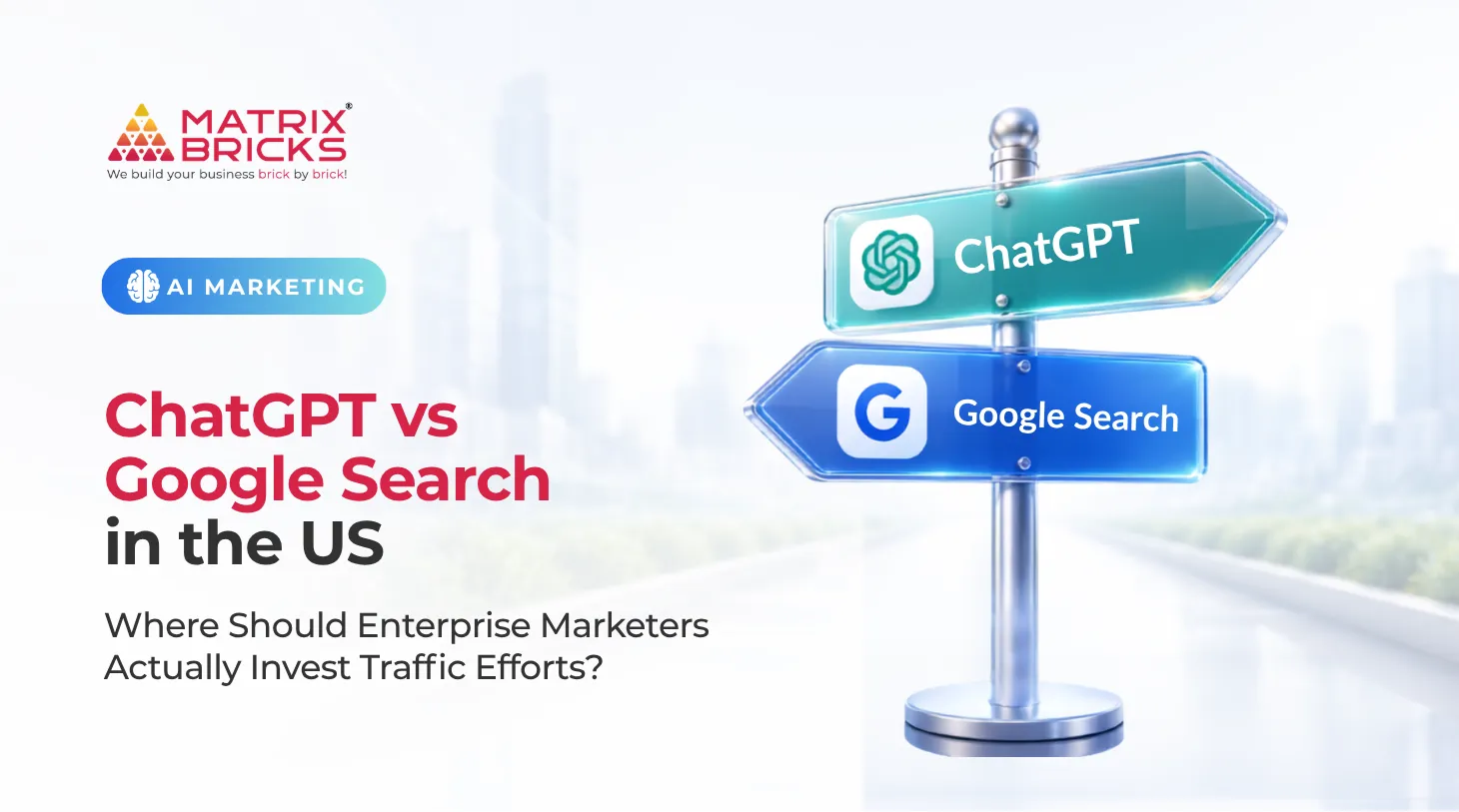
Your marketing team has a limited budget. Organic traffic is getting harder to win. AI search is changing how people discover brands. So where should enterprise marketers focus their efforts?
Should you double down on Google SEO, or is it time to invest in ChatGPT visibility?
The answer is not as simple as choosing one over the other. While Google still dominates online discovery, AI-driven search experiences are changing how people research products, compare services, and make buying decisions. Businesses that continue following yesterday’s search strategy risk missing tomorrow’s customers.
If your team is asking where to prioritize marketing resources, this guide will help you understand:
- How ChatGPT vs Google USA is changing enterprise search behavior.
- Why a modern enterprise SEO strategy should include both traditional and AI-driven search.
- How to make smarter AI search budget allocation decisions without sacrificing existing SEO performance.
- What enterprise marketers should do today to stay competitive as AI search continues to grow.
The reality is simple. This is no longer Google versus ChatGPT. It is about building a search strategy that reaches customers wherever they choose to search.
Search Is No Longer a Single Destination
Ten years ago, the customer journey was predictable.
Someone searched on Google, clicked several websites, compared options, and eventually contacted a business.
Today, that journey looks very different. Many buyers now start with AI assistants like ChatGPT for research before they ever visit Google. They ask detailed questions, compare vendors, summarize reviews, and request recommendations in one conversation.
Google has also evolved. AI-generated summaries now appear above many search results, reducing clicks while answering questions directly.
This means enterprise marketers are competing for visibility across multiple discovery channels instead of one.
| Traditional Search | AI Search Experience |
|---|---|
| Multiple keyword searches | Natural conversations |
| Website rankings matter most | Authority and trusted content matter most |
| User visits several pages | AI summarizes information instantly |
| SEO drives clicks | AI influences buying decisions before clicks |
Instead of replacing Google, AI is reshaping how users consume information.
Google Still Owns Search, But User Behavior Is Changing
Google continues to process billions of searches every day across the United States. Businesses still depend on Google for high-intent traffic, local searches, ecommerce purchases, and branded discovery.
However, marketers are noticing new patterns.
Customers increasingly ask AI tools questions like:
- Which CRM is best for manufacturing companies?
- What cybersecurity provider works best for healthcare?
- Compare the top enterprise cloud platforms.
Instead of opening ten browser tabs, they receive organized answers within seconds.
This changes one important marketing metric.
Traffic is no longer the only goal. Visibility during the research stage has become equally valuable.
That means brands need content that both search engines and AI systems can confidently understand and reference.
Why Enterprise SEO Still Matters
Some marketers mistakenly believe AI will eliminate SEO.
That is far from reality. A strong enterprise SEO strategy remains the foundation of digital visibility because AI systems often rely on authoritative websites to build trustworthy responses.
Strong enterprise SEO delivers:
- Higher Organic Visibility
Google remains one of the largest sources of qualified traffic for enterprise businesses. Ranking well still generates leads at scale. - Greater Brand Authority
Well-structured websites with expert content earn trust from both users and AI systems. - Better Customer Experience
Technical SEO improves site speed, navigation, accessibility, and usability, which directly impacts conversions. - Long-Term Marketing Efficiency
Unlike paid advertising, SEO continues generating returns long after content is published.
For large organizations, SEO is no longer just about rankings. It supports brand credibility across the entire digital ecosystem.
Why AI Search Deserves Marketing Investment
AI search introduces a completely different opportunity. Instead of chasing rankings for thousands of keywords, businesses now compete to become trusted sources that AI assistants reference.
Several trends are driving this shift:
- Buyers ask longer, more specific questions.
- Decision-makers want summarized research.
- AI recommendations influence vendor shortlists.
- Complex B2B purchases increasingly begin inside conversational AI.
For example:
A procurement manager comparing enterprise cybersecurity vendors may ask ChatGPT for the best providers based on compliance, scalability, and support.
If your content demonstrates expertise across those areas, your brand has a higher chance of being reflected in AI-generated responses.
This makes AI visibility an extension of SEO rather than its replacement.
Enterprise Marketing Needs Both Google and AI
Many marketing teams continue to treat Google Search and ChatGPT as competing platforms, but enterprise marketers should focus on how they complement each other.
That is the wrong question. The better question is:
How do we build content that succeeds across both?
Consider how leading enterprise brands approach digital visibility.
- Microsoft
Microsoft continues investing heavily in technical SEO while expanding AI-powered experiences across Bing and Copilot. - HubSpot
HubSpot publishes authoritative educational content that performs well in Google and is frequently referenced during AI-generated business discussions. - Salesforce
Salesforce builds comprehensive resource libraries supported by original research, documentation, customer stories, and expert insights that strengthen visibility across multiple search experiences.
The common pattern is clear.
These brands create trusted information rather than optimizing for a single platform.
How Should Enterprise Teams Split Their Investment?
There is no universal percentage because every business has different goals.
However, marketers can prioritize investments based on maturity.
| Business Priority | Recommended Focus |
|---|---|
| Organic lead generation | Technical SEO and content optimization |
| Brand awareness | Thought leadership and digital PR |
| AI visibility | Structured expert content and topical authority |
| Customer trust | Case studies, reviews, and original insights |
| Future readiness | AI-friendly content architecture |
Rather than moving budget away from SEO, organizations should gradually expand their AI search budget allocation while protecting existing organic performance.
Think evolution, not replacement.
Get Your Free Consultation!
Connect with our team to improve visibility, unlock growth opportunities, and build strategies tailored to your business goals.
Practical Steps Enterprise Marketers Should Take Today
The transition to AI search does not require rebuilding your entire marketing strategy. It requires improving how your expertise is presented.
Here are the areas that deserve attention.
- Publish Content That Solves Real Problems
Focus less on keyword stuffing and more on answering business questions completely. Buyers want expertise, not promotional copy. - Strengthen Topical Authority
Build content clusters around core services instead of isolated blog posts. A connected content ecosystem helps both Google and AI understand your expertise. - Add Original Insights
Unique research, customer experiences, industry observations, and practical examples create content AI cannot easily replace. - Improve Technical Foundations
Schema markup, internal linking, fast page speed, and clear information architecture remain essential for discoverability. - Build Trust Signals
Enterprise buyers trust companies that demonstrate experience through client success stories, expert authorship, certifications, and transparent business information.
Common Mistakes Enterprise Marketers Should Avoid
Many businesses react emotionally to new technology. Instead, they should respond strategically.
Here are some mistakes to avoid:
- Ignoring AI completely
Waiting too long could make competitors more visible during the research phase. - Abandoning SEO too early
Google still delivers enormous amounts of commercial traffic across nearly every industry. - Publishing AI-generated content without expertise
Generic content rarely earns trust from users or search platforms. - Chasing every new trend
Build sustainable authority instead of reacting to every algorithm update. - Measuring only website traffic
Brand visibility, mentions, engagement, and authority now matter just as much.
Trust Will Decide Which Businesses Win the Future
Search is becoming more conversational.
Customers expect instant answers.
Decision-making is becoming faster.
Yet one thing has not changed. People still trust businesses that consistently demonstrate expertise.
Whether someone discovers your company through Google, ChatGPT, AI summaries, or another emerging platform, they are looking for accurate information, genuine experience, and confidence before making a purchase.
The organizations that invest in credibility today will be the ones customers continue discovering tomorrow.
Rather than debating whether Google or ChatGPT will come out on top, enterprise marketers should concentrate on building their brand as the most trusted source of industry knowledge. That strategy works regardless of where search evolves next.
Future-Proof Your Enterprise Search Strategy Today
AI search is changing buyer behavior faster than most organizations realize. Every month you delay gives competitors another opportunity to strengthen their digital visibility. If your business wants to improve organic performance while preparing for the next generation of AI-powered discovery, now is the time to act. Connect with Matrix Bricks today and build a search strategy that delivers measurable growth across both traditional and AI-driven search experiences.
Frequently Asked Questions
Not entirely. AI tools are becoming an important part of business research, but Google remains essential for discovering websites, comparing vendors, and completing transactions. A successful AI search optimization approach combines traditional SEO with content designed for conversational search.
- AI is strongest during early-stage research and comparison.
- Google continues to dominate high-intent searches and website discovery.
- Businesses should optimize for both rather than choosing one platform.
An effective enterprise SEO strategy focuses on authority, technical excellence, and helpful content instead of simply targeting keywords. This creates a strong foundation for visibility across both search engines and AI platforms.
- Build topic clusters around your core expertise.
- Publish original research and practical insights.
- Improve technical SEO, structured data, and internal linking.
The best approach is to expand existing search investments rather than replacing them. Companies should gradually allocate resources toward AI-ready content while maintaining strong SEO performance.
- Continue investing in technical SEO.
- Create expert-led content designed for conversational search.
- Measure visibility beyond traditional traffic metrics.
Google continues to deliver significant organic search traffic for enterprise businesses. Most purchase journeys still include traditional search before buyers make a final decision.
- Google remains critical for branded searches.
- Local and transactional queries still perform best in search engines.
- SEO supports long-term digital growth regardless of AI adoption.
Brands improve their AI content strategy by publishing trustworthy, structured, and experience-based content that answers real customer questions comprehensively.
- Demonstrate subject matter expertise consistently.
- Use clear headings and logical content organization.
- Include customer stories, research, and practical examples.
Modern marketing success extends beyond clicks. Tracking search visibility metrics helps businesses understand how customers discover their brand across evolving search experiences.
- Monitor branded search growth and authority signals.
- Measure engagement, conversions, and assisted customer journeys.
- Track content performance across both traditional and AI search ecosystems.