





 India
India  UK
UK  UAE
UAE 
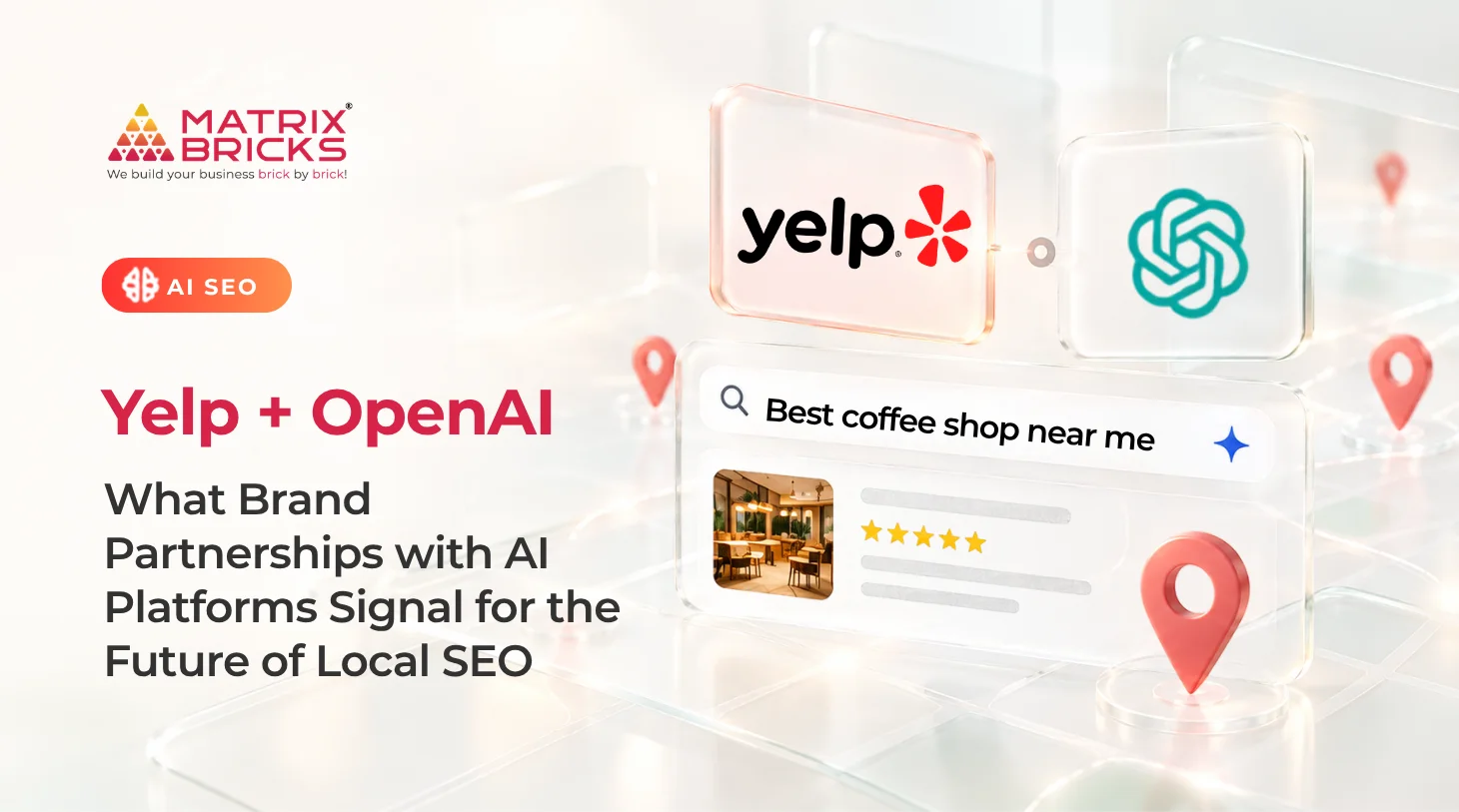
What happens when customers stop searching for a local business and start asking AI to find one for them?
That question is becoming harder for brands to ignore. A customer looking for a dentist in Chicago, a restaurant in Austin, or a plumber in Miami may no longer want to compare pages of search results. They may simply ask an AI assistant for the best options based on their needs. The Yelp OpenAI partnership is an important signal of this shift, bringing Yelp’s local business data, reviews, ratings, and photos into ChatGPT’s conversational search experience.
For local businesses, this changes the conversation around google ai search, reputation, reviews, and brand visibility in ai search. The opportunity is no longer limited to ranking on a traditional local search engine. Businesses increasingly need to be accurate, relevant, and trustworthy wherever customers discover them.
- Customers are moving from keyword searches toward detailed, conversational questions.
- Reviews and business information can influence how AI understands a local brand.
- Google remains important, but AI platforms are becoming another discovery layer.
- Local SEO is evolving from simply ranking to being considered for recommendation.
The Yelp and OpenAI Partnership Is Bigger Than a New Search Feature
Yelp has built a strong local business ecosystem through reviews, ratings, photos, and business data, while OpenAI brings conversational AI that understands detailed user intent. The Yelp OpenAI partnership connects these strengths, giving ChatGPT access to Yelp’s local information for relevant recommendations, with features such as restaurant reservations and waitlists taking users from discovery to action.
This changes local search from query → results → comparison → decision to a more direct question → recommendation → action journey. For businesses, the focus is shifting from simply ranking for terms like “Italian restaurant Boston” to being clearly understood as a relevant option for specific customer needs.
- Relevance: Clearly communicate services, specialties, and locations.
- Reputation: Maintain accurate listings and genuine customer reviews.
- Context: Build a digital presence that helps AI understand why your business fits a particular need.
Local SEO Is Becoming More About Relevance Than Rankings
For years, local SEO has focused on rankings, Google Maps, google ratings, reviews, citations, and location-based keywords. Those factors still matter, but AI adds a new question: Does it understand why your business is relevant to a specific customer?
A hotel might be known for family stays, a restaurant for group dining, or an HVAC company for emergency repairs. These real customer associations give AI context beyond basic keywords.
That makes local SEO increasingly about:
- Visibility: Being present across relevant search platforms.
- Relevance: Clearly showing what your business is known for.
- Credibility: Maintaining accurate information and genuine reviews.
Reviews Are Becoming Part of the Brand’s Digital Identity
Reviews have always influenced consumers. Someone choosing between two restaurants with similar menus may naturally gravitate toward the one with stronger reviews. The same applies to dentists, contractors, hotels, salons, auto repair shops, and countless other local businesses.
AI makes reviews interesting for another reason: they contain natural descriptions of customer experiences.
A five-star review that says “great service” provides some value. A detailed review explaining that a restaurant is quiet on weekday evenings, accommodates dietary restrictions, and works well for client dinners contains considerably more context.
This does not mean businesses should try to manufacture reviews around phrases they want AI to recognize. That approach can quickly become artificial and undermine trust.
The better strategy is to build a genuine customer experience and make it easy for customers to share specific feedback.
For example, a business can pay attention to recurring themes in its reviews:
- What do customers consistently praise?
- Which services or products receive the strongest feedback?
- What questions or complaints appear repeatedly?
- Are customers describing the business differently from how the brand describes itself?
Those insights can improve more than review management. They can influence website content, service pages, FAQs, customer experience, and positioning.
In other words, customer feedback can become a source of marketing intelligence, not just a star rating.
Get Your Free Consultation!
Connect with our team to improve visibility, unlock growth opportunities, and build strategies tailored to your business goals.
Google Is Not Going Away. The Search Landscape Is Expanding
It would be a mistake to look at the rise of ChatGPT and assume that Google no longer matters.
Google continues to play a major role in local discovery, and its own AI capabilities are changing how users interact with search. Google ai search is part of the same broader movement toward conversational and AI-assisted discovery.
The important point is that businesses are entering a multi-platform search environment.
A potential customer might discover a local business through Google Maps, search results, Yelp, ChatGPT, social media, Apple Maps, a review website, or another AI-powered interface.
That creates a practical challenge: information needs to remain accurate and consistent across the places where customers and AI systems may encounter it.
| Traditional Local SEO | Emerging AI Search |
|---|---|
| Focuses heavily on rankings | Focuses more on relevance and recommendations |
| Keyword-led searches | Conversational, context-rich questions |
| Business listings | Business information across multiple sources |
| Star ratings | Ratings plus review context |
| Website clicks | Direct answers and actions |
| Search visibility | Visibility across search and AI ecosystems |
This does not mean businesses need to chase every new platform. It means they need a stronger digital foundation that can support visibility across different discovery environments.
What Businesses Should Do Differently
The smartest response to AI-powered local search is not to abandon existing SEO strategies. It is to strengthen the information and reputation those strategies are built on.
Start with the basics. Business names, addresses, phone numbers, hours, services, categories, locations, and other core information should be accurate across important platforms. Outdated information can create confusion for customers and search systems alike.
Then look at the website itself. Service pages should explain what the business actually does, who it serves, where it operates, and what customers can expect. Content should address the questions customers genuinely ask rather than forcing keywords into every page.
A local healthcare practice, for instance, can explain its services, appointment process, locations, treatment considerations, and common patient questions. A restaurant can provide clear information about menus, dietary options, reservations, group dining, and location. A contractor can explain service areas, project types, timelines, and factors that affect pricing.
This type of content gives search engines and AI platforms more useful information to work with while making the website genuinely helpful to customers.
The same principle applies to third-party profiles. Yelp, Google, industry directories, social platforms, and other relevant sources should reinforce the same basic story about the business.
The goal is consistency without making every platform look identical.
The Bigger Lesson for Brand Visibility
There is a larger trend behind the Yelp and OpenAI relationship.
AI platforms need reliable information to produce useful answers. That makes established sources with specialized data increasingly valuable. Yelp has deep expertise in local business information and consumer reviews. Other industries have their own trusted databases, directories, publishers, marketplaces, and specialist platforms.
As AI search develops, partnerships with these sources could become increasingly important.
For brands, this means online presence is becoming less about controlling one website and more about building a consistent digital footprint across the wider information ecosystem.
A customer may never visit a business website before deciding to call it. They might first encounter a recommendation generated from information found across reviews, listings, websites, and other sources.
That is where brand awareness and visibility start to overlap with search strategy.
The question is no longer simply whether people can find your brand. It is whether the information they encounter gives them enough confidence to choose it.
What the Future of Local Search Could Look Like
The next stage of local search will likely feel less like searching a directory and more like asking a knowledgeable assistant.
Someone could say, “Find me three highly rated electricians near Denver who handle older homes, have weekend availability, and are known for clear pricing.”
The platform then does much of the research and comparison.
For businesses, this shift changes the way they need to approach online visibility. The businesses most likely to benefit will be those with strong reputations, accurate information, clear services, useful content, and a consistent presence across trusted sources.
That is the real lesson behind the Yelp OpenAI partnership. Local SEO is not being replaced by AI. It is being stretched into a larger ecosystem where search engines, review platforms, AI assistants, maps, and business websites all contribute to discovery.
Businesses that continue optimizing only for rankings may miss that shift.
Businesses that build a strong, trustworthy digital presence give customers, search engines, and AI platforms more reasons to understand and recommend them.
The transition is already underway. Waiting until AI search becomes a major source of local leads could mean trying to catch up after competitors have already established their visibility.
If your local SEO strategy is still built only around rankings and keywords, now is the time to broaden it. Audit your listings, reputation, reviews, content, and AI search presence before your competitors become the businesses customers see first. Connect with Matrix Bricks today to build a stronger local search strategy for the next generation of discovery.
Frequently Asked Questions
The partnership allows OpenAI to use licensed Yelp business information, including reviews, ratings, and photos, within ChatGPT to support local discovery. This makes AI-powered local recommendations more closely connected to established local business data.
- Better local context: Yelp information can help AI understand businesses beyond basic names and addresses.
- More direct discovery: Users can increasingly move from recommendations toward actions such as reservations.
AI is making local search optimization more conversational and context-driven. Customers can describe what they need instead of relying on short keyword phrases.
- More specific intent: Queries can include location, preferences, budget, timing, and other requirements.
- Broader visibility: Businesses may need to consider how they appear across search engines, review platforms, maps, and AI assistants.
Yes. Google Business Profile optimization and strong ratings remain important for businesses that depend on local customers. AI does not eliminate the value of a trustworthy reputation.
- Consumer confidence: Strong ratings can influence whether customers consider a business.
- Local credibility: Consistent positive feedback contributes to a stronger overall online reputation.
Improving AI search visibility starts with making your business easy to understand across reliable online sources.
- Keep information consistent: Review business details, services, hours, locations, and contact information regularly.
- Create useful content: Answer customer questions clearly instead of producing pages designed only around keywords.
No. Search engine optimization for generative AI should complement traditional SEO rather than replace it.
- Google remains important: Local rankings, Maps, reviews, and organic search continue to influence customer discovery.
- AI adds another layer: ChatGPT and other AI platforms are changing how some customers research and compare options.