





 India
India  UK
UK  UAE
UAE 

A few years ago, businesses could rank on Google with aggressive keyword targeting, a decent backlink profile, and hundreds of blog pages optimized around search volume. That strategy does not work the same way anymore.
Today, Google evaluates something much more difficult to fake. Real user satisfaction.
This is why many businesses across the USA are experiencing unstable rankings despite investing heavily in SEO. Their websites may technically target the right keywords, but users are not engaging with the experience. Pages load slowly on mobile devices, navigation feels confusing, content looks overloaded, and visitors leave before taking action.
Google notices that behavior.
Modern search algorithms are now heavily influenced by page experience signals, engagement patterns, mobile usability, and content trustworthiness. In other words, SEO best practices and user experience are no longer separate disciplines. They directly influence each other.
This shift has become even more important after:
- Google’s Helpful Content updates
- Core Web Vitals becoming ranking signals
- AI-generated search summaries changing user behavior
- Mobile-first indexing becoming standard
- E-E-A-T signals influencing content quality evaluation
For businesses trying to compete in crowded USA search markets, this means rankings are no longer won purely through optimization tricks. Websites now need to create fast, trustworthy, and frictionless experiences that genuinely help users.
The websites performing best today usually share the same characteristics:
- Their pages load quickly across mobile and desktop devices
- Content is structured for real readers, not only algorithms
- Navigation feels intuitive and uncluttered
- Information demonstrates genuine expertise and experience
- Technical SEO supports usability instead of disrupting it
That balance between usability and optimization is now one of the biggest competitive advantages in organic search.
Why Google Now Treats UX as an SEO Signal
Google’s goal has always been simple. Deliver the best possible result for every search query.
Years ago, the algorithm relied heavily on backlinks and keyword relevance because those were easier signals to measure. But as search evolved, Google realized that rankings alone could not accurately predict user satisfaction.
A page might technically target the right keyword while still creating a poor experience.
For example, many websites used to rank despite:
- Slow loading times
- Aggressive popup ads
- Thin content
- Misleading titles
- Poor mobile layouts
Users would click those results, become frustrated, and immediately return to Google to search again. That behavior became an important quality indicator.
This is exactly why modern Google ranking factors now include several experience-focused signals:
- Mobile usability
- Page speed
- Visual stability
- Safe browsing
- Readability
- Helpful content systems
Google’s Core Web Vitals update was one of the clearest signs of this shift. It officially connected website performance and user experience directly to rankings.
The rise of AI-generated search summaries has made this even more important. Modern search engines increasingly favor content that is well-organized, credible, and genuinely valuable to users because AI-driven search systems rely on dependable sources to deliver accurate information.
That means websites cannot rely only on SEO mechanics anymore. They must also prove credibility and usability.
Get Your Free Consultation!
Connect with our team to improve visibility, unlock growth opportunities, and build strategies tailored to your business goals.
Strong SEO Foundations Still Matter, But Intent Matters More
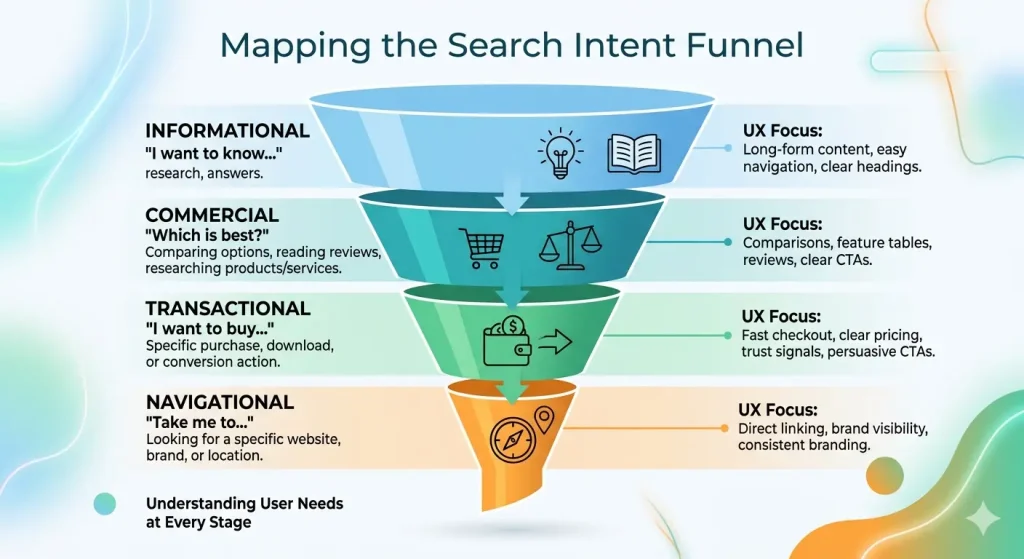
Even though UX has become critical, technical SEO fundamentals still matter significantly. The difference is that modern optimization is now more intent-driven instead of keyword-driven.
The strongest-performing websites today focus less on “ranking for keywords” and more on solving specific user problems.
Search Intent Is Now the Core of SEO
One of the biggest reasons content fails to rank is mismatched intent.
A business may target a high-volume keyword, but if the content does not align with what users actually expect, engagement drops quickly.
For example:
- Someone searching “best payroll software for startups” expects comparisons and recommendations
- Someone searching “payroll software pricing” is much closer to a purchasing decision
Google analyzes these behavioral patterns constantly.
This is why modern on-page SEO techniques now focus heavily on:
- User intent mapping
- Semantic relevance
- Contextual search behavior
- Topical depth
Long-tail keywords have become especially valuable because they align more closely with conversational search behavior. Queries like how to improve website user experience for SEO often convert better because they reflect highly specific intent.
Businesses across the USA are also seeing stronger engagement from content that answers practical questions directly instead of creating overly broad articles.
Content Experience Is Quietly Influencing Rankings
Content quality is no longer measured only by information accuracy. Google now evaluates how users interact with content after they click. A page may contain valuable insights, but if visitors struggle to consume the information, rankings and engagement can still decline.
Many websites lose traffic because the content experience feels overwhelming. Large text blocks, cluttered layouts, slow-loading visuals, and poor mobile formatting often push users away within seconds. That negative engagement directly affects modern Google ranking factors and weakens overall UX and SEO performance.
This is why high-performing websites now structure content around readability and user flow instead of only keyword placement. Strong content experiences usually include:
- Clear heading hierarchy for easier navigation
- Shorter paragraphs and scannable formatting
- Optimized visuals that support website speed and SEO ranking
- Logical transitions that improve engagement
- Mobile-friendly layouts aligned with mobile-first indexing best practices
Businesses following modern SEO best practices are focusing on content that feels easy to consume, trustworthy, and genuinely helpful because better usability often leads to stronger dwell time, lower bounce rates, and improved organic visibility.
For example:
| Strong Content Experience | Weak Content Experience |
|---|---|
| Structured sections | Unorganized formatting |
| Mobile readability | Desktop-only layouts |
| Fast-loading visuals | Heavy media slowing pages |
| Helpful examples | Generic filler content |
This does not mean content should become overly simplified. The goal is clarity without losing depth.
One major trend across high-ranking USA business websites is the shift toward expert-driven educational content. Businesses are increasingly publishing content backed by:
- Real examples
- Industry observations
- Original insights
- First-hand experience
That directly strengthens E-E-A-T SEO signals.
Core Web Vitals Optimization Is More Than a Technical Task
Many businesses still treat Core Web Vitals optimization like a developer-only responsibility. In reality, these metrics directly influence user trust and engagement.
Google evaluates three major areas:
- Loading speed
- Responsiveness
- Visual stability
Even small delays create friction.
Research consistently shows that users become significantly more likely to abandon pages when load times increase beyond a few seconds. In competitive industries like SaaS, healthcare, finance, and eCommerce across the USA, that directly impacts revenue.
Here is why each metric matters:
| Metric | User Impact |
|---|---|
| LCP | Slow loading creates frustration immediately |
| INP | Delayed interactions reduce usability |
| CLS | Layout shifting damages trust |
For example, imagine trying to click a button on a mobile website while the page suddenly shifts because an ad loads late. That experience feels unreliable instantly.
Google increasingly prioritizes websites that minimize these frustrations.
This is also why businesses focusing heavily on website speed and SEO ranking improvements often see stronger engagement metrics alongside ranking improvements.
Mobile Experience Is Now the Primary Experience
Google’s mobile-first indexing completely changed how websites are evaluated.
The mobile version of your website is now considered the primary version, not the secondary one. Yet many businesses still design websites desktop-first and treat mobile optimization as an afterthought.
That creates major problems because most USA search traffic now comes from smartphones.
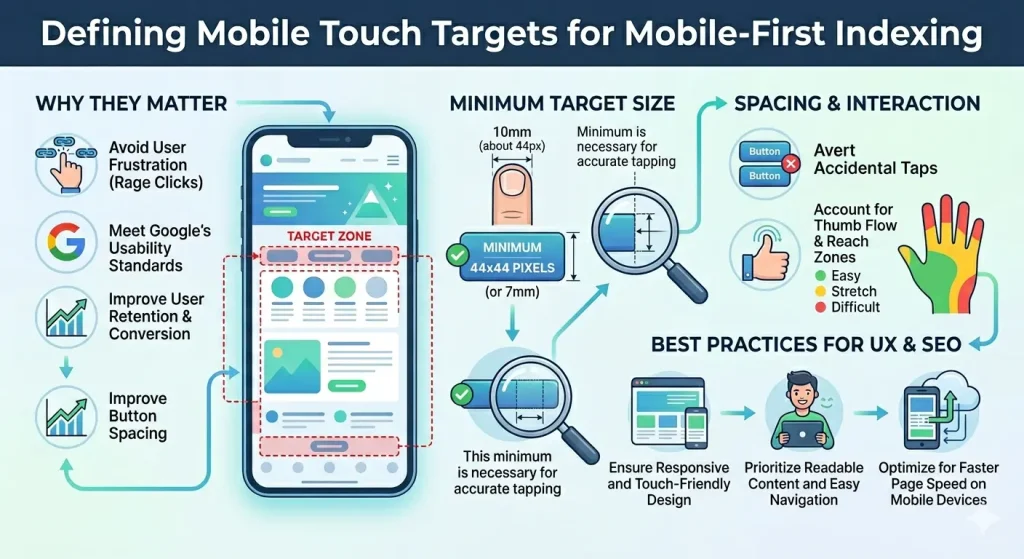
Strong mobile experiences usually include:
- Simplified navigation
- Readable typography
- Faster loading speeds
- Touch-friendly layouts
- Reduced visual clutter
Businesses following strong mobile-first indexing best practices are also seeing better engagement and conversion rates because mobile usability directly affects how long visitors stay on-site.
A website may look visually impressive on desktop, but if users struggle on mobile devices, rankings and conversions can both decline.
E-E-A-T Is Becoming a Competitive Advantage
One of the biggest shifts happening in SEO right now is Google’s increased focus on trust and expertise.
AI-generated content has flooded the internet, making generic information easier than ever to produce. Because of this, Google is prioritizing signals that demonstrate real credibility. This is where E-E-A-T SEO becomes extremely important.
Google increasingly rewards content that demonstrates:
- First-hand experience
- Subject matter expertise
- Brand authority
- Trustworthiness
Businesses that publish vague, repetitive, or overly generic content are finding it harder to compete.
Strong E-E-A-T content usually:
- Explains real-world applications
- Uses expert insights
- Provides practical recommendations
- References current industry trends
- Focuses on audience-specific challenges
For example, a strong article about SEO and UX should not only define Core Web Vitals. It should explain how those metrics impact actual user behavior, lead generation, and business growth.
That depth creates stronger trust signals for both users and search engines.
Get Your Free Consultation!
Connect with our team to improve visibility, unlock growth opportunities, and build strategies tailored to your business goals.
The Biggest SEO and UX Mistakes Businesses Still Make
Despite all these changes, many websites still repeat the same avoidable mistakes.
Some of the most common include:
| Mistake | Business Impact |
|---|---|
| Keyword stuffing | Reduces readability and trust |
| Thin AI-generated content | Weakens authority |
| Slow mobile experiences | Increases bounce rates |
| Poor navigation | Hurts engagement |
| Intrusive popups | Creates frustration |
| Weak internal linking | Reduces crawl efficiency |
One of the biggest mistakes businesses make today is optimizing for algorithms while forgetting human behavior.
Google’s systems continue evolving toward user satisfaction signals. Businesses that genuinely improve customer experience are usually the ones building long-term organic visibility.
Conclusion: SEO Success Now Depends on User Experience
The future of SEO is no longer driven by shortcut tactics or algorithm manipulation. It is about building websites people genuinely trust and enjoy using.
Businesses that combine strong technical SEO with better usability are consistently seeing:
- Higher engagement
- Better conversion rates
- More stable rankings
- Stronger brand trust
- Improved long-term visibility
As AI-powered search experiences continue growing, websites that demonstrate expertise, usability, and trustworthiness will continue outperforming competitors.
If your website still feels slow, cluttered, outdated, or difficult to navigate, improving user experience may be the missing piece affecting your rankings.
Connect with Matrix Bricks to build an SEO and UX strategy designed for modern search behavior, stronger engagement, and long-term organic growth.
Frequently Asked Questions
The most effective SEO best practices now focus on balancing technical optimization with user experience and trust signals. Google prioritizes websites that load quickly, answer user intent clearly, and provide reliable information.
Businesses should focus on:
- Creating intent-driven content instead of keyword-heavy pages
- Improving mobile usability, readability, and page speed
Modern SEO is increasingly about building trust and improving the overall website experience.
User experience directly influences modern Google ranking factors because Google measures how visitors interact with websites after clicking search results.
Strong UX improvements include:
- Faster load speeds and responsive mobile layouts
- Clear navigation and scannable content structures
Websites that create smoother experiences often achieve better engagement and more stable rankings.
Core Web Vitals optimization measures how users experience website speed, responsiveness, and visual stability in real-world situations.
Improving these metrics helps:
- Reduce bounce rates caused by slow-loading pages
- Improve engagement and user trust
Fast and stable websites create better experiences, especially for mobile users across the USA.
There is a strong connection between website speed and SEO ranking because slow websites frustrate users and reduce engagement.
Businesses can improve performance by:
- Compressing images and reducing unnecessary scripts
- Using caching systems and content delivery networks
Faster websites usually perform better in both rankings and conversions.
The best way to improve website user experience for SEO is by making websites faster, clearer, and easier to navigate.
Important improvements include:
- Creating readable and scannable content layouts
- Simplifying navigation and improving mobile responsiveness
Businesses that prioritize usability alongside SEO often see stronger long-term organic growth.

Mehul G Brahmbhatt
Founder & CEO, Matrix BricksMehul G Brahmbhatt brings over 25 years of experience in digital strategy, marketing, and business transformation. He built Matrix Bricks to help growing businesses build scalable, performance-driven digital systems. As an author, he shares clear, actionable insights drawn directly from hands-on experience, covering digital growth, technology adoption, and modern marketing.