





 India
India  UK
UK  UAE
UAE 
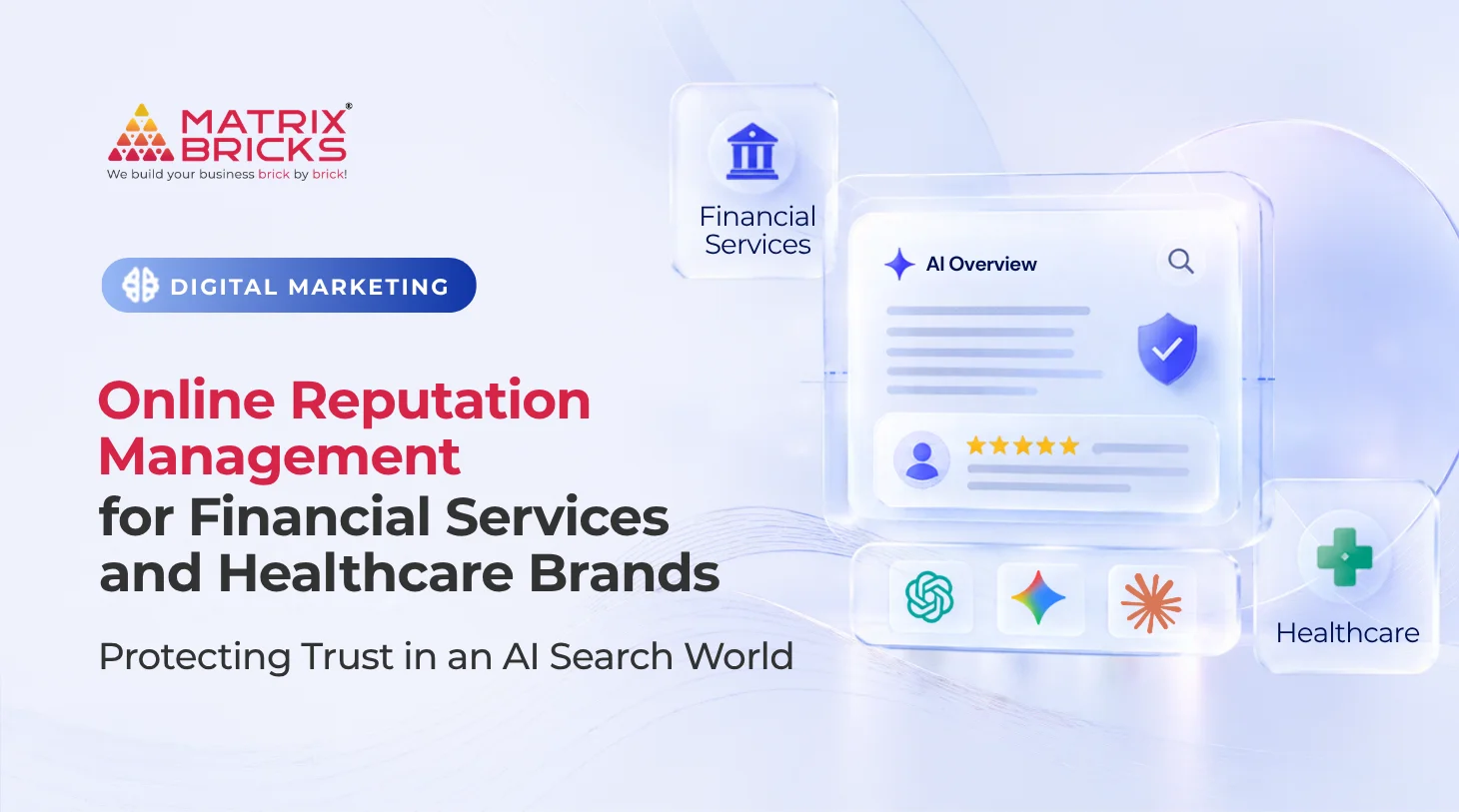
What happens when a potential patient searches your healthcare brand and finds a poor review before your website? Or when a prospective customer asks an AI tool whether your financial company is trustworthy and the answer is shaped by complaints, news coverage, and third-party discussions you never addressed?
That is the new reputation challenge. Online Reputation Management for Financial Services and healthcare reputation management are no longer limited to monitoring Google reviews. Brands now need to understand how search engines, AI platforms, review sites, news publishers, forums, and social platforms collectively shape public perception.
A strong reputation strategy should help you:
- Find reputation risks early: Track reviews, complaints, misleading information, news mentions, and recurring customer concerns.
- Build trustworthy signals: Publish accurate, useful information that reinforces credibility across search and AI-driven discovery.
- Respond without creating new problems: Handle criticism professionally while protecting customer and patient privacy.
The goal is simple: when people research your brand, they should find an accurate, consistent, and trustworthy picture.
Why Reputation Matters More in Financial Services and Healthcare
Trust has always mattered in these industries. What has changed is how quickly people can form an opinion.
A banking customer may compare several providers before opening an account. A patient may read reviews before booking an appointment. A business owner may ask an AI assistant to compare financial institutions. In each case, the decision can be influenced by information that sits outside the company’s own website.
Google’s AI search experience is increasingly designed to provide synthesized answers with links to supporting sources. Google has also reported increased usage of AI Overviews for queries where the feature appears.
That makes reputation a search visibility issue as well as a brand issue.
| Traditional reputation management | AI-era reputation management |
|---|---|
| Monitor reviews | Monitor reviews, search results, AI answers, forums and news |
| Respond to complaints | Identify recurring issues and address their underlying causes |
| Manage brand mentions | Build consistent information across trusted sources |
| Focus on Google rankings | Consider how multiple sources influence AI-generated answers |
| Protect brand image | Strengthen evidence, transparency and trust |
For financial and healthcare brands, the stakes are particularly high because consumers are often making decisions involving money, personal information, health, or long-term wellbeing.
Financial Brands Cannot Afford a Reputation Gap
Consider a fictional customer searching for a credit union. The company’s website highlights competitive rates, convenient services, and customer support. But elsewhere online, several recent complaints mention slow dispute resolution.
Even if those complaints represent a small portion of its customer base, they can influence the research process.
This is where ORM for financial services becomes more than review management. It involves understanding what customers are seeing across the entire digital ecosystem.
What financial brands should monitor
- Customer complaints: Look for repeated concerns involving fees, account access, claims, payments, communication, or support.
- Third-party mentions: Review business publications, comparison websites, social platforms, forums, and consumer sites.
- Search results: Track branded searches and queries such as “Is [brand] legitimate?” or “[brand] complaints.”
- Executive visibility: Monitor how senior leaders and subject-matter experts are represented online.
- Content accuracy: Check whether outdated or misleading information continues to rank for important brand searches.
The CFPB’s 2025 complaint data illustrates why consumer concerns deserve close attention. Credit and consumer reporting accounted for the largest share of complaints received by the agency, with more than millions of complaints reported in that category.
The lesson is not that complaints automatically damage a brand. It is that unresolved, recurring complaints can become part of the public narrative.
Healthcare Reputation Requires an Even More Careful Approach
Healthcare reputation management has another layer of complexity: privacy.
A healthcare provider cannot respond to a negative review in the same way a restaurant might respond to a dissatisfied customer. Even when the reviewer shares personal medical details publicly, the provider must consider privacy obligations before responding.
HHS has emphasized that covered healthcare organizations need to protect protected health information when communicating through public-facing websites and social media.
That means medical reputation management needs to balance responsiveness with discretion.
A better response approach
Instead of publicly debating the details of a patient’s experience, a provider can acknowledge the concern without confirming private information and invite the individual to contact the appropriate team through a secure channel.
This accomplishes two things:
- It shows prospective patients that the organization listens.
- It avoids turning one negative review into a larger privacy or compliance problem.
For healthcare brands, reputation is also shaped by educational content. A hospital, clinic, medical group, or health technology company that consistently publishes accurate information gives search engines and AI systems more credible material to understand.
The FTC has repeatedly stressed that health-related marketing claims need appropriate evidence, including claims communicated through testimonials and endorsements.
Get Your Free Consultation!
Connect with our team to improve visibility, unlock growth opportunities, and build strategies tailored to your business goals.
How AI Search Changes Reputation Management
Traditional search gives users a list of pages. AI search can give them a summary.
That difference matters.
Suppose someone asks an AI platform, “What do people say about this hospital?” The answer may draw from multiple signals, including websites, reviews, news coverage, business profiles, and other publicly available information.
If those sources contain inconsistent information, the resulting answer may not reflect how the organization wants to be perceived.
This is why modern ORM Services for Finance and healthcare reputation programs should focus on the information ecosystem, not just individual review platforms.
Build the information AI can trust
- Create authoritative content: Publish clear service information, expert commentary, research, FAQs, policies, and educational resources.
- Keep business information consistent: Ensure names, locations, leadership details, services, and contact information are accurate across major platforms.
- Strengthen third-party credibility: Earn legitimate coverage, citations, reviews, and expert mentions rather than trying to manipulate them.
- Correct misinformation: Where inaccurate claims appear, address them with facts and appropriate evidence.
Google’s recent AI search updates have emphasized original content, firsthand perspectives, and trusted sources, reinforcing the importance of having credible information available online.
Reputation Strategy Should Start Before a Crisis
One of the biggest mistakes brands make is treating reputation management as emergency cleanup.
By the time a negative story ranks prominently, a misleading AI answer circulates, or a complaint becomes widely shared, the response window is already smaller.
Effective ORM Strategies Financial Companies and healthcare organizations can use include:
1. Establish a reputation baseline
Search the brand from different perspectives. Look at branded queries, executive names, product names, locations, complaints, and common customer questions.
2. Identify recurring themes
One isolated complaint may not reveal much. Ten complaints about the same issue probably do. Use reputation monitoring to identify patterns involving customer service, billing, accessibility, communication, wait times, or product expectations.
3. Create useful answers
If customers repeatedly ask the same questions, answer them clearly on your website. This helps users directly while giving search engines more reliable context.
4. Build genuine positive signals
Do not manufacture reviews or suppress legitimate criticism. The FTC’s consumer review rule addresses deceptive practices involving fake reviews, misleading testimonials, review suppression, and certain forms of manipulation. Instead, make it easy for genuine customers to share honest feedback.
5. Measure what changes
Track branded search results, sentiment, review trends, negative mentions, visibility of authoritative pages, and recurring complaints. Reputation management becomes much more useful when it moves from “What are people saying?” to “What changed after we acted?”
The Best Reputation Strategy Is Built on Trust
Financial and healthcare brands do not need a perfect internet.
They need an accurate one.
A few negative reviews do not automatically destroy credibility. In fact, a brand with overwhelmingly positive feedback but no visible criticism can sometimes appear less believable. What matters is how consistently the organization demonstrates competence, transparency, responsiveness, and accountability.
The same principle applies to AI search.
You cannot control every sentence an AI system generates. You can influence the quality and consistency of the information available about your brand.
That is the real opportunity behind online reputation management healthcare and financial services reputation programs. Instead of chasing every negative mention, build an online presence strong enough to provide context.
Protect Your Reputation Before Someone Else Defines It
For financial and healthcare brands, reputation is now part of the customer journey. A review can influence a decision. A complaint can become a search result. A news story can shape an AI-generated summary. A single outdated page can create confusion.
Waiting for a reputation crisis is expensive.
Start by auditing what customers, prospects, journalists, search engines, and AI platforms can currently find about your organization. Then identify the gaps, address the risks, and build credible information around the questions that matter most.
Matrix Bricks can help you build a proactive reputation strategy that strengthens search visibility, credibility, and trust across the digital channels shaping customer decisions today. Reach out now to assess your brand’s online reputation before misinformation or unresolved customer concerns become the story.
Frequently Asked Questions
ORM for financial services is the process of monitoring, managing, and improving how a financial institution is represented across search engines, reviews, social platforms, news websites, forums, and third-party sources.
- It can uncover recurring complaints, misleading information, and negative brand mentions.
- It also helps financial brands publish reliable information that gives customers better context during research.
Healthcare reputation management matters because patients often research providers before booking appointments or choosing treatment. Online information can influence whether they see an organization as credible and safe.
- Reviews and patient experiences can affect first impressions.
- Educational content, accurate provider information, and responsible responses can strengthen trust without compromising patient privacy.
Modern AI reputation management considers how AI-powered search systems may interpret information from multiple online sources when generating answers.
- Consistent information across reputable websites gives search systems clearer context.
- Strong original content and credible third-party references can help establish a more accurate digital footprint.
Online review management should begin with determining whether a review violates the platform's policies rather than simply trying to remove criticism.
- Legitimate negative feedback should generally be handled professionally and transparently.
- Fake, fraudulent, or policy-violating reviews can be reported through the relevant platform's process.
Financial services reputation management works best when monitoring is combined with customer experience improvements and credible content.
- Track complaints around fees, service, fraud concerns, account access, and communication.
- Develop clear resources that answer customer questions and demonstrate expertise without making unsupported claims.