





 India
India  UK
UK  UAE
UAE 
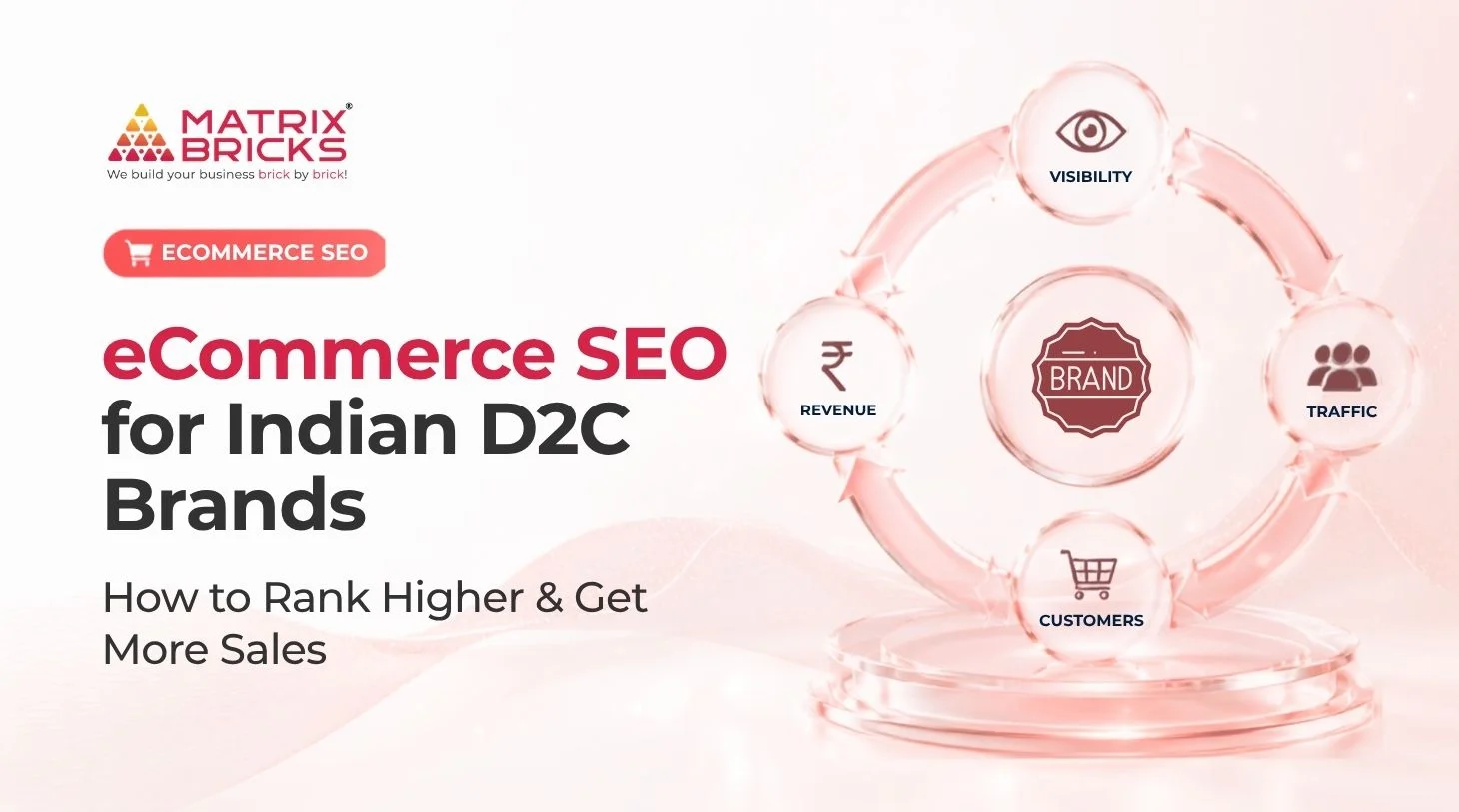
Running a D2C brand in India is exciting, but it is also highly competitive.
Every day, consumers search online for products across skincare, fashion, home décor, wellness, electronics, and food. For many brands, that search journey starts on Google, yet appearing in those results is often the biggest challenge.
You may have a strong product, a well-designed website, and active social media presence, but still struggle to generate consistent organic sales. At the same time, competitors continue to capture qualified traffic and build visibility without depending entirely on paid ads.
Many Indian D2C brands face challenges such as:
- Rising advertising costs that make customer acquisition increasingly expensive.
- Strong competition from marketplaces and established brands dominating search results.
- Product pages that fail to rank despite offering high-quality products.
- Websites that attract visitors but struggle to convert them into customers.
This is where ecommerce SEO services in India strategies can make a real difference. A well-planned SEO approach helps your store appear in front of people actively searching for products like yours, while also attracting high-intent visitors who are closer to buying.
In this guide, we’ll explore how Indian D2C brands can improve rankings, strengthen visibility, and turn organic traffic into sustainable revenue.
Why SEO Has Become a Critical Growth Channel for D2C Brands
The Indian eCommerce landscape has changed quickly. Today, shoppers research brands, compare products, read reviews, and look for recommendations before buying. Searches like “best organic shampoo for hair fall” or “comfortable running shoes for women” often signal strong purchase intent. That is why SEO remains one of the most valuable long-term growth channels for D2C brands. Unlike paid advertising, SEO can keep driving qualified traffic long after the spend stops.
| Factor | Paid Advertising | SEO |
|---|---|---|
| Traffic Duration | Ends when budget stops | Continues over time |
| Customer Trust | Moderate | Higher organic credibility |
| Cost Per Acquisition | Often increases | Improves over time |
| Long-Term ROI | Variable | Strong |
| Scalability | Budget dependent | Growth driven |
For growing D2C brands, SEO is not simply about rankings. It is about building a reliable acquisition channel that supports long-term business growth.
Get Your Free Consultation!
Connect with our team to improve visibility, unlock growth opportunities, and build strategies tailored to your business goals.
Building an SEO Foundation That Supports Sales
Many businesses approach SEO as a keyword exercise. In reality, successful eCommerce SEO requires a much broader strategy.
Search engines aim to deliver the most relevant and useful results to users. To rank well, your website must demonstrate relevance, authority, and a positive user experience.
Focus on Search Intent
One of the biggest mistakes brands make is targeting broad keywords without understanding what customers are actually searching for.
For example, someone searching for “face wash” could be looking for almost anything. However, a person searching for “face wash for oily skin with natural ingredients” has a much clearer intention.
Targeting specific search intent helps attract visitors who are more likely to convert.
Key opportunities include:
- Product-specific searches.
- Problem-solving searches.
- Comparison queries.
- Purchase-focused long-tail keywords.
When your content aligns with customer intent, rankings and conversions often improve together.
Conduct a Thorough Website Review
Before implementing changes, businesses should evaluate the current state of their website through a comprehensive SEO audit services in India for eCommerce brands.
This process helps uncover:
- Technical issues affecting visibility.
- Content gaps across category and product pages.
- Opportunities to improve rankings.
- User experience problems impacting conversions.
Without understanding existing weaknesses, it becomes difficult to build an effective SEO strategy.
The Role of Product Page SEO in Driving Revenue
For many D2C brands, product pages are the most valuable assets on the website. They are often the final destination before a purchase decision is made.
Yet product pages are frequently overlooked from an SEO perspective.
Effective Product Page SEO helps search engines understand your products while giving potential customers the information they need to buy with confidence.
Create Product Titles That Match Customer Searches
Product titles should be clear, descriptive, and aligned with the language customers actually use.
Instead of relying on generic product names, include relevant details that help both users and search engines understand the product.
A descriptive title often performs better because it communicates value immediately.
Write Unique and Helpful Product Descriptions
Many online stores use manufacturer descriptions or duplicate content across multiple products. Due to this most of the businesses today looking for the best SEO content writing services in India.
Strong product descriptions should explain:
- Key benefits.
- Product features.
- Ideal use cases.
- Customer outcomes.
The goal is not simply to describe the product but to answer questions and remove purchase hesitation.
Use Reviews as a Trust-Building Asset
Reviews play an important role in both SEO and conversion optimisation.
They provide:
- Fresh user-generated content.
- Additional keyword variations.
- Social proof.
- Greater purchasing confidence.
Customers often trust other customers more than marketing copy.
Optimise Product Images
Visual content significantly influences buying decisions.
Ensure product images:
- Load quickly.
- Display multiple product angles.
- Include descriptive file names.
- Use relevant alt text.
Well-optimised images can improve both user experience and search visibility.
Online Store Optimisation: Turning Visitors into Customers
Generating traffic is only one part of the equation. If visitors leave without purchasing, rankings alone will not deliver business growth.
This is where eCommerce Development Services in India becomes essential.
Improve Website Speed
Site speed directly affects user experience. Fast-loading pages are now a standard expectation, particularly for consumers browsing and shopping on mobile devices.
A slow-loading product page can increase bounce rates and reduce conversions before customers even view the product.
To improve performance:
- Compress images without sacrificing quality.
- Reduce unnecessary scripts and plugins.
- Use reliable hosting infrastructure.
Even small improvements in loading time can have a measurable impact on sales.
Create a Mobile-First Shopping Experience
A significant portion of India’s online shopping activity now happens on smartphones.
A mobile-friendly website should offer:
- Fast loading pages.
- Easy navigation.
- Readable content.
- Simple checkout processes.
When mobile users encounter friction, they often abandon the purchase entirely.
Simplify Website Navigation
Visitors should be able to move through your website effortlessly.
A clear navigation structure helps customers discover products faster while making it easier for search engines to crawl your website.
Good navigation improves:
- Product discoverability.
- User engagement.
- Internal linking.
- Overall shopping experience.
Why Technical SEO for eCommerce Matters More Than Most Brands Realise
Many SEO improvements are visible to users. Others happen behind the scenes.
While customers may never notice technical SEO directly, search engines certainly do.
Strong technical SEO services for eCommerce in India creates the foundation that allows content and product pages to perform effectively.
Ensure Search Engines Can Access Your Website
Search engines must be able to crawl and understand your content efficiently.
Important technical elements include:
- XML sitemaps.
- Proper robots.txt configuration.
- Clean URL structures.
- Effective internal linking.
When search engines can navigate your website easily, indexing becomes more efficient.
Manage Duplicate Content Properly
Duplicate content is common across eCommerce websites because of category filters, product variants, and pagination.
If left unmanaged, it can dilute ranking potential and create confusion for search engines.
Using canonical tags and maintaining a logical site structure helps reduce these issues.
Implement Structured Data
Structured data provides additional context about your products.
It helps search engines understand information such as:
- Product availability.
- Pricing
- Reviews
- Ratings
This can improve visibility and increase click-through rates from search results.
Content Marketing: An Untapped Opportunity for D2C Brands
Many D2C brands focus exclusively on product pages while ignoring informational content.
This approach limits visibility.
Customers often begin their journey by researching a problem before searching for a specific product.
For example, a skincare brand could create content around:
- How to choose a face serum.
- Common causes of skin dryness.
- Ingredients that help reduce pigmentation.
A fitness brand could publish guides on:
- Workout recovery.
- Protein selection.
- Nutrition planning.
By addressing customer questions early in the buying journey, brands can build trust and attract organic traffic long before a purchase decision is made.
| Content Type | Purpose |
|---|---|
| Buying Guides | Support purchase decisions |
| Product Comparisons | Help customers evaluate options |
| Educational Articles | Build authority |
| FAQs | Address objections |
| Expert Insights | Increase trust |
High-quality content supports both rankings and customer confidence.
Measuring SEO Success Beyond Rankings
While rankings are important, they should never be the only measure of success.
The ultimate objective of search engine optimization services in Mumbai, India is business growth.
Successful brands track metrics that directly impact revenue.
Key performance indicators include:
- Organic traffic growth.
- Product page engagement.
- Conversion rates.
- Revenue from organic search.
- Average order value.
- Customer acquisition costs.
When SEO is aligned with business goals, it becomes much easier to demonstrate long-term value.
Common SEO Mistakes That Hold D2C Brands Back
Many D2C brands limit their SEO potential by overlooking fundamental optimisation practices that affect visibility and sales.
- Publishing thin product content with limited value for users and search engines.
- Targeting broad keywords instead of high-intent search terms.
- Ignoring technical issues such as broken links, duplicate content, and crawl errors.
- Failing to optimise product and category pages effectively.
- Prioritising traffic growth over conversions and revenue.
- Missing content opportunities that can attract and educate potential customers.
Avoiding these mistakes can help improve rankings, drive qualified traffic, and generate stronger business
What’s Next for D2C Search Growth?
Search behaviour is evolving as consumers become more informed and selective in how they discover products online. Conversational queries, voice searches, and AI-driven search experiences are becoming increasingly common, while search engines continue to prioritise relevance, expertise, and trust.
Brands that focus on creating genuinely helpful content, delivering a strong user experience, and building customer trust will be better positioned to maintain visibility and drive sustainable growth in the years ahead.
Explore What Stronger Search Visibility Could Mean for Your Brand
If you’re looking to build a stronger SEO foundation, Matrix Bricks India can help your D2C brand improve visibility, attract qualified buyers, and create more consistent organic growth. A tailored strategy can make SEO a more dependable part of your sales engine over time.
Frequently Asked Questions
SEO is a long-term investment that builds momentum over time. Most online stores begin seeing measurable improvements within a few months, although highly competitive industries may require a longer timeframe. Consistent optimisation, quality content, and technical improvements all influence how quickly results appear.
- Businesses that prioritise Technical SEO for eCommerce often achieve faster indexing and improved search visibility.
- Stores with strong content and well-optimised product pages typically experience more sustainable growth over time.
Product pages often represent the final step before a customer makes a purchase. Effective Product Page SEO helps search engines understand the relevance of your products while providing shoppers with the information they need to make informed decisions.
- Optimised product pages can improve visibility for high-intent searches.
- Detailed product content often increases customer confidence and conversions.
A comprehensive SEO Audit for eCommerce evaluates the overall health of an online store. It identifies technical issues, content weaknesses, user experience problems, and opportunities for improving organic performance.
- The audit helps uncover barriers that may be preventing higher rankings.
- It provides a clear roadmap for future SEO improvements and growth.
SEO and paid advertising serve different purposes. Paid campaigns can generate immediate traffic, while SEO helps build a long-term source of qualified visitors and customers.
- Strong Online Store Optimisation allows businesses to maximise the value of both channels.
- Combining SEO with paid campaigns often creates a more balanced growth strategy.
Technical SEO ensures that search engines can effectively crawl, understand, and index your website. Without a strong technical foundation, even high-quality content may struggle to perform well in search results.
- Good technical health supports better rankings and user experience.
- Proper site architecture makes it easier for search engines to discover important pages.
Yes. Smaller brands often have the advantage of focusing on niche audiences and highly specific customer needs. With the right eCommerce SEO Services, they can target valuable search opportunities that larger competitors may overlook.
- Long-tail keywords often provide stronger conversion potential.
- Specialised content can help build authority within a specific market segment.