





 India
India  UK
UK  UAE
UAE 
A few years ago, getting your website to rank on Google’s first page was often enough to attract attention, generate leads, and grow your business. Today, that reality is changing.
Imagine a potential customer looking for a marketing agency, a software solution, or a cybersecurity provider. Instead of opening Google and browsing through multiple websites, they ask ChatGPT, Gemini, or Perplexity a question and receive an instant answer.
The websites that appear in those AI-generated responses gain visibility. The businesses that don’t often left out of the conversation altogether.
This shift is creating an entirely new challenge for brands across the United States.
- From researching solutions to comparing providers, consumers are increasingly using AI-powered platforms to guide their purchasing decisions.
- AI platforms are becoming influential sources of recommendations.
- Businesses need new ways to stay discoverable online.
This is why Generative Engine Optimization Services USA are rapidly gaining attention. Companies are exploring AI Search Optimization, Answer Engine Optimization, and advanced GEO Strategy frameworks to improve how their content is discovered and referenced by AI systems.
The impact of AI on search is already evident; the real challenge for businesses is adapting to this new reality. It already has. The real question is how businesses can position themselves to benefit from this shift.
The Biggest Change in Search Since Google
For decades, search engines have operated in a predictable way. Users entered keywords, search engines displayed results, and businesses competed for clicks.
AI-powered search has changed that process.
Today, users ask complete questions such as:
- What is the best project management software for remote teams?
- Which digital marketing strategy delivers the highest ROI for SaaS companies?
- What are the most effective ways to improve online visibility in 2026?
Instead of returning a page filled with links, AI tools generate a summarized answer.
This subtle change has major implications.
Businesses are no longer competing just for a spot on the search results page. They are competing to establish credibility in a digital environment where AI platforms play an increasing role in deciding which sources are highlighted and referenced.
Consider brands like HubSpot, Shopify, Canva, and Salesforce. Their strong presence across AI-driven discussions is not the result of ranking for a handful of keywords. It stems from years of consistently publishing valuable resources, sharing industry expertise, and building trust within their respective domains.
- Educational content
- Industry research
- Product documentation
- Expert insights
- Consistent publishing
In many ways, AI search is rewarding the same qualities users have always valued: credibility, relevance, and trust.
Understanding Generative Engine Optimization
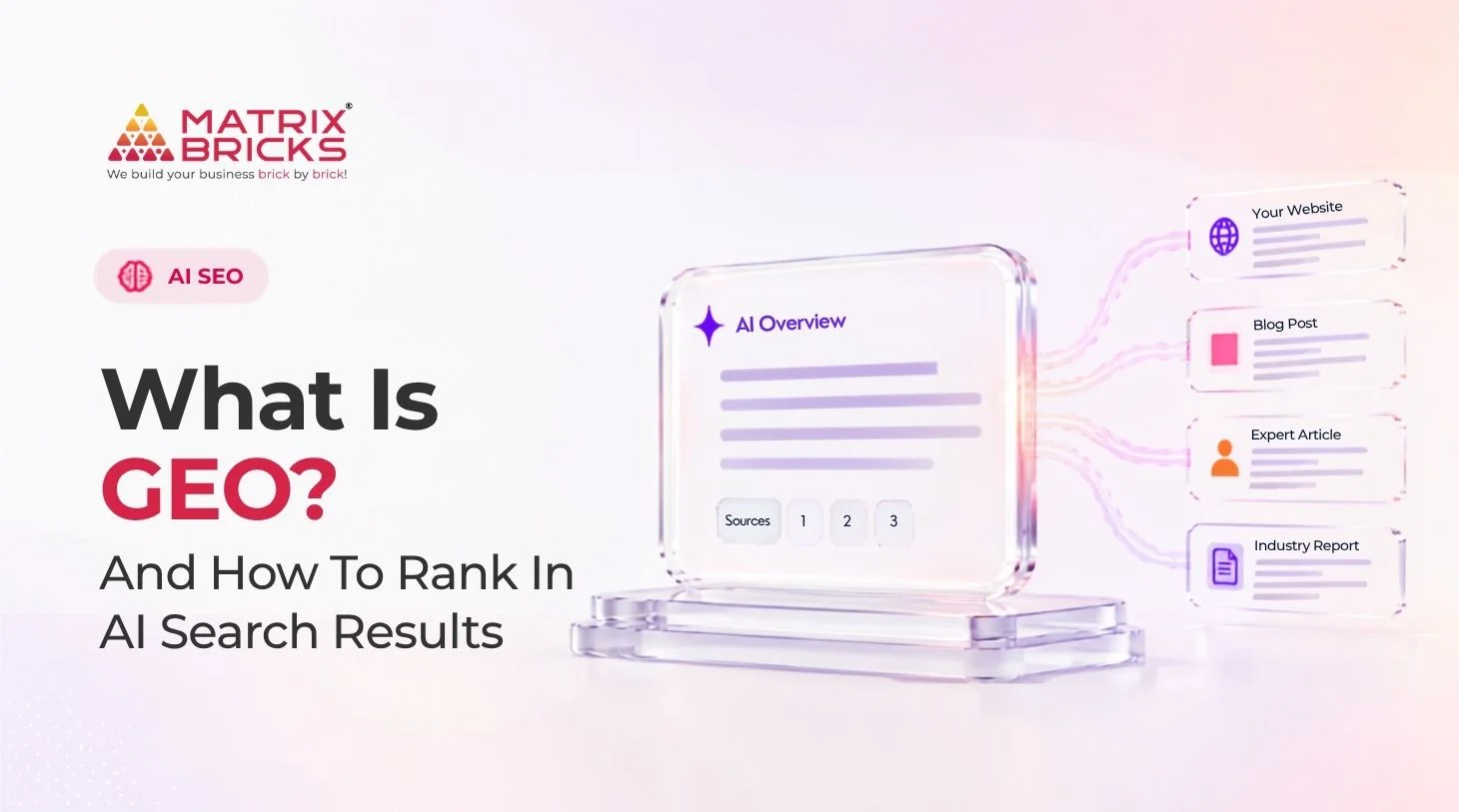
Generative Engine Optimization, commonly known as GEO, is the process of improving your digital content so that AI-powered search engines can better understand, trust, and reference it when generating answers. Unlike traditional SEO, which focuses heavily on rankings and traffic, GEO focuses on visibility within AI-generated responses.
Think of it this way:
- Traditional SEO helps users find your website.
- GEO helps AI platforms find your expertise.
This distinction may seem small, but it changes how businesses approach content creation. The goal is no longer just to rank. The objective is to create content that consistently demonstrates expertise and earns the confidence of both users and AI-powered platforms.
SEO, AEO, and GEO: What’s the Difference?
Many marketers confuse GEO with Answer Engine Optimization, but they are not identical.
| Approach | Primary Goal | Focus |
|---|---|---|
| SEO | Improve rankings | Search engines |
| Answer Engine Optimization | Deliver direct answers | Voice search and answer platforms |
| GEO | Improve AI visibility | Generative AI platforms |
Rather than viewing these strategies as separate disciplines, businesses should see them as complementary components of a modern search strategy.
Organizations that integrate traditional Search Engine Optimization (SEO) Services USA with AI Search Optimization are better equipped to maintain visibility across both search engines and emerging AI-driven discovery channels.
Why Some Brands Appear in AI Answers More Often Than Others
One of the most common misconceptions about AI search is that it randomly pulls information from across the internet.
In reality, AI systems rely on signals that help determine which sources deserve attention.
Imagine two websites covering the same topic:
- One publishes a short article with generic advice.
- The other provides detailed explanations, examples, FAQs, expert insights, and regularly updated information.
Which source appears more trustworthy?
Both users and AI systems tend to prefer the second option. As AI-driven search evolves, the value of well-researched and authoritative content continues to increase.
AI platforms increasingly favor content that demonstrates:
- Expertise
- Authority
- Relevance
- Clarity
- Trustworthiness
Google’s emphasis on experience and expertise aligns closely with what AI systems appear to value as well.
For example, a financial company explaining investment strategies is likely to be viewed differently from a generic blog with no demonstrated expertise. The same principle applies across industries such as:
- Healthcare
- Technology
- Legal services
- Marketing
- Finance
- Education
The stronger your authority within a topic area, the greater your chances of being recognized as a reliable source.
How Businesses Can Strengthen Their Visibility in AI Search
There is no guaranteed formula for appearing in AI-generated responses. However, businesses can significantly improve their chances by focusing on how they create, organize, and maintain content.
Build Authority Around Topics, Not Keywords
Many organizations continue to build content around individual search terms rather than developing expertise around broader subject areas. AI search is changing that mindset. Rather than publishing isolated articles targeting unrelated terms, successful brands develop clusters of content around core topics.
Consider how HubSpot approaches marketing education. Its content extends beyond SEO and covers:
- Content marketing
- CRM systems
- Sales enablement
- Marketing automation
- Analytics
- Email marketing
- Customer experience
Each piece reinforces the others, creating a strong ecosystem of expertise. For businesses pursuing AI Answer Engine Optimization (AEO) Services USA, becoming a trusted source within a specific niche often matters more than targeting dozens of disconnected keywords.
Get Your Free Consultation!
Connect with our team to improve visibility, unlock growth opportunities, and build strategies tailored to your business goals.
Focus on Answering Questions Completely
One reason AI platforms reference certain source is because they provide complete answers.
Many articles explain what something is but fail to address:
- Why it matters
- How it works
- Common challenges
- Practical applications
- Recommended next steps
The most valuable content answers questions from multiple angles.
For example, someone researching Generative Engine Optimization may also want to understand:
- How GEO differs from SEO
- Why AI search is growing
- How AI chooses sources
- Practical optimization techniques
- Future implications for businesses
The more comprehensive the resource, the more useful it becomes for both users and AI systems.
Write Like People Actually Speak
Traditional search encouraged short keyword phrases. AI encourages conversations. Instead of targeting only terms such as “AI SEO,” businesses should think about how users naturally ask questions:
- How can my company appear in ChatGPT recommendations?
- What factors influence AI search visibility?
- Why do some brands get cited by AI systems?
- How can I improve my chances of appearing in AI-generated answers?
Content that mirrors real conversations often aligns better with modern search behavior.
Add Original Perspectives
This is where many companies miss an opportunity. The internet is already filled with rewritten information. AI systems are becoming increasingly capable of identifying repetitive content.
What stands out are:
- Original observations
- Industry insights
- Lessons learned
- Expert commentary
- Unique viewpoints
For example, a digital marketing agency sharing insights from actual campaigns provides more value than a generic article repeating common advice. Originality creates differentiation. Differentiation builds authority. Authority improves visibility.
Make Content Easy to Understand
Even highly informative content can lose value if it is difficult to navigate. Clear formatting helps both readers and AI systems identify important information.
Consider using:
- Descriptive headings
- Bullet points
- FAQ sections
- Definitions
- Comparison tables
- Step-by-step explanations
Well-structured content improves readability and increases the likelihood that key information can be surfaced in AI-generated responses.
Keep Content Updated
AI systems tend to favor information that remains accurate and relevant. Regularly reviewing and updating content through SEO Audit services USA can help ensure that it reflects:
- Current industry trends
- Updated statistics
- New technologies
- Changing regulations
- Evolving customer needs
Refreshing existing content often delivers more value than continuously publishing new content while neglecting older resources.
What Businesses Often Get Wrong About GEO
Many organizations approach GEO with unrealistic expectations.
Common mistakes include:
- Expecting immediate results
- Treating GEO as a replacement for SEO
- Publishing large volumes of low-quality content
- Focusing only on keywords instead of expertise
- Ignoring content updates and maintenance
The reality is that GEO is an extension of good digital marketing.
Businesses that succeed are often the ones already focused on:
- Creating useful content
- Demonstrating expertise
- Maintaining content quality
- Building trust over time
- Addressing real audience questions
A company with hundreds of thin, outdated articles may struggle to gain AI visibility regardless of technical SEO optimization services USA.
Meanwhile, a smaller organization with fewer but more authoritative resources may achieve stronger results.
Quality is an increasingly outperforming quantity.
The Future of Search Belongs to Trusted Sources
Search is becoming more conversational, more personalized, and more influenced by artificial intelligence.
Google continues to expand AI-generated experiences. AI assistants are becoming part of daily workflows. Consumers increasingly expect immediate answers rather than lists of links.
As this trend accelerates, businesses will need to think beyond rankings alone.
Future visibility will depend on whether AI systems recognize a brand as a credible source of information.
The way people search for and consume information is evolving, driven by both rapid technological innovation and changing digital habits.
| Emerging Trend | Impact on Businesses |
|---|---|
| Conversational search | Greater focus on natural language content |
| Personalized AI recommendations | Stronger need for authority and trust |
| AI-assisted purchasing | Increased importance of educational content |
| Autonomous research tools | Greater emphasis on content depth |
| Trust-based discovery | Higher value placed on expertise |
Organizations looking to remain competitive in an AI-driven search environment should prioritize the following areas:
- Building topical authority
- Publishing high-quality educational content
- Strengthening trust signals
- Improving content organization
- Maintaining content accuracy
- Investing in long-term expertise
Organizations investing in Generative Engine Optimization Services USA today are not simply responding to a trend. They are preparing for how digital discovery is likely to evolve over the coming years.
Conclusion
Generative Engine Optimization is not about replacing SEO. It is about adapting to a world where AI increasingly influences how information is discovered, evaluated, and recommended.
Businesses that focus on expertise, credibility, and genuinely useful content are more likely to earn visibility in AI-generated search experiences. Combining traditional SEO with AI Search Optimization, Answer Engine Optimization, and a well-planned GEO Strategy creates a stronger foundation for long-term digital growth.
As AI-powered search continues to evolve, the brands that consistently provide trustworthy and valuable information will have the greatest opportunity to remain visible.
The businesses that become trusted sources today are likely to be the brands AI recommends tomorrow.
Ready to Improve Your Visibility in AI Search?
AI-powered search is already shaping how customers discover businesses, compare solutions, and make decisions. Waiting to adapt could mean losing valuable visibility to competitors who are actively building authority in AI-driven environments.
Explore how Matrix Bricks USA can help your organization develop a future-ready GEO strategy designed to strengthen visibility across emerging AI-driven search experiences.
Frequently Asked Questions
The primary objective of GEO is to increase the likelihood that AI platforms reference or recommend your content when answering user questions. Unlike traditional SEO, which focuses on rankings, AI Search Optimization focuses on visibility within AI-generated responses.
Not at all. Smaller businesses often have an advantage because they can focus deeply on niche topics and establish expertise more quickly.
Some benefits include:
- Specialized knowledge
- Faster content creation
- Stronger niche authority
- Better audience alignment
Answer Engine Optimization focuses on presenting information in a clear and structured format that directly addresses user queries. By making content easier to interpret and surface, it can support GEO initiatives and improve visibility across AI-driven search experiences.
Content that is comprehensive, trustworthy, and well-organized tends to perform best. Examples include:
- Detailed guides
- Expert insights
- Comparison articles
- FAQs
- Educational resources
- Research-backed content
These formats help users and AI systems understand information more effectively.
Results vary depending on content quality, competition, authority, and consistency. Like SEO, GEO is generally a long-term investment focused on building trust and visibility over time rather than delivering immediate results.
Yes. Technical SEO remains important because it helps AI systems and search engines access, interpret, and understand content more effectively.
Key considerations include:
- Website performance
- Mobile usability
- Structured data
- Secure browsing
- Clear site architecture
Start by reviewing your existing content. Identify opportunities to:
- Improve content depth
- Strengthen authority
- Answer user questions more effectively
- Build stronger topic clusters
- Update outdated information
Many businesses investing in Generative Engine Optimization Services USA begin by improving the quality and usefulness of the content they already have.