





 India
India  UK
UK  UAE
UAE 
Every business wants better results from its marketing budget. Yet many companies face the same dilemma. Should they invest more in campaigns that generate immediate leads, or focus on building a brand that customers remember for years? Prioritising one while ignoring the other often leads to rising acquisition costs, inconsistent growth, or weak customer loyalty.
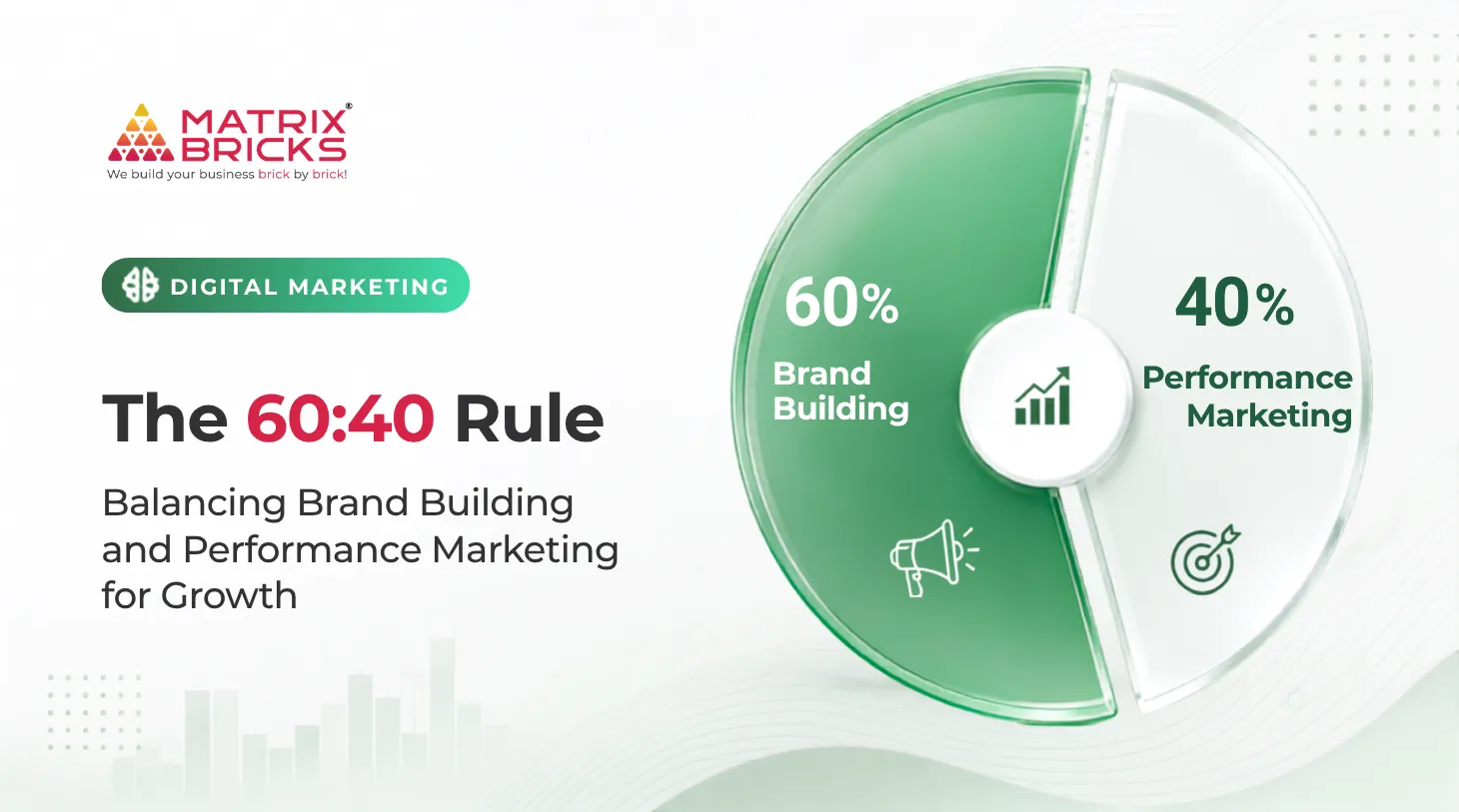
The answer lies in balancing brand vs performance marketing. The widely recognised 60:40 rule encourages businesses to combine short-term sales activities with long-term brand investment to achieve sustainable growth. Whether you’re refining your brand strategy in the UK or planning next year’s marketing budget, understanding this balance can help you build stronger customer relationships while improving returns.
In this blog, you’ll learn:
- Why relying on one marketing approach limits growth.
- How the 60:40 rule supports sustainable success.
- Practical ways to implement the rule.
Understanding the 60:40 Rule
The 60:40 rule suggests that around 60 percent of marketing investment should focus on building a brand, while the remaining 40 percent should drive immediate sales through performance marketing.
The principle gained popularity through the research of marketing experts Les Binet and Peter Field, who found that businesses achieving consistent long-term growth rarely relied only on short-term advertising. Instead, they invested in brand awareness while continuing to generate measurable results through targeted campaigns.
Brand building creates future demand by improving recognition and trust. Paid search advertising services helps businesses reach high-intent audiences and convert customers who are ready to make a purchase. Together, they create a digital marketing strategy that delivers both immediate and lasting results.
Why Businesses Often Lose the Balance
One of the biggest reasons businesses over-invest in performance marketing is that results are easy to measure. Clicks, leads, conversions, and return on investment appear almost instantly, making paid campaigns seem more attractive than branding initiatives.
However, depending solely on performance marketing creates long-term challenges. Common mistakes businesses make:
- Focusing only on short-term sales
Paid campaigns can increase enquiries quickly, but without ongoing brand awareness, customer acquisition often becomes more expensive as competition increases.
- Treating branding as visual design
A strong brand is much more than a logo or colour palette. It is built through consistent messaging, customer experiences, helpful content, and trust.
- Expecting immediate branding results
Brand building is a gradual process. Customers often interact with a business several times before remembering it or making a purchasing decision.
Finding the right balance helps businesses avoid these pitfalls while creating a more resilient marketing strategy.
Brand Building Creates Future Growth
Brand building focuses on staying memorable long before customers need your products or services. When people recognise and trust your business, they are more likely to choose you over competitors when the buying moment arrives.
Effective brand-building activities include:
- Creating valuable content that answers customer questions.
- Sharing authentic stories that build emotional connections.
- Maintaining a consistent identity across every marketing channel.
- Delivering excellent customer experiences that encourage recommendations.
Consider Nike. Its campaigns rarely focus only on trainers or sportswear. Instead, they inspire audiences through stories of determination and achievement. This emotional connection strengthens brand recall and influences future purchasing decisions.
Similarly, John Lewis invests in memorable festive campaigns every year. Although these adverts are not designed solely to generate immediate sales, they reinforce trust and familiarity that benefit the brand throughout the year.
Performance Marketing Turns Interest into Action
While branding creates awareness, performance marketing helps convert interested customers into leads and sales.
Businesses commonly use performance marketing through:
| Activity | Main Objective |
|---|---|
| Paid Search | Generate qualified leads |
| Social Media Advertising | Drive conversions |
| Email Marketing | Increase repeat purchases |
| Retargeting Campaigns | Re-engage interested visitors |
| Landing Page Optimisation | Improve conversion rates |
These channels target customers who already have purchase intent. Someone searching for a specific product or service is much closer to making a buying decision than someone seeing your brand for the first time.
The challenge is that performance marketing captures existing demand rather than creating new demand. Without continued investment in branding, fewer potential customers enter the buying journey, making paid campaigns less effective over time.
Get Your Free Consultation!
Connect with our team to improve visibility, unlock growth opportunities, and build strategies tailored to your business goals.
Why the Two Work Better Together
Successful businesses understand that branding and performance marketing complement each other rather than compete.
Think about Apple. Before launching a new product, it creates anticipation through keynote events, media coverage, storytelling, and carefully planned communications. By the time customers begin searching online, demand already exists. Performance campaigns then help convert that interest into purchases.
The same principle applies to smaller businesses.
A regional law firm publishing expert legal insights throughout the year builds credibility before potential clients require legal advice. Later, when those clients search online, the firm’s familiar name is more likely to earn their trust than an unknown competitor.
The strongest marketing strategies do not choose between branding and performance. They combine both to build recognition, generate demand, and convert customers more efficiently.
Putting the 60:40 Rule into Practice
The 60:40 rule is a guideline, not a strict formula. Every business has different goals, budgets, and audiences. A start-up may invest slightly more in building awareness, while an established company launching a new product may temporarily increase performance marketing. The objective is to ensure both approaches support one another rather than compete for budget.
Here are a few practical ways to achieve that balance.
Build a recognisable brand
Strong brands are built through consistent experiences, not occasional campaigns.
- Maintain consistent messaging: Use the same tone of voice and visual identity across your website, social media, emails, and advertising.
- Create helpful content: Publish blogs, videos, and guides that solve customer problems instead of constantly promoting products.
- Invest in customer experience: Positive interactions often lead to repeat business and valuable word-of-mouth referrals.
Strengthen your performance campaigns
Once your brand has earned attention, performance marketing helps turn interest into action.
Focus on:
- Search engine optimisation and paid search.
- Social media advertising.
- Email marketing and remarketing.
- Conversion rate optimisation.
Businesses that combine these activities with consistent branding often achieve stronger returns than those relying on advertising alone.
Measuring the Right Metrics
One of the biggest mistakes businesses make is judging success only by immediate sales. While conversions are important, they don’t tell the full story.
A balanced strategy measures both brand growth and campaign performance.
| Brand Metrics | Performance Metrics |
|---|---|
| Brand awareness | Leads generated |
| Branded search volume | Conversion rate |
| Customer sentiment | Cost per acquisition |
| Direct website traffic | Return on ad spend |
Tracking both sets of metrics helps businesses understand whether they are building future demand while delivering results today.
Lessons from Leading Brands
Many of the world’s best-known companies continue investing in brand building despite having strong market recognition.
Coca-Cola consistently uses storytelling and sponsorships to strengthen emotional connections with customers, while running targeted campaigns that drive seasonal sales.
Airbnb inspires travellers through compelling brand campaigns before using personalised digital advertising to convert interest into bookings.
These examples show that sustainable growth comes from combining emotional engagement with measurable marketing activity.
Key Takeaways for Businesses
If you’re reviewing your marketing strategy, keep these principles in mind:
- Build trust before expecting customers to buy.
- Use performance marketing to capture demand, not create it.
- Measure both brand health and sales performance.
- Review your budget regularly instead of focusing only on short-term results.
The businesses that grow consistently are those that remain visible even when customers are not actively buying. When the buying decision arrives, familiarity often becomes a competitive advantage.
Ready to Create a Balanced Marketing Strategy?
Growth doesn’t come from chasing short-term wins alone. It comes from building a brand that customers remember while running campaigns that convert interest into measurable results. If you’re ready to develop a smarter marketing strategy that delivers both immediate impact and sustainable growth, connect with Matrix Bricks in London, UK and start building a marketing approach designed for lasting success.
Frequently Asked Questions
The 60:40 rule recommends investing more in long-term brand building while reserving the remaining budget for activities that generate immediate sales. A balanced marketing budget strategy supports both future growth and current revenue.
- It reduces over-reliance on paid advertising.
- It strengthens customer trust over time.
Understanding brand vs performance marketing helps businesses balance awareness with lead generation. A strong digital marketing strategy ensures customers recognise your brand before they are ready to buy.
- Branding builds trust and familiarity.
- Performance marketing converts buying intent.
The ideal budget depends on business goals, competition, and growth stage. A well-planned brand awareness strategy should support immediate objectives while strengthening future market presence.
- Review budgets regularly.
- Adjust spending based on business priorities.
Yes. Small businesses can apply the principle by combining affordable branding activities with targeted campaigns. A focused customer acquisition strategy benefits from both approaches.
- Publish valuable content consistently.
- Support organic growth with paid campaigns.
Success comes from tracking brand and sales metrics together. Using the right marketing performance metrics provides a clearer picture of long-term effectiveness.
- Monitor awareness alongside conversions.
- Optimise campaigns based on performance data.