





 India
India  UK
UK  UAE
UAE 
Your Sales Team Is Waiting for the First Call. Your Buyers Have Already Made Their First Impression.
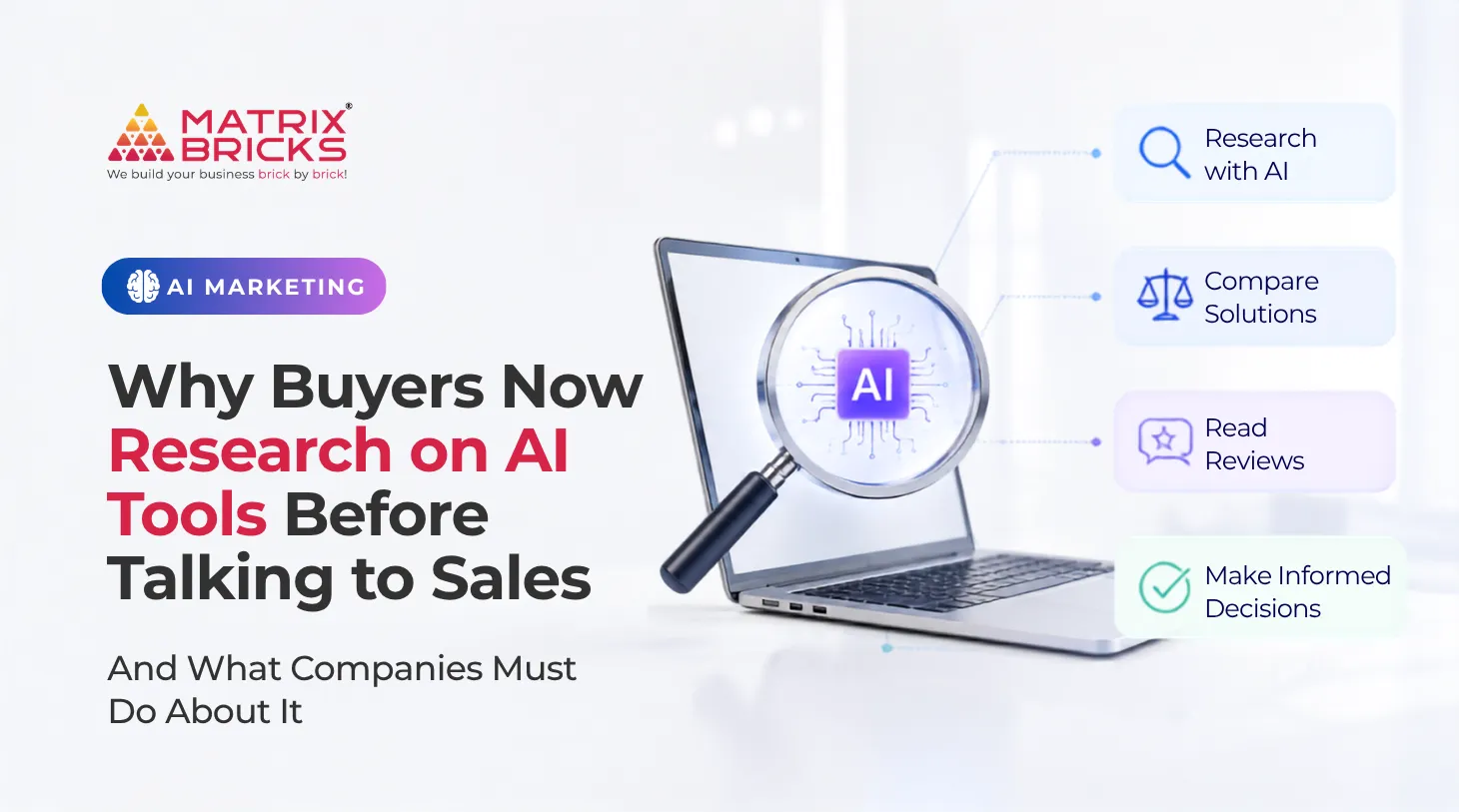
A few years ago, the typical B2B buying journey started with a Google search, a visit to a company’s website, and eventually a conversation with a sales representative. Today, that journey looks very different. Before reaching out to your business, buyers are asking AI tools to compare vendors, explain products, summarize reviews, and even recommend the best solutions for their needs.
This shift toward AI-driven buyer research is changing how businesses attract, educate, and convert prospects. Companies that fail to adapt risk becoming invisible long before a sales conversation begins.
Today’s buyers are:
- Using AI platforms to research vendors instead of browsing dozens of websites.
- Comparing products, pricing models, and customer reviews before filling out a contact form.
- Involving multiple stakeholders who rely on AI to answer different business questions.
- Expecting trustworthy, educational content that helps them make informed decisions.
If your digital presence is not helping AI understand and recommend your business, you could be losing qualified opportunities without even realizing it.
The Traditional B2B Buying Journey Has Changed
For years, businesses focused on ranking on search engines, running paid campaigns, and encouraging prospects to book demos. While these strategies still matter, they are no longer the first stop for many decision-makers.
Executives, procurement teams, and department heads are turning to AI assistants like ChatGPT, Gemini, Claude, and Perplexity to speed up research and simplify complex decisions.
Instead of reading twenty different articles, they ask AI questions such as:
- Which CRM is best for a mid-sized manufacturing company?
- Compare the top cloud migration providers.
- How do I choose the right cybersecurity partner?
- Which marketing agency has experience with enterprise businesses?
The AI compiles information, highlights trusted brands, and provides summaries within seconds. By the time a prospect visits your website, they often have a shortlist of potential vendors already in mind.
Businesses are no longer competing solely for higher search engine rankings. They are competing to become the brands AI confidently recommends.
Get Your Free Consultation!
Connect with our team to improve visibility, unlock growth opportunities, and build strategies tailored to your business goals.
What Is AI-Driven Buyer Research?
Simply put, AI-driven buyer research is the process of using artificial intelligence to gather, compare, and evaluate information before speaking with a sales representative.
Rather than relying on multiple websites, buyers ask conversational questions and receive structured, easy-to-understand responses.
| Traditional Research | AI-Powered Research |
|---|---|
| Multiple Google searches | One conversational AI session |
| Reading numerous websites | AI-generated summaries |
| Contacting vendors early | Contacting vendors after research |
| Manual product comparison | Instant side-by-side comparisons |
| Long research process | Faster and more informed decisions |
This evolution is helping buyers save time while raising expectations for businesses. If your company lacks clear, trustworthy, and authoritative digital content, AI may struggle to recommend it.
Buyers Are Arriving Better Informed Than Ever
Sales teams across industries are noticing the same trend. Initial conversations are becoming more detailed because prospects have already completed much of their research.
Instead of asking basic questions, buyers want to discuss implementation timelines, integrations, return on investment, compliance, and long-term scalability.
This creates new opportunities for businesses that educate their audience before the first meeting.
Better-informed buyers often:
- Understand your market.
They already know your competitors, industry trends, and available solutions. - Expect transparency
Pricing, security, customer success stories, and implementation details are no longer optional information. - Want proof, not promises.
Case studies, testimonials, certifications, and measurable outcomes carry more weight than marketing claims.
Companies like Microsoft, Salesforce, HubSpot, and ServiceNow have invested heavily in educational resources, research reports, customer stories, and knowledge centers. Their goal is not just to rank on search engines but to become trusted sources of information wherever buyers conduct research.
Why Buying Committees Are Using AI
Enterprise purchasing decisions rarely involve one person. Technology investments often require approval from several stakeholders, each with different priorities.
This is where buying committee marketing becomes increasingly important.
Different members of the buying committee ask AI different questions based on their responsibilities.
- Chief Information Officer: Can this solution integrate with existing systems?
- Chief Financial Officer: What is the expected return on investment?
- Procurement Manager: How do pricing models compare?
- Marketing Leader: Will this solution support future growth?
- Security Team: Does the vendor meet compliance and cybersecurity standards?
A single product page cannot answer every one of these questions effectively. Businesses need comprehensive, audience-focused content that addresses multiple perspectives throughout the buying process.
Why Your Website Alone Is No Longer Enough
Many organizations believe that having a professional website is enough to attract buyers. In reality, AI evaluates information from multiple trusted sources before presenting recommendations.
Your company’s digital footprint now extends far beyond your website.
It includes:
- Industry publications
- Customer reviews
- Case studies
- News mentions
- Executive interviews
- Partner websites
- Social media discussions
- Educational blogs
- White papers
- Webinar recordings
The stronger and more consistent your digital presence, the more confidence AI has in presenting your business as a credible option.
This is why businesses are investing more in thought leadership, digital PR, customer success stories, and authoritative content rather than relying solely on product-focused pages.
Winning the Digital-First Buyer Journey
The modern digital-first buyer journey begins long before a prospect completes a contact form. Businesses must ensure that every digital interaction builds trust and answers real customer questions.
Here are the strategies leading organizations are adopting.
Create Content That Solves Problems
Instead of only talking about products and services, publish resources that answer the questions your buyers are already asking AI.
Helpful content includes implementation guides, comparison articles, industry insights, checklists, and practical how-to resources.
Build Trust Through Evidence
Trust has emerged as one of the most valuable competitive differentiators.
Support your claims with:
- Customer success stories
- Independent reviews
- Industry certifications
- Awards and recognitions
- Expert opinions
- Original research
These assets strengthen credibility for both human buyers and AI systems.
Make Your Website Easy to Understand
AI performs better when content is organized, structured, and written clearly.
Use descriptive headings, answer common questions, explain technical concepts in plain language, and keep important information easy to find.
Invest in Executive Thought Leadership
Business leaders who regularly share insights on technology, innovation, cybersecurity, and digital transformation help establish their organizations as trusted industry voices.
This authority influences both buyer perception and AI-generated recommendations.
What Companies Must Do Next
Businesses that want to stay competitive should rethink how they approach digital marketing services, seo content writing strategy, and customer education.
Focus on building a digital ecosystem rather than simply generating website traffic.
| Traditional Strategy | Modern Growth Strategy |
|---|---|
| Rank on search engines | Become visible across AI platforms |
| Promote products | Educate buyers |
| Focus on keywords alone | Build topical authority |
| Generate leads | Build trust before first contact |
| Sales-first messaging | Knowledge-first experiences |
The organizations that succeed will be those that consistently provide accurate, trustworthy, and valuable information across every digital touchpoint.
Rather than chasing every new technology trend, they will focus on becoming reliable sources of expertise. As AI continues to influence purchasing decisions, businesses that educate first and sell second will earn greater trust and stronger customer relationships.
Why Buyers Now Research with AI Before Talking to Sales
The real question is no longer whether buyers rely on AI. They already are.
The real question is whether your business is giving AI enough high-quality information to recommend you with confidence.
Every article you publish, every customer success story you share, every expert insight you provide, and every trust signal you build contributes to how your company is perceived during the research process.
Businesses that embrace this shift today will be better positioned to attract qualified prospects, shorten sales cycles, and strengthen long-term customer relationships tomorrow.
Win Visibility in the AI-First Buying Era
The way enterprise buyers research solutions has changed, and businesses that continue relying on yesterday’s marketing strategies risk falling behind. If you want your brand to be discovered, trusted, and recommended throughout the modern buying journey, now is the time to evolve your digital strategy. Connect with Matrix Bricks today to build a future-ready digital presence that keeps your business visible, credible, and competitive in an AI-driven world.
Frequently Asked Questions
AI-driven buyer research refers to the use of artificial intelligence tools to evaluate vendors, compare products, and gather business information before contacting a sales team. A strong content authority strategy helps businesses become more discoverable during this research process.
- Educational content improves buyer confidence before the first conversation.
- Expert insights and trusted resources increase digital credibility.
- Consistent information across multiple channels strengthens visibility.
AI is making the purchasing process faster by helping buyers analyze large amounts of information in minutes. A strategic B2B content marketing approach helps businesses stay visible and valuable at every stage of the changing buyer journey.
- Buyers spend more time researching independently.
- Sales conversations focus on business outcomes rather than basic information.
- Trusted educational content becomes a competitive advantage.
A digital-first buyer journey means prospects complete much of their evaluation online before engaging with a salesperson. Effective customer experience optimization ensures every digital interaction builds trust.
- Buyers expect immediate access to valuable information.
- Multiple digital touchpoints influence purchasing decisions.
- Consistency across channels improves buyer confidence.
Today's B2B buying decisions often involve multiple stakeholders, each with their own priorities and expectations. A strong account-based marketing approach helps businesses deliver relevant information to each decision-maker.
- Technical teams evaluate security and integration.
- Finance leaders prioritize cost efficiency and measurable return on investment.
- Executives look for long-term business value.
Businesses should create trustworthy, well-structured content that demonstrates expertise and authority. A comprehensive SEO and AI optimization strategy supports stronger visibility across digital platforms.
- Publish in-depth educational resources.
- Earn mentions from credible industry sources.
- Keep website content accurate and regularly updated.
No. AI supports research, but relationships, strategic discussions, and negotiations still require experienced sales professionals. A balanced sales enablement strategy helps teams deliver greater value during buyer conversations.
- AI handles information gathering.
- Sales teams solve complex business challenges.
- Human expertise remains essential for enterprise decision-making.